
If you live in the UAE, you’ll probably know that health insurance is compulsory, but why is one policy so different from another? If you’ve ever compared insurance prices and asked yourself why yours are higher than your neighbours’, then welcome to the club.
How do you understand health insurance costs? To understand the health insurance cost in UAE you have to understand how insurance companies determine premiums, and some essential points like age, your medical record, your emirate, your type of coverage and even your preferred hospital network will all contribute to the final price you pay.
Whether you are an expat relocating to Dubai, a family looking to make a home in Abu Dhabi or an individual searching for medical insurance cover, understanding how the insurance providers cost their premiums will enable you to select cover that’s both affordable and suitable for your medical requirements.
What Determines Health Insurance Costs in the UAE?
No, it’s never a one-price-fits-all kind of deal. Different insurers weigh risk in different ways. That said, you can still find some key elements to that final health insurance premium across the board. It all boils down to an amalgam of you, your health, and the specific details of the policy:
- Your Age
- Your Sex
- Which emirate you live in
- Your medical background (including pre-existing conditions)
- How much cover you opt for
- Which hospitals and clinics are covered
- The kind of health insurance plan you select
- Extra benefits and features
- How many family members need to be covered?
Pretty straightforward: the more comprehensive your cover, the higher the cost.
Step 1: Consider Your Age
Age is one of the biggest pricing factors.
Generally:
Age Group | Expected Premium Level |
18–30 | Lower |
31–45 | Moderate |
46–60 | Higher |
60+ | Highest |
Older adults usually require more healthcare services, increasing the insurer’s expected claims cost.
For senior citizens, insurers may also apply waiting periods or require additional medical information before issuing a policy.
Step 2: Identify Your Emirate
Health insurance rules vary between emirates throughout the UAE. Take Dubai, for instance; employees must have health insurance from employers, as set out in the local laws. In Abu Dhabi, most people are mandated to have health insurance as well.
It is important to research the requirements for the emirate where you will be residing.
Moreover, the prices for health insurance are different depending on the emirate.
Step 3: Decide on the Level of Cover
Not every health insurance plan offers the same benefits.
A basic policy may include:
- GP consultations
- Emergency treatment
- Essential diagnostics
- Prescription medicines
A comprehensive plan may also include:
- Specialist consultations
- Maternity care
- Dental treatment
- Optical benefits
- Physiotherapy
- Mental health services
- International emergency cover
Naturally, broader coverage results in a higher premium. Choosing an insurance policy is about more than just looking at the premium. Consider the coverage amounts, deductible, and hospital network, exclusions, etc before choosing a policy. For a detailed breakdown on 10 things to consider when buying health insurance, refer to our blog.
Step 4: Choose Your Hospital Network
Insurance providers usually divide hospitals and clinics into different network categories.
A wider provider network often means:
- More hospital choices
- Shorter travel times
- Access to premium healthcare facilities
However, it also increases the annual premium.
Someone comfortable using a smaller approved network can often save money without sacrificing essential healthcare.
Step 5: Consider Your Medical History
Medical underwriting plays an important role in premium calculation.
Insurers commonly assess the following:
- Diabetes
- Hypertension
- Heart disease
- Asthma
- Previous surgeries
- Long-term medication
- Chronic illnesses
Some conditions may:
- Increase premiums
- Be covered with additional terms
- Require waiting periods
- Be excluded depending on the insurer and policy
Being accurate when declaring medical history is essential, as incorrect information could affect future claims.
Step 6: Decide Between Individual and Family Cover
If you’re purchasing individual medical insurance, your premium is based solely on your own risk profile.
Family plans usually consider:
- Number of adults
- Children’s ages
- Maternity requirements
- Overall level of cover
Although family policies cost more overall, they may provide better value than purchasing separate policies for each family member.
Quick Calculation Checklist
Before requesting a quote, prepare:
✔ Age
✔ Emirates ID or residency details
✔ Emirate of residence
✔ Medical history
✔ Current medications
✔ Preferred hospitals
✔ Required level of cover
✔ Family members to insure
Having this information ready helps insurers generate more accurate quotes when applying for health insurance online.
Medical Advice From An Expert
When you’re evaluating quotes for health insurance, the lowest premium isn’t always your best choice.
Lower-priced plans often have higher
Co-payments
Provider access (in-network hospital options)
Annual benefit limits
Waiting periods
Exclusions.
Instead, look at the overall policy – not just the premium – as you consider the following:
Your benefits
Your preferred hospitals
Customer support for claims.
A plan with a marginally higher premium may provide superior protection and cost you less out-of-pocket in the long run.
What’s The Health Insurance Bill Like in the UAE in 2026?
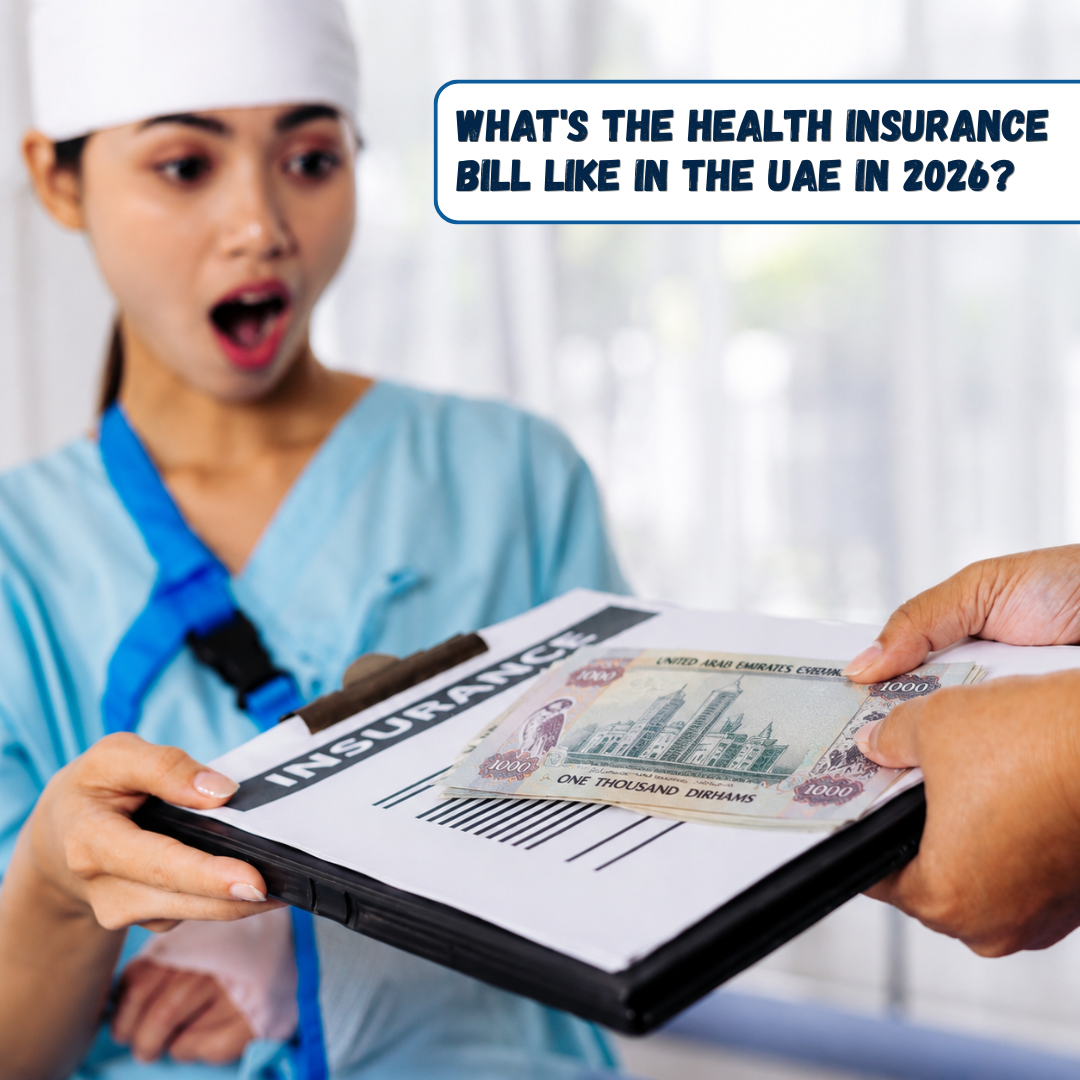
Okay, so there’s no magic bullet figure that everyone pays to insure their health. But based on the projections below, you can get a sense of how much you and your loved ones are looking to cough up. Of course, the price tag will vary significantly based on your insurer, your age, your pre-existing medical conditions, the breadth of coverage you want, and which emirate you’re calling home.
Insurance Policy Typical Annual Price (AED) Best For:
Basic Health Insurance Policy 700–2,500 Young professionals, insurance newbies, the company man
Standard Health Insurance Policy: 2,500–6,000 Families (small-ish ones) and the rest of us.
Comprehensive Health Insurance Policy: 6,000–15,000+ Families (the bigger ones), seniors, and the expats who don’t mess around.
Industry Insighter: Bear in mind, the above are just ballparks and can be altered according to the insurer’s terms, the applicant’s underwriting process, and any official directives from regulatory bodies.
Hidden Costs That Can Affect Your Premium
The annual premium is only one part of the total cost of Health Insurance in the UAE. Before choosing a policy, review the following charges and policy conditions.
Co-payments
Some plans require you to contribute a percentage of the consultation, treatment or prescription cost.
Deductibles
A deductible is the amount you pay before your insurance begins covering eligible medical expenses.
Waiting Periods
Benefits such as maternity care or treatment for certain pre-existing conditions may only become available after a specified waiting period.
Network Restrictions
Using hospitals or clinics outside your approved network could result in higher out-of-pocket costs or non-covered claims.
Annual Benefit Limits
Each policy has a maximum amount it will pay during the policy year. Once this limit is reached, further eligible costs may become your responsibility.
How to Save Big on UAE Health Insurance: 7 Smart Legal Moves?
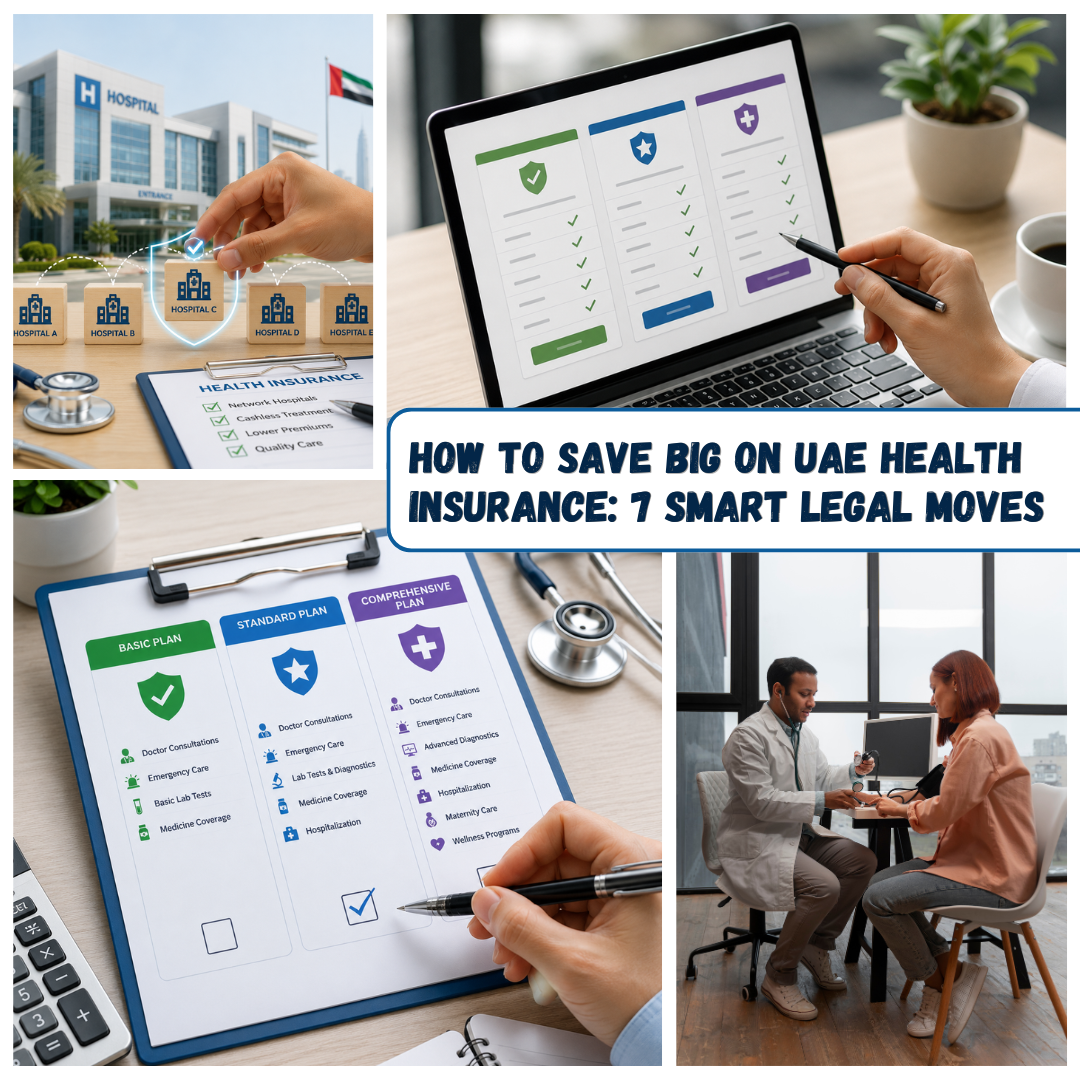
You don’t have to compromise on critical health coverage to save money. Try these effective tactics to slash your premium without putting yourself at risk.
1. Compare Multiple Quotes
Don’t settle for the first quote. Shopping for insurance policies ensures you land the best bang for your buck, a robust suite of benefits, and rock-bottom prices.
2. Choose the Right Level of Cover
There’s no need to pay for perks you won’t use. Opt for a policy that suits your specific health demands, instead of one boasting the most impressive feature set.
3. Select a Suitable Hospital Network
Are you OK with using a set of designated doctors and hospitals? If yes, you could potentially get cheaper premiums than a policy with unrestricted choice.
4. Be Upfront and Honest About Your Health
Full and accurate health information ensures a smooth journey during enrolment. Honesty means no back-and-forth down the line with claim issues, policy changes, or dreaded delays.
5. Review Your Policy Every Year
Your health situation changes. Each year, review your policy to guarantee you’re only paying for coverage that fits your current lifestyle.
6. Think Family Package Deals
For families with more than one member, a family Health Insurance Plan usually delivers greater overall savings than individually purchased policies.
7. Buy Your Health Insurance Online
When buying health insurance online, you can effortlessly compare policy details, breeze through paperwork, and assess your options side-by-side before taking the plunge.
Basic vs Standard vs Comprehensive Health Insurance Plans
Choosing the right policy depends on your healthcare needs, budget and preferred level of protection.
Feature | Basic Plan | Standard Plan | Comprehensive Plan |
GP Consultations | Yes | Yes | Yes |
Specialist Visits | Limited | Yes | Yes |
Emergency Treatment | Yes | Yes | Yes |
Hospital Network | Limited | Expanded | Extensive |
Diagnostic Tests | Basic | Wider Cover | Comprehensive |
Maternity Benefits | Usually Optional | Often Included | Commonly Included |
Dental & Optical | Rare | Optional | Frequently Included |
International Emergency Cover | No | Limited | Often Included |
Premium | Low | Moderate | Higher |
Common Mistakes Buyers Make
Often, buyers are too fixated on the price tag of the premium and are oblivious to some of the important policy features that may influence their healthcare experience.
A buyer should always watch out for these mistakes that many make in their haste:
- Opting for the cheapest available premium without carefully scrutinising exclusions of the policy.
- Neglecting the amount of co-payments and deductibles involved.
- Not carefully considering hospital networks of a given policy and ensuring preferred healthcare providers are included.
- Misrepresenting their existing medical conditions to the insurance provider.
- Buying a higher coverage than the real need.
- Not comparing the policy benefits before renewal.
- Comparing prices instead of benefits.
Conclusion
To calculate health insurance costs in the UAE, you should consider not just the premium but age, location, previous illness, your benefits, etc. By keeping these factors in mind and carefully comparing all the policies, you would be able to secure the best policy at your cost that suits your needs so that your policy helps in meeting your health needs and you can utilise your policy to the optimum by staying aware of all the exclusions. So, don’t delay reviewing and purchasing a policy, as you can do it anytime throughout the year.
What is needed for a successful policy: purchase several policies and compare plans carefully; check out benefits and understand co-payments, exclusions, and the network of providers before selecting a policy.
It will assist you in finding the finest healthcare coverage at affordable costs.