
Running a business in the UAE comes with plenty of responsibilities, but some challenges arrive without warning. An employee could slip on a wet floor, a construction worker could be injured on-site, or a warehouse employee could get hurt handling heavy equipment. Medical bills, compensation, legal action and downtime can add up fast — and many companies only think about the consequences once they’re already dealing with them.
That is why Workmen Compensation Insurance in the UAE is more than just a valuable service. It is an absolute necessity. Not only does this particular type of insurance cover many expenses for the employer, but it also ensures that employees are compensated adequately in the wake of a workplace injury. In this guide, we will go over everything that there is to know about Workmen’s Compensation Insurance and why it is such an essential addition to any company in the UAE, regardless of the industry they operate in.
What is Workmen’s Compensation Insurance in the UAE?
Workmen’s Compensation Insurance is a policy that covers an employer’s legal liability for compensation in case of an employee’s injury, disability, or death resulting from an accident occurring at the workplace. In other words, this insurance covers your liabilities by taking over the payment of compensation from your company’s funds in case an employee is injured, disabled, or killed during their work.
Is Workmen’s Compensation Insurance Mandatory in the UAE?
Any company is legally obligated to take care of its employees in the UAE. This obligation remains in place, even for small businesses.
UAE Labour Law Requirements
The federal labour law makes it the employer’s responsibility to cover compensation in the case of an employee’s work-related injury. In various emirates and free zones, presenting proof of insurance coverage is mandatory for the approval of a project or trade licence. This applies particularly to construction and industrial licences. Even if an employer’s insurance coverage is not explicitly required by a particular licensing authority, the insurance is still mandatory, as it covers the employer’s legal obligation under the labour law, thus relieving the employer from having to cover such costs from his own funds.
Understanding Employer Responsibilities in the UAE
According to the UAE Labour Law, employers are obliged to provide a safe working environment and cover any expenses that may arise due to an employee’s injury at work.
These responsibilities may include:
- Providing necessary medical treatment
- Paying compensation where required under applicable laws
- Reporting workplace incidents where necessary
- Following health and safety requirements relevant to their industry
Seen this way, workmen’s compensation works best as part of a bigger Business Insurance UAE plan, not something bought on its own. Most established companies combine a few types of cover — property, liability, motor, and workforce protection — so no single accident catches them off guard. Looking at these policies together, instead of one at a time, makes it much easier to spot any gaps.
What Happens if You Don’t Have It?
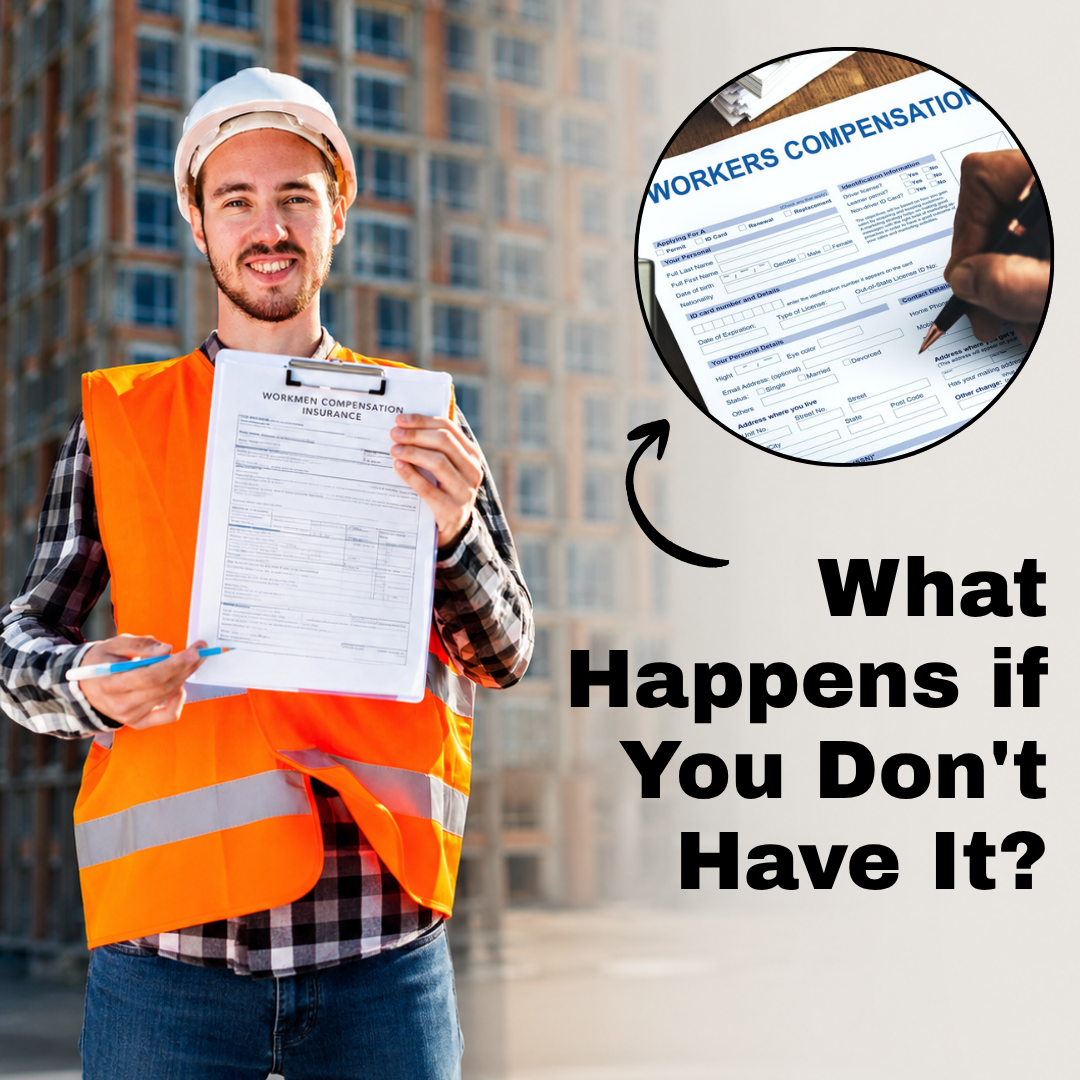
Some employers assume workplace accidents are unlikely, particularly if they operate in a low-risk environment. Without insurance, the employer can still be held responsible for the damages. The only difference is that instead of the insurance company covering the costs:
- Emergency medical treatment
- Hospital care
- Rehabilitation costs
- Disability compensation
- Legal representation
- Court-awarded compensation, where applicable
Moreover, an incident occurring without insurance in place could lead to lengthy procedures to determine responsibility. This could significantly damage the business since instead of working on generating revenue, the owner and employees will have to deal with the consequences of the incident.
What Does the Policy Actually Cover?
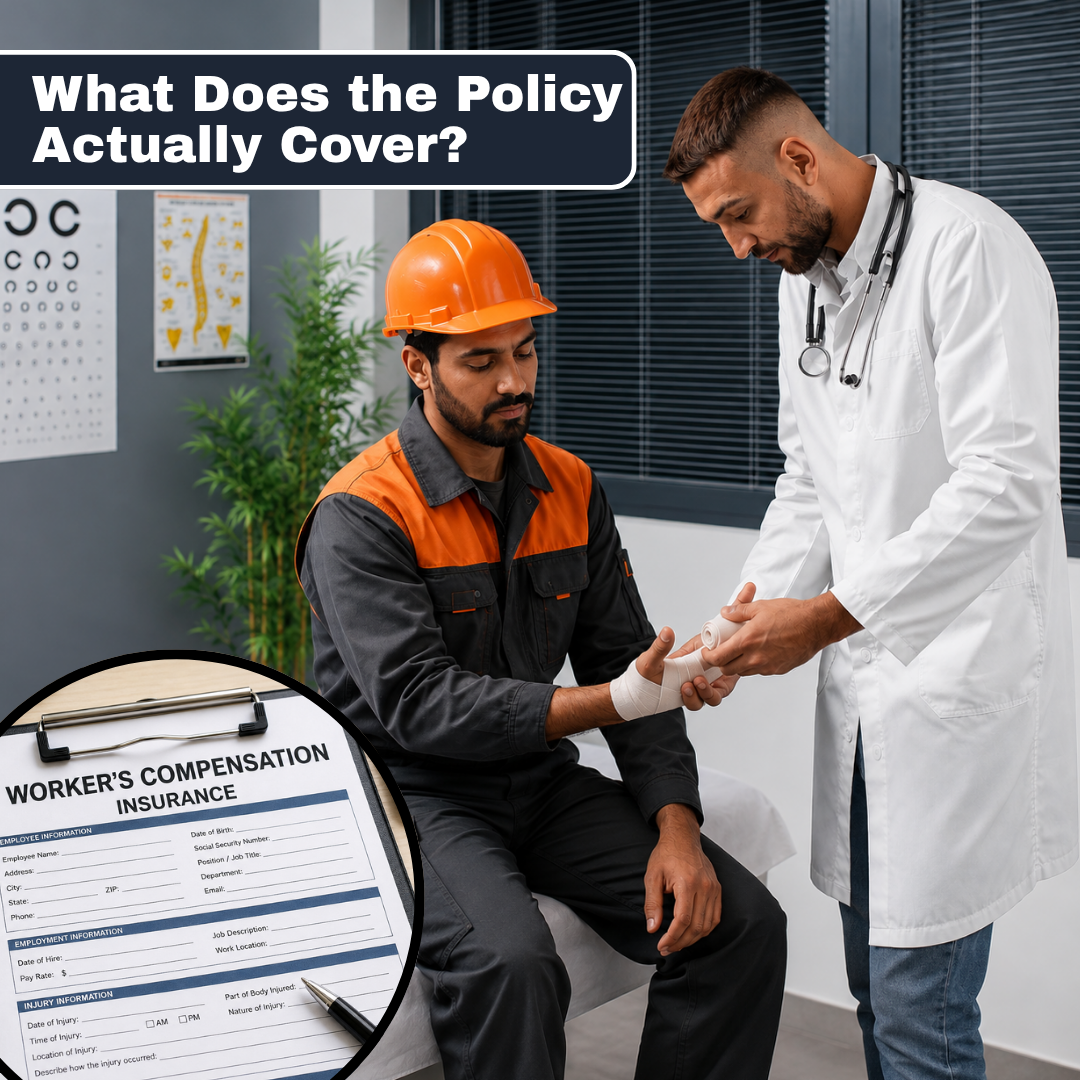
Coverage typically extends across several categories, and understanding each one helps when comparing quotes.
Covered
- Medical treatment for work injuries
- Temporary disability payments
- Permanent disability compensation
- Death benefits for dependants
- Rehabilitation costs
- Employer’s legal liability
Medical Expenses
Hospital treatment, surgery, and follow-up care linked directly to the workplace incident.
- In-patient care
- Surgical procedures
- Prescribed medication
- Diagnostic tests
- Follow-up appointments
- Ambulance services
- Emergency room treatment
- Initial medical assessments
- Urgent procedures needed to stabilise the employee
Temporary and Permanent Disability
Wage replacement while an employee recovers, and lump-sum compensation if an injury results in lasting impairment.
Death Benefits
A payout to dependants if an employee dies as a result of a workplace accident — often one of the most emotionally and financially significant claims a business will ever face.
Rehabilitation and Legal Liability
Physiotherapy or retraining costs, alongside legal defence expenses if a claim is disputed or escalates to court.
What Isn’t Covered?
Insurance is designed to protect you from all the worst things that can happen in the workplace. Well, most things anyway. But as important as knowing what’s covered is knowing what isn’t.
Policies will have a wide range of exclusions:
- Intentional self-injury
- Injuries caused by alcohol or drug misuse
- Injuries unrelated to work
- Pre-existing medical conditions
- Fraudulent or exaggerated claims
- Undisclosed high-risk operations
- Injuries during criminal acts
How Can Workmen’s Compensation Insurance Protect Your Business?
Workmen’s Compensation Insurance can provide a variety of benefits beyond just compensation. These include things such as:
Covers Medical Expenses
Medical costs can become prohibitively expensive in the case of an injury requiring surgery, physical therapy, or other medical treatment.
A typical policy may contribute towards eligible costs such as:
- Emergency medical treatment
- Ambulance services
- Hospital admission
- Surgical procedures
- Follow-up consultations
- Rehabilitation and physiotherapy, where covered
By shifting a significant amount of this liability to the insurer, employers can avoid large, unpredictable medical expenses that could hurt the business. Some employers also purchase Group Medical Insurance policies in addition to Workmen’s Compensation Insurance to cover both work-related injuries and medical care for employees.
Covers Disability and Death Benefits
An employee may be temporarily incapacitated or permanently disabled as a result of an industrial accident.
Workmen’s compensation insurance can provide coverage for any of the following:
- Temporary total disability
- Temporary partial disability
- Permanent disability
- Death benefits payable to eligible beneficiaries, where applicable
Reduces Financial Risk
Unexpected incidents are one of the biggest threats to business stability.
A single workplace accident can lead to:
- High medical expenses
- Compensation payments
- Legal costs
- Investigation expenses
- Temporary staffing shortages
Keeps You Legally Compliant
Holding valid cover is an assurance that your business meets its labour law obligations, which is particularly important when renewing a licence and during any Ministry of Human Resources and Emiratisation inspections.
Builds Employee Trust
Workers with assured knowledge of their cover are likely to report incidents honestly and remain loyal to the company.
Reduces Business Disruption
Claims move faster when an insurer, rather than an internal team scrambling to manage a crisis, handles the process.
Protects Your Reputation
Clients, investors and recruitment partners increasingly check whether contractors carry adequate workforce insurance before signing agreements — particularly in construction tendering.
Which Businesses Need Workmen’s Compensation Insurance?

Workplace safety is relevant to any organisation that has employees. Office-based companies may still encounter trip and fall accidents, as well as muscle/back strain through lifting, or accidents when using machinery or equipment.
Construction Companies
Construction remains one of the highest-risk industries due to:
- Working at height
- Heavy machinery
- Electrical hazards
- Manual handling
- Falling objects
Hospitality Businesses
Hotels, restaurants and catering companies often expose employees to:
- Hot surfaces
- Sharp equipment
- Wet floors
- Heavy lifting
- Kitchen accidents
Retail Businesses
Retail employees may experience:
- Slips and trips
- Stockroom injuries
- Manual lifting accidents
- Customer-related incidents
Offices and Corporate Businesses
Office environments are not risk-free.
Common incidents include:
- Falls on stairs
- Ergonomic injuries
- Electrical accidents
- Manual handling injuries
Manufacturing Businesses
Manufacturing environments frequently involve machinery, production lines and repetitive tasks, all of which increase the likelihood of workplace injuries.
Logistics and Transport Companies
Drivers, warehouse staff and delivery teams often work in physically demanding environments where injuries can arise during loading, unloading or transportation.
For logistics, transport and delivery businesses in particular, Workmen Compensation Insurance tends to work best alongside Commercial Vehicle Insurance UAE cover for the company fleet. The two policies deal with different sides of the same risk — one covers the driver as an employee if they’re injured on the job, while the other covers the vehicle and any third-party damage from a road incident. A business running its own vans or trucks without both in place is really only half-protected.
How Does the Claims Process Work?
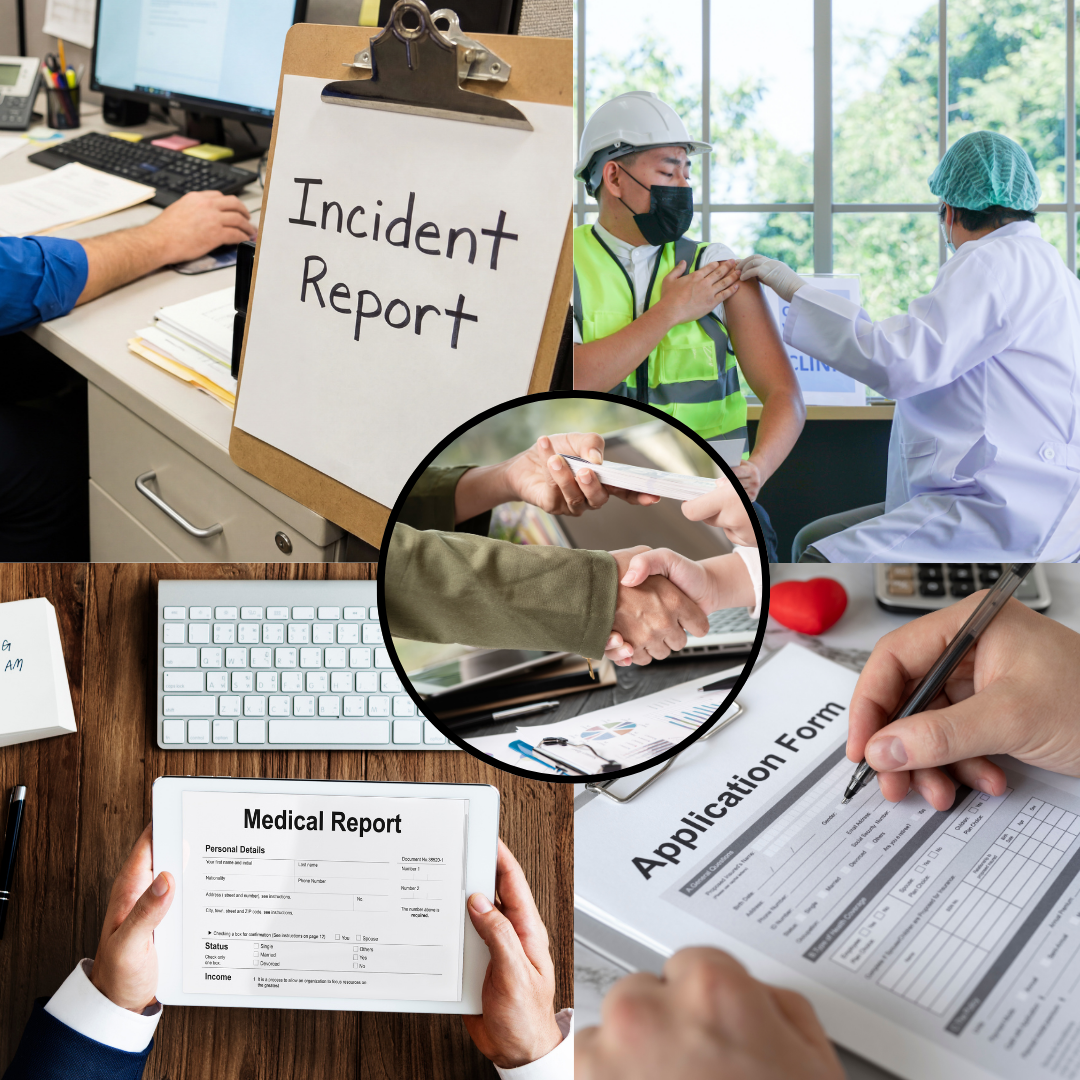
One concern many employers have is whether making a claim will be complicated.
While procedures differ slightly between insurers, most claims follow a similar process.
Step 1 – Report the Incident
The accident should be reported as soon as possible.
Employers should:
- Record what happened
- Gather witness statements where available
- Notify the insurer promptly
- Follow internal reporting procedures
Delays can slow the claims process.
Step 2 – Seek Medical Treatment
The injured employee should receive appropriate medical attention immediately.
Medical reports will often form part of the evidence required during the claim assessment.
Step 3 – Submit Supporting Documents
Most insurers request documentation before assessing a claim.
Medical Reports
These explain the injury, treatment received and expected recovery period.
Employer Statement
The employer usually provides details explaining how the incident occurred.
Accident Report
Supporting records, photographs or incident reports may also be requested.
Providing complete information early can help avoid unnecessary delays.
Step 4 – Claim Assessment
The insurer reviews:
- Policy coverage
- Medical evidence
- Accident circumstances
- Employer documentation
- Applicable legal obligations
Additional information may be requested if required.
Step 5 – Compensation Payment
Once the assessment is complete and the claim is approved, compensation is paid according to the policy terms and applicable UAE regulations.
The exact timeframe varies depending on the complexity of the claim.
How to Choose the Right Workmen’s Compensation Insurance in the UAE?
Not every insurance policy offers the same level of protection. Looking beyond the premium can save considerable costs later if a claim arises.
Check Coverage Limits
Review the maximum compensation available for:
- Medical expenses
- Disability benefits
- Death benefits
- Legal costs
Low premiums sometimes come with lower benefit limits.
Understand Policy Exclusions
Ask the insurer to explain what isn’t covered.
Knowing the exclusions before purchasing the policy reduces the chance of surprises during a claim.
Compare Premiums Carefully
Price matters, but value matters more.
A slightly higher premium may provide:
- Wider protection
- Faster claims handling
- Better customer support
- Higher compensation limits
Review the Claims Process
A straightforward claims process can reduce stress following a workplace accident.
Ask questions such as:
- How quickly are claims assessed?
- What documents are required?
- Is online claim submission available?
Choose a Reputable Insurance Provider
Many experienced risk advisers recommend evaluating insurers based on more than price alone.
Look for providers with:
- Strong financial stability
- Good customer service
- Transparent policy wording
- Efficient claims support
- Experience serving UAE businesses
Common Mistakes Employers Should Avoid
Even businesses that purchase insurance can make decisions that weaken their protection.
Choosing the Cheapest Policy
The lowest premium isn’t always the best value.
Limited cover may leave employers paying substantial costs themselves.
Failing to Review Policies Each Year
New employees, different job roles or expanding operations may require updated insurance protection.
Underestimating Workplace Risks
Many office-based businesses assume accidents won’t happen.
In reality, injuries occur across almost every industry.
Delaying Accident Reporting
Late notification can slow the claims process and, in some cases, affect claim outcomes.
Reporting incidents promptly benefits both employers and employees.
Assuming General Liability Insurance Is Enough
General liability insurance and Workmen’s Compensation Insurance serve different purposes.
General liability insurance generally protects against claims made by third parties, such as customers or visitors.
Workmen’s Compensation Insurance focuses specifically on work-related employee injuries and compensation obligations.
Having one policy does not automatically replace the need for the other.
Best Practices to Reduce Workplace Accidents
Insurance is only one part of effective risk management. Preventing accidents wherever possible benefits everyone.
- Provide regular safety training
- Carry out routine risk assessments
- Review equipment regularly
- Review walkways
- Review fire safety measures
- Check manual handling risks
- Check electrical systems
- Maintain equipment properly
- Build a strong safety culture
- Encourage employees to report hazards
Conclusion
Workplace accidents can never be predicted, and every industry, regardless of how safety-focused it may be, has to deal with them occasionally. The most crucial difference between an unfortunate incident and a full-scale crisis is whether or not the appropriate cover was in place. While Workmen Compensation Insurance in the UAE will not be able to prevent mishaps from occurring, it will relieve your company of having to deal with their often-lethal consequences alone. It is vital to assess your current needs in relation to your provider’s coverage, go over the offers from several insurers, and consult with an expert in the field before renewing your policy.