
How Can Expats Choose the Best UAE Insurance Policy?
A missed invoice for a hospital, a car repair you didn’t predict, or a delayed or cancelled flight that throws an entire family trip off course these are the moments when many people in the UAE realise they needed a better policy sooner. A UAE insurance policy is not just documentation it can be the difference between an achievable setback and critical financial distress. For citizens and noncitizens, the right policy depends on where you live, what you do for work, and who depends on you.
An insurance policy can shield residents and expats from high medical bills, vehicle damage, travel disruptions and business crises. In the UAE, some insurance is compulsory, while other policies are strongly advantageous because they reduce financial difficulties and help you meet legal or legitimate conditions. This guide explains the main types of cover, what is usually required, how premiums are set and how to choose a policy that fits your needs. It is written for anyone comparing the insurance policies offered by UAE providers, from families to working professionals and business owners.
Why Insurance Is Essential for Expats Living in the UAE?
An insurance policy is an agreement that transfers particular financial risks to an insurer in exchange for a premium. In simple terms, you pay the insurer, and the Insurance company in the UAE helps cover entitled losses according to the policy guidelines. In the UAE, insurance companies are controlled or managed, and the government platform notes that the Central Bank of the UAE registers and licences insurers operating in the country.
The core value of an insurance policy is financial security, but the accurate cover depends on the policy terms and conditions, exclusions and the insurer’s network.
Insurance is not universal. A resident might require health cover for visa or employment purposes, car cover for legal road use, travel cover for overseas trips and business cover if they run a company. The best insurance in UAE terms is not always the cheapest. It is the one that matches your risk, budget and requirement.
How the Right Insurance Protects Expats Living in the UAE?
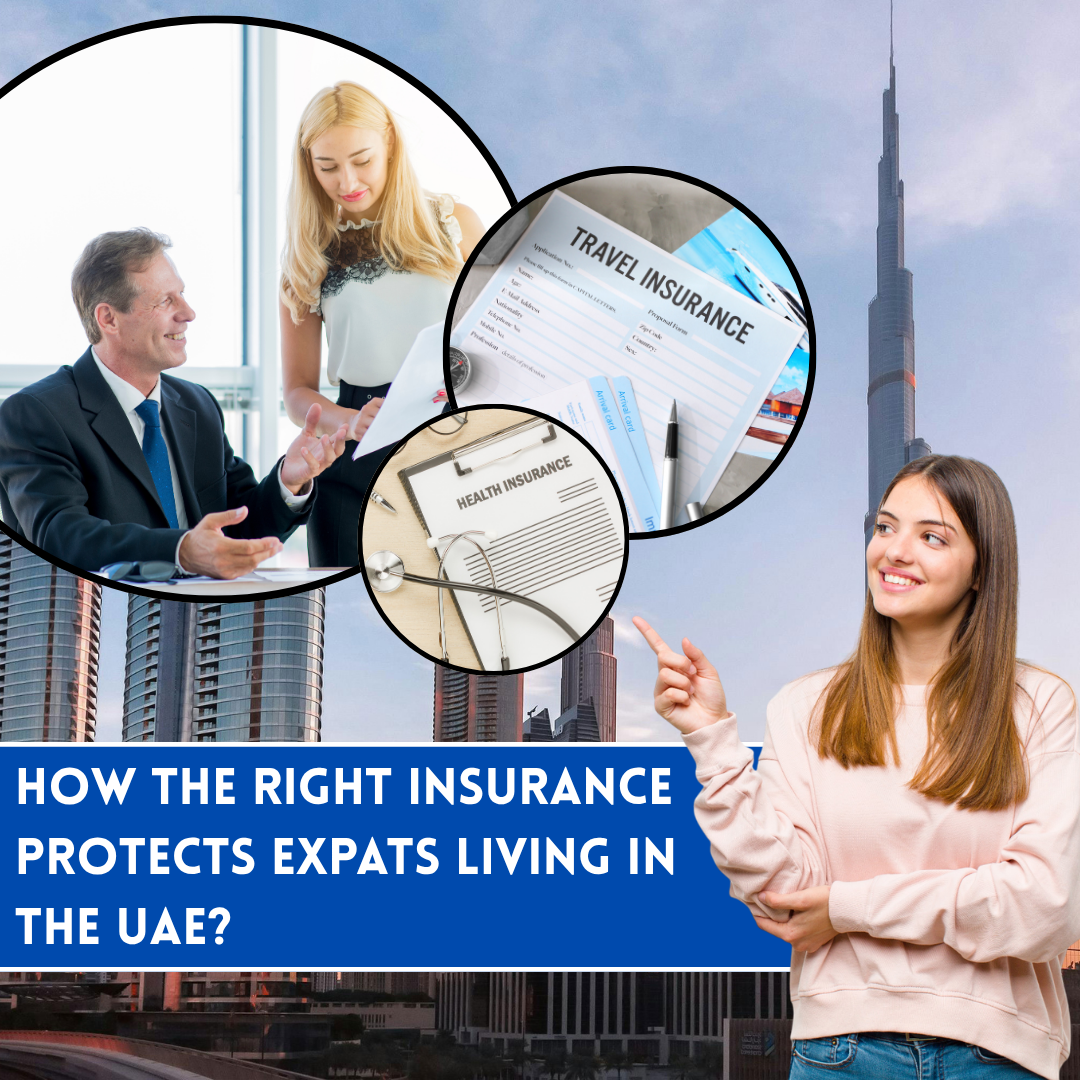
The biggest categories are health, car, travel and business insurance. Each fulfils a different purpose, and many residents need more than one policy at the same time.
Health Insurance in the UAE
Health insurance is compulsory in UAE insurance plans because medical treatment can be expensive without cover. The official UAE platform says employers shall provide health insurance for employees in Dubai, and for resident dependents, the sponsor is responsible for cover. It also states that from 1 January 2025, employers must buy health insurance for private sector employees and domestic workers as a necessity for issuing or renewing a residency card, with the starting price at AED 320 per year.
Health insurance in the UAE can be compulsory, and the rules depend on the emirate, employment status and residency category.
For private sector employees and domestic workers in several emirates, the Basic Health Insurance Scheme provides defined inpatient and outpatient co-payments, chronic disease cover without a waiting period and a two-year policy term. The official guidance also says the scheme includes telehealth services and a network of hospitals, clinics and pharmacies. For residents, families and expats, it is wise to compare insurer networks, claim processes and the scope of exclusions rather than focusing only on the premium.
Car Insurance in the UAE
Car insurance in the UAE is essential because it protects you financially after accidents, theft or damage. The Central Bank’s unified car policy confirms that third-party car insurance covers liability towards a third party injured or affected by the insured vehicle. In practice, most drivers choose between third-party cover and comprehensive cover.
Third-party insurance is usually the minimum level of guard and pays for damage or injury you cause to other people or their property. Comprehensive cover usually includes third-party liability plus damage to your own vehicle, subject to the policy terms. If you drive a newer car, finance a vehicle or want stronger protection against unexpected repair bills, comprehensive insurance is usually more suitable.
Third-party car insurance protects others, while comprehensive insurance usually protects both others and your own car, depending on exclusions.
Travel Insurance in the UAE
Travel insurance in the UAE is planned to protect you before and during a trip. It often covers urgent medical care, trip cancellation, delayed flights, lost luggage and accountability, subject to the plan. For expats and families travelling often, travel insurance can be mainly useful because overseas medical costs can be far higher than expected.
Travel cover is not just for holidays. It can also support business travellers, students and residents visiting family abroad. Some policies are for solo trips, while others are annual or multiple visit policies for regular travellers. Always check whether the destination, age limits and all the conditions are covered before buying.
Business Insurance in the UAE
Business insurance in the UAE helps companies handle property loss, liability claims, jobholder risks and professional errors. Depending on the business type, coverage may include property insurance, public liability, employer liability, professional insurance and specialised cover for trade or regulatory exposure. For regulated entities, professional indemnity cover can be mandatory under specific rules and licences.
Business insurance protects a company’s finances, continuity and legal position when accidents, claims or operational losses occur.
The right business package depends on scale and activity. A small consultancy may need professional indemnity, while a retailer may need property and liability cover. Bigger companies often combine several policies to reduce gaps between covers & claims.
Is Insurance Mandatory in the UAE?
Yes, some types are mandatory, but not all insurance is compulsory for everyone. The official UAE platform states that health insurance is mandatory for employees and, in Dubai and Abu Dhabi, for resident dependents under the relevant system. It also states that private sector employers and local workers must have health insurance for residency card issuance or renewal from 1 January 2025.
It also says that from 1 January 2025, private sector employers and local workers require health insurance in place for residency card issuance or renewal.
For car insurance, third-party liability is the legal requirement of UAE car insurance, and the standard car policy exists to cover third-party injury or damage caused by the insured vehicle. For businesses, compulsory cover depends on the licence type, the governing authority and the area of the business, especially in free zones and regulated sectors. Travel insurance is normally not required for all residents, but it may be required for some visas, destinations or travel bookings.
How Much Does Insurance Cost in the UAE?
Premiums differ significantly because insurers price risk different ways and because cover levels differ. The basic health insurance package referenced by MoHRE costs AED 320 per year for the specific plan. Car, travel and business premiums depend on many factors, including age, vehicle value, medical history, destination, business activity and claim record.
Insurance Type |
Cost Pattern |
|
Health insurance |
Differs by age, plan, network and benefits. The basic package is AED 320 per year under the official scheme. |
|
Car insurance |
Depends on vehicle value, driver profile, claims history and level of cover. |
|
Travel insurance |
Normally based on trip length, destination, age and cover limits. |
|
Business insurance |
Based on business type, turnover, location, assets and liability exposure. |
The key point is that cheap cover can become expensive later if it excludes the risks you actually face. Comparing quotes on price alone is insufficient, and if you need all the information and loopholes regarding a policy, you must consult a trustworthy and reputable company such as Insura.ae.
What Affects Premiums?
Several factors affect your UAE insurance premium. Some are personal, while others relate to the item or risk being insured. For health insurance, age, medical history and the scope of cover matter most. For car insurance, the insurer will look at the car’s value, driver experience, claims history and whether the policy is third-party or comprehensive.
Other common pricing factors include:
- Coverage amount.
- Deductibles or co-payments.
- Network size and hospital access.
- Policy exclusions.
- Location and usage.
- Claims history.
If you are comparing insurance companies in the UAE options, ask how each insurer prices renewals, add-ons and claim adjustments. A lower premium can still be poor value if the excess is high or the claims process is slow.
How to Choose the Best Insurance Policy in the UAE?
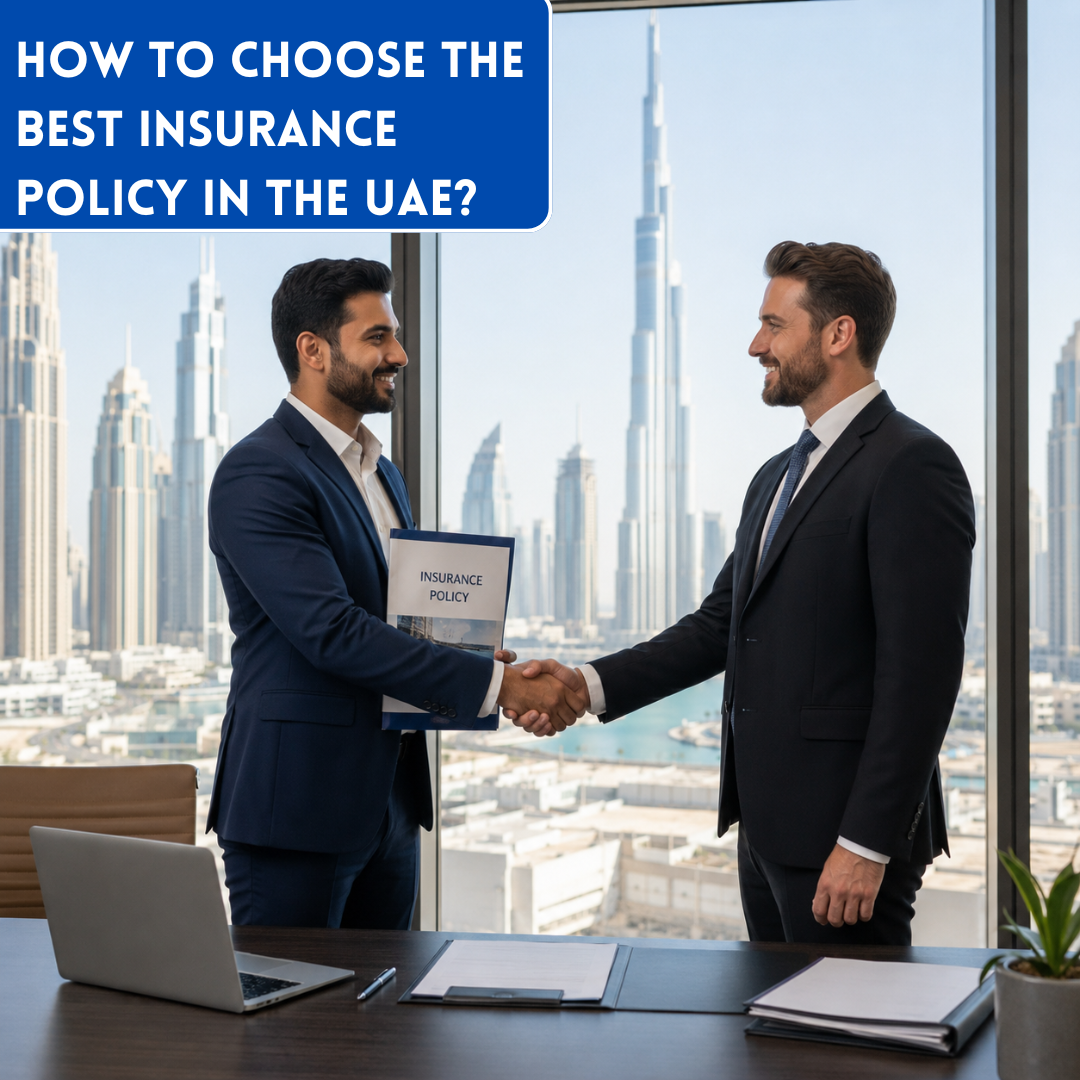
Start with your real need, not the circular. A family comparing car, health or travel insurance should look at policy limits, policy restrictions, hospital networks and claims handling efficiency before deciding.
Quick Checklist
- Look at a few insurers and agents online or in person before choosing.
- See what is included and what is excluded before you buy.
- Read the whole policy wording, not only the summary.
- Double check deductibles, co-insurance and waiting periods.
- Check the claims process and settlement timeline.
- Look at customer support and network access.
- Approach the policy according to your visa, job and family needs.
The best policy is the one that fits your risks, your budget and your needs, not simply the one with the lowest premium. If you are an expat and looking for some guidance regarding different policies, you must read the guide to understanding your insurance policy as a UAE Expat.
Documents Required
The documents depend on the policy type, but the usual requirements are direct and simple:
- Health insurance: Emirates ID proof, passport, visa copy and any medical documents if requested.
- Car insurance: DL, car RC and Emirates ID.
- Travel insurance: Passport, travel itinerary and trip dates.
- Business insurance: Trade licence, company documents, asset details and staff information.
- Certain policies may also request income evidence or medical declarations.
Keep digital copies ready, because online applications are now common across many UAE insurance companies. Missing information can delay both purchase and claim processing.
Avoid These Mistakes
People often buy a policy in a hurry and only get to know the gap after filing a claim. These are some of the most common mistakes.
- Buying only on price.
- Ignoring exclusions and waiting periods.
- Underinsuring property, vehicles or medical needs.
- Not disclosing relevant health & medical or driving information.
- Forgetting to renew and letting the policy expire.
- Believing all UAE insurance plans offer the same benefits.
- Forgetting that employer cover may not extend to dependents.
- Ignoring claim documentation requirements until after an incident.
- Treating business insurance as optional when contracts or licences may require it.
- Auto-renewable without checking if your needs have changed.
If you want better cover and protection, compare the policy terms and conditions as carefully as the premium. That approach generally saves money and stress later.
How to Buy an Insurance Policy in the UAE?
Buying cover is usually straightforward once you know what you need. Start by thinking about the risk you actually want to protect yourself against, rather than jumping straight to the cheapest plan. Then compare policies from licensed insurers or a trusted platform, gather the documents you are likely to need and take a proper look at the parts people often skip — exclusions, limits and deductibles.
Before you purchase, it also helps to understand how claims are managed. In theory, the policy sounds amazing, but if the claims process is tricky, the whole thing becomes frustrating and disappointing down the line. Once you are happy, you have set up your premium, printed and kept your copy and set a reminder for when it is due, so you don’t lose the opportunity!
For expats in the UAE, there is one more thing worth checking carefully: whether the policy works across all emirates or only within a specific network. That detail can affect how easily you use the cover and how much you end up paying out of pocket.
How to Claim Insurance as an Expat in the UAE?

Making an insurance claim in the UAE doesn’t need to be exhausting. If you follow the right steps and act quickly, the process is generally simple
Step 1: Contact the Insurer as Soon as Possible
Contact your insurance company as soon as possible after the incident. Timely notification helps prevent delays or issues with your claim.
Step 2: Collect the Documents
Collect the documents you’ll need: Emirates ID, policy number, bills and receipts, and any medical or police reports. Keeping everything together makes the process faster.
Step 3: Lodge the Claim
Fill in the claim form accurately and attach your documents. Most insurers let you submit claims via their website, mobile app, email, or at a branch — use whichever is easiest.
Step 4: Stay Available and Follow Up
Watch your phone and email. The insurer may ask for more information or clarification. Respond quickly to keep things moving.
Correct and complete information, timely submission generally leads to a much smoother process. If anything is unclear, contact your insurer and ask what they need next.
Expert Tips
- Select cover based on likely claims, not extreme-case thinking.
- Check whether your preferred hospitals or garages are in the network.
- Ask how cost-sharing and excess work in practice.
- Check exclusions for pre-existing conditions, drivers and destinations.
- Save policy numbers and emergency contacts somewhere easy to access.
Conclusion
The right UAE insurance policy is the one that protects you properly and covers all your needs and fits your budget. Instead, you need to have insurance that is perfectly matched to your needs, your spending plan, and also to the kinds of challenges you are actually anticipated to confront. Whether you require car insurance, health, travel, or business insurance, you must see to it that you thoroughly consider the policy information, as well as figure out what it covers and what is not covered, and how it could genuinely assist you if you ever need to file a claim.
A plan with reduced premiums might be useful in the short term, yet might lead to you losing extra cash if the insurance coverage isn’t capable of supplying you the insurance policy that you deserve. It is a fantastic idea to compare some policies, read the contract carefully, and evaluate them against your own requirements on an everyday basis before you get them. As soon as the selection gets a little overwhelming for you, talking to a reliable insurance firm can simplify the procedure a great deal as well as assist you choose a policy that can assist you more effectively, as opposed to just a low-cost policy.
Frequently Asked Questions
Which Insurance is Mandatory in the UAE?
In many cases, health insurance is required in the UAE, especially for employees and resident dependents, depending on the emirate’s rules. From 1 January 2025, it also became a requirement for private sector employees and domestic workers when renewing residency under the Basic Health Insurance Scheme. Car insurance is also essential if you want to drive legally, with third-party liability forming the core of the policy.
How Much Does Health Insurance Cost?
There is no single price because health insurance varies by emirate, insurer and the level of cover you choose. The Basic Health Insurance Scheme mentioned by MoHRE is priced at AED 320 per year for the specified package, while more comprehensive plans can cost much more. It is worth comparing the premium alongside co-payments, exclusions and waiting periods so you know what you are really paying for.
How Do You File an Insurance Cover Claim?
The best method is to report the incident ASAP, collect your data and submit the forms and documents the insurer asks for. The Central Bank’s claims rulebook says insurers should set out claim forms, required documents and settlement timeframes, and should notify the client of approval or rejection within 15 days after receiving complete documents unless more time is justified. Keep copies of everything you send, because that makes follow-up much easier.
What Does It Cost to Have Health Insurance?
It is not easy to pinpoint the price because health insurance costs vary considerably across the Emirates, the insurance company you choose, and the extent of coverage selected. For instance, while MoHRE’s Basic Health Insurance Scheme for the offered package comes in at
AED 320 per year, other more inclusive health plans can be quite more pricey. Therefore, while purchasing insurance, look at not only the policy’s premiums but also co-pays, waiting periods, and any exclusions.
What Constitutes Full Comprehensive Car Insurance?
Usually, the coverage offered in a full comprehensive insurance policy is broader compared to third-party coverage. It includes damage to your personal vehicle, in addition to damage done to others. This policy is most commonly suitable for relatively new vehicles that are still under finance, or are more costly. Before purchasing a full comprehensive insurance policy, confirm the excess, the car insurance repair shop and exclusions, as well as other policies, to be sure you fully comprehend the coverage details.
Is It Possible to Change Your Insurer?
For the most part, you have the option to switch insurance companies upon your renewal or, depending on the policy’s terms and applicable laws, you might even be able to change before your renewal. Before selecting another provider, compare its advantages, waiting periods, renewal terms and continuity provisions for existing policies – especially those about health cover and no-claim benefits. Generally, changing your insurance at the close of your contract term, not in the midst of a policy period, is easier.
In many cases, health insurance is required in the UAE, especially for employees and resident dependents, depending on the emirate’s rules. From 1 January 2025, it also became a requirement for private sector employees and domestic workers when renewing residency under the Basic Health Insurance Scheme. Car insurance is also essential if you want to drive legally, with third-party liability forming the core of the policy.
There is no single price because health insurance varies by emirate, insurer and the level of cover you choose. The Basic Health Insurance Scheme mentioned by MoHRE is priced at AED 320 per year for the specified package, while more comprehensive plans can cost much more. It is worth comparing the premium alongside co-payments, exclusions and waiting periods so you know what you are really paying for.
The best method is to report the incident ASAP, collect your data and submit the forms and documents the insurer asks for. The Central Bank’s claims rulebook says insurers should set out claim forms, required documents and settlement timeframes, and should notify the client of approval or rejection within 15 days after receiving complete documents unless more time is justified. Keep copies of everything you send, because that makes follow-up much easier.
It is not easy to pinpoint the price because health insurance costs vary considerably across the Emirates, the insurance company you choose, and the extent of coverage selected. For instance, while MoHRE’s Basic Health Insurance Scheme for the offered package comes in at
AED 320 per year, other more inclusive health plans can be quite more pricey. Therefore, while purchasing insurance, look at not only the policy’s premiums but also co-pays, waiting periods, and any exclusions.
Usually, the coverage offered in a full comprehensive insurance policy is broader compared to third-party coverage. It includes damage to your personal vehicle, in addition to damage done to others. This policy is most commonly suitable for relatively new vehicles that are still under finance, or are more costly. Before purchasing a full comprehensive insurance policy, confirm the excess, the car insurance repair shop and exclusions, as well as other policies, to be sure you fully comprehend the coverage details.
For the most part, you have the option to switch insurance companies upon your renewal or, depending on the policy’s terms and applicable laws, you might even be able to change before your renewal. Before selecting another provider, compare its advantages, waiting periods, renewal terms and continuity provisions for existing policies – especially those about health cover and no-claim benefits. Generally, changing your insurance at the close of your contract term, not in the midst of a policy period, is easier.