
Moving to Dubai often comes with two emotions: excitement and uncertainty. The skyline, career opportunities, lifestyle, and tax benefits attract professionals from around the world. Yet, one question quietly sits behind every relocation plan:
“Cost of living in Dubai?”
The honest answer is simple. Dubai is not cheap, but it is affordable either. Your lifestyle choices, housing decisions, and spending habits shape your monthly budget far more than many people expect.
This guide breaks down the real day-to-day costs so you can plan with clarity instead of assumptions.
Understanding the Bigger Picture
Before diving into categories, it helps to look at overall estimates.
Recent cost data suggests:
- A single person may spend around 4,100 AED per month, excluding rent
- A family of four may spend roughly 14,400 AED per month, excluding rent
However, there is one essential expense many newcomers initially overlook.
Beyond monthly bills, major lifestyle decisions such as where you live and what you drive significantly impact your budget. Whether you’re searching for property for rent, property for sale, motor for rent, or motor for sale, comparing options in one place helps you avoid overspending. Platforms like Listify.ae make it easier to explore verified listings across real estate, vehicles, and various local services in the UAE.
Using a centralized property and motor marketplace allows residents to evaluate pricing, locations, and features before committing — ultimately helping you manage your cost of living more strategically.
Planning smartly is not just about how much you earn — it is also about where and how you spend.
Why is Health Insurance Important in Dubai?
In Dubai, health insurance in Dubai UAE is not just a personal choice; it is a legal requirement. UAE regulations mandate that residents maintain valid medical cover, and employers commonly provide basic workmen’s compensation insurance for employees. Dependents and family members, though, often require separate arrangements.
Beyond compliance, health insurance plays a practical financial role. Medical treatment in Dubai is modern and high-quality, yet private healthcare costs can be substantial without coverage. Even routine consultations or minor procedures may create unexpected expenses. That’s why choosing the right insurance provider also plays a crucial role here.
Proper insurance planning helps in three important ways:
- It ensures access to approved hospitals and clinics
- It protects against sudden medical bills
- It supports long-term financial stability
What this tells us is important. Dubai living costs are highly flexible. Two residents earning the same salary can experience very different financial realities.
Housing Cost
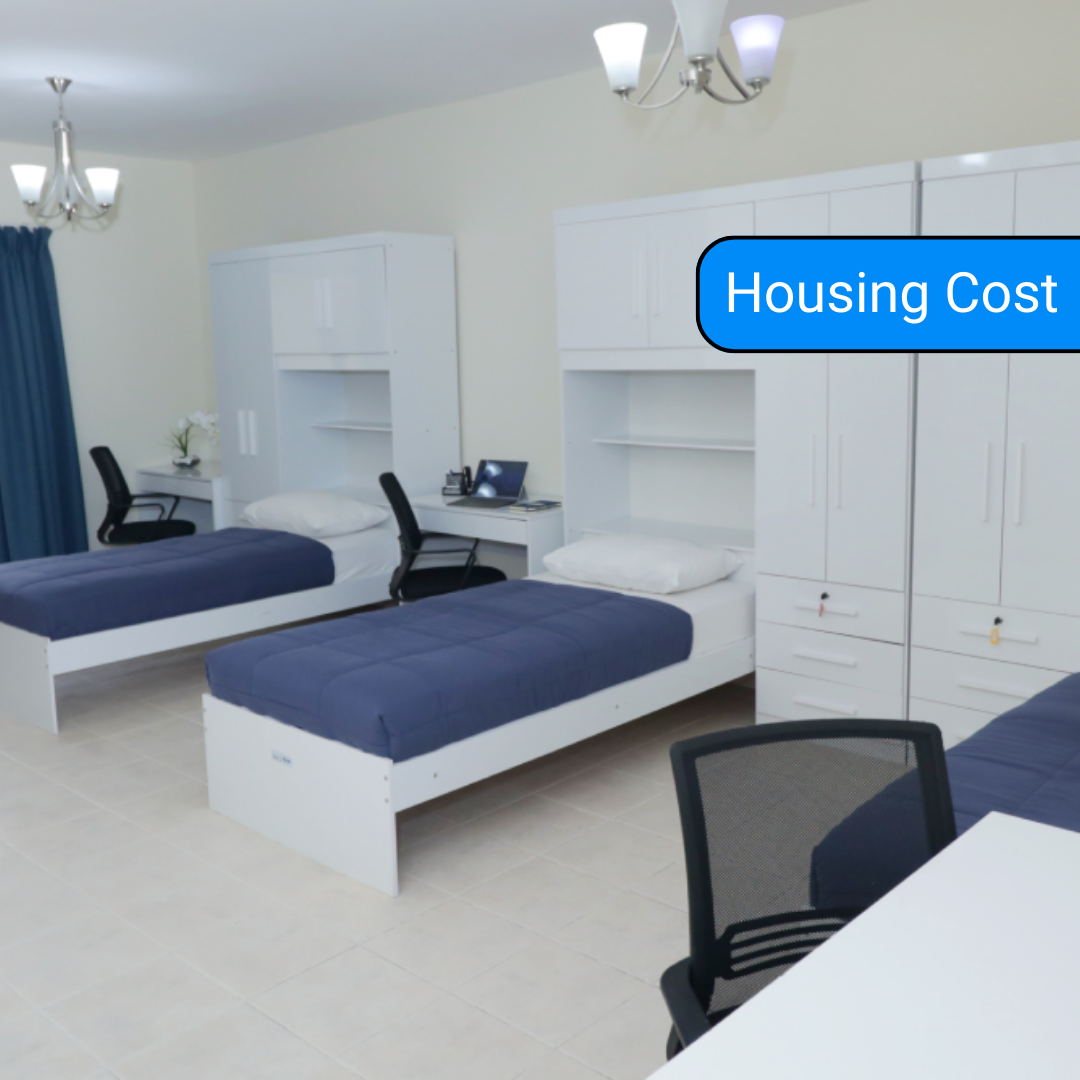
Accommodation typically consumes the biggest portion of any Dubai budget.
Average monthly rents:
- 1-bedroom apartment in city centre: 8,570 AED
- 1-bedroom outside centre: 5,280 AED
- 3-bedroom in city centre: 16,060 AED
- 3-bedroom outside centre: 11,280 AED
- The starting price for partition rooms is AED 700–1,000.
- Bad space begins at AED 500.
- Approximately AED 4,300 to AED 5,000 per month for a studio flat
This price gap explains why neighbourhood choice matters more than many newcomers realise. Living centrally offers convenience, shorter commutes, and proximity to business hubs. However, moving slightly outward often delivers significant savings without drastically affecting lifestyle.
For new residents, a practical approach is to prioritise commute time, public transport access, and daily routine rather than prestige alone. Now let’s look at the cost of food and groceries in Dubai.
Food and Grocery Costs
Contrary to common fears, grocery expenses in Dubai remain reasonable when compared to many global cities.
Typical supermarket prices:
- Milk (1 litre): 6.7 AED
- Bread (500g): 5 AED
- Eggs (12): 13 AED
- Chicken fillets (1kg): 30 AED
- Tomatoes (1kg): 5 AED
- Bottled water (1.5L): 2.2 AED
For residents who cook regularly, food costs can stay comfortably controlled. Imported speciality items increase bills, but everyday essentials remain accessible.
Dining out, however, quickly changes the picture.
Eating Out: Flexible but Addictive
Restaurant spending depends heavily on frequency and preference.
Average prices:
- Inexpensive restaurant meal: 40 AED
- Mid-range meal for two: 300 AED
- Fast food combo meal: 35 AED
- Cappuccino: 21 AED
Dubai offers dining options across every price bracket. Casual meals remain affordable, while frequent premium dining noticeably raises monthly expenses.
For freelancers and young professionals, balancing home cooking with occasional dining often creates a comfortable middle ground.
Transport: A Predictable Expense
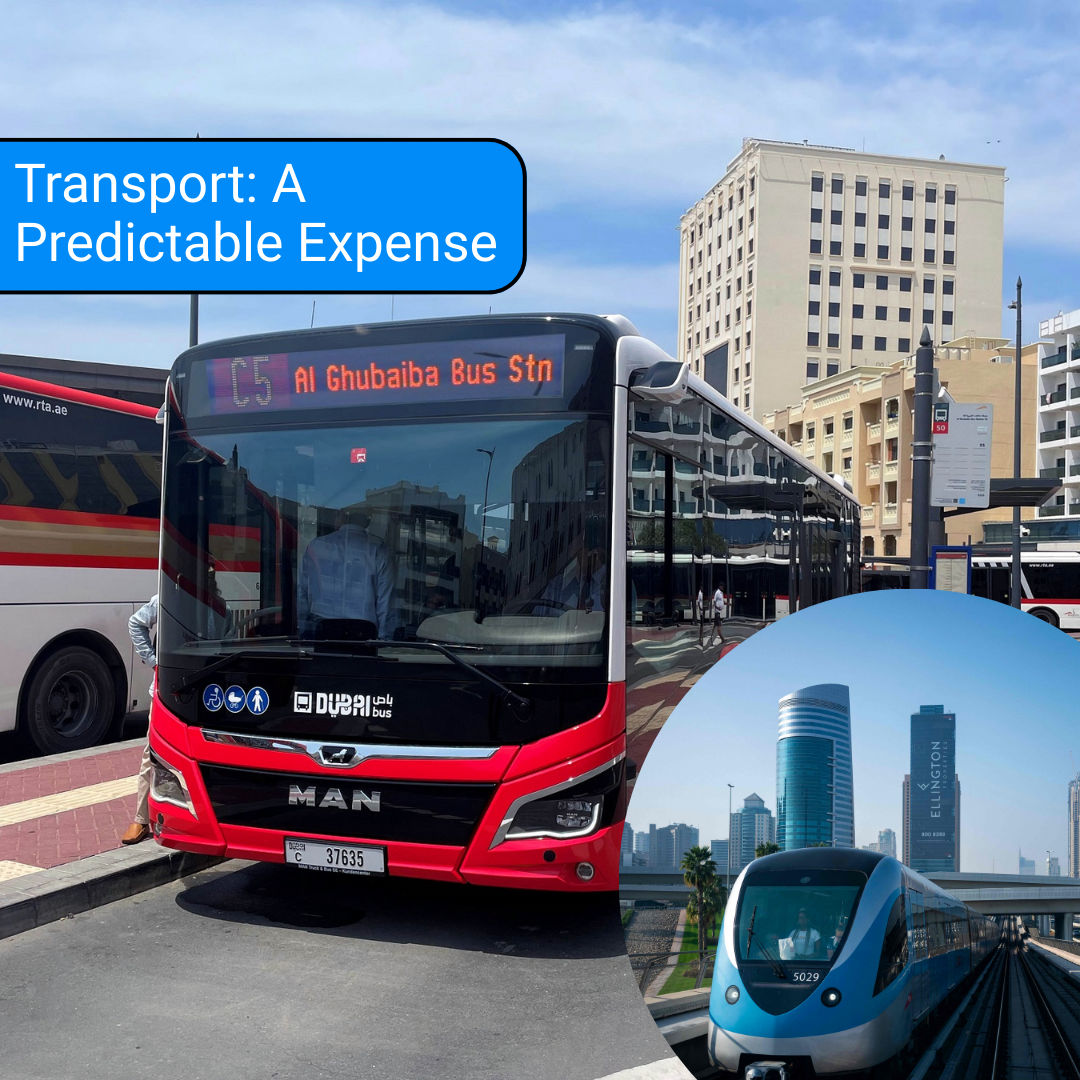
Dubai’s transport costs are generally stable and easy to estimate.
Public transport:
- One-way ticket: 6 AED.
- Monthly pass: 320 AED.
Taxi fares:
- Starting fare: 12 AED.
- Per kilometre: 2.5 AED.
Fuel:
- Petrol (1 litre): 2.85 AED.
Public transport suits many city workers, particularly those living along metro lines. Meanwhile, car ownership introduces additional considerations such as affordable car insurance, registration, servicing, and parking.
This is where financial planning becomes essential rather than optional.
Utilities and Connectivity
Monthly utilities for an average apartment:
- Electricity, cooling, water, waste: 887 AED.
Connectivity costs:
- Mobile plan: 220 AED.
- Broadband internet: 354 AED.
Air conditioning drives utility bills, especially during warmer months. Many newcomers underestimate this component, which later disrupts budgets.
Planning for seasonal variation helps avoid surprises.
Once essentials such as electricity, internet, and mobile plans are accounted for, attention naturally shifts towards lifestyle choices. This is where personal preferences begin to shape spending patterns far more noticeably.
Lifestyle and Leisure Spending
Dubai’s lifestyle appeal is undeniable. However, leisure choices influence monthly costs significantly.
Examples:
- Gym membership: 270 AED.
- Cinema ticket: 52 AED.
- Tennis court (hour): 181 AED.
The city accommodates both modest and luxury lifestyles. Social habits, weekend activities, and entertainment preferences define this category more than fixed pricing.
For residents relocating with children, financial planning extends beyond discretionary spending. Education and childcare introduce a far more structured and unavoidable layer of expenses that require early consideration.
Education and Childcare Cost

For families relocating with children, education becomes a major financial pillar.
Average costs:
- Preschool/kindergarten: 2,950 AED per month per child.
- International primary school: 60,000 AED annually.
Schooling costs vary widely by curriculum and institution. Early research is vital, particularly since waiting lists and admissions processes may influence housing decisions.
These long-term expenses highlight a broader financial reality. Living comfortably in Dubai is closely tied to income alignment, making salary expectations and earning capacity an important part of the discussion.
Why Income Alignment Matters
Average monthly net salary: 14,900 AED.
Dubai’s tax-free income structure often offsets higher living costs. However, financial comfort depends on aligning income with lifestyle expectations.
For instance:
- A single professional earning 10,000 AED can live comfortably with careful housing choices.
- A family requires far more structured budgeting and planning.
Income without expense awareness often leads to financial stress, regardless of salary level.
Income considerations also explain why Dubai is frequently compared with other global cities. Cost perceptions often shift when viewed alongside international financial centres.
Dubai vs Major Global Cities
Comparative data frequently show:
- Dubai is notably less expensive than New York (excluding rent).
- Rent remains significantly lower than in many Western financial centres.
This comparison explains Dubai’s global appeal. Residents often enjoy higher disposable income relative to similarly paid roles in heavily taxed cities.
Hidden Costs New Residents Often Miss
While standard expenses receive attention, several overlooked costs affect newcomers:
- Security deposits for rentals.
- Ejari registration and housing fees.
- Vehicle insurance and registration.
- Health insurance requirements.
- School deposits and uniforms.
Ignoring these early expenses may distort initial financial planning.
Practical Budgeting Tips for Newcomers
For anyone planning a move, these principles offer stability:
- Separate fixed costs from lifestyle spending.
- Choose housing based on commute practicality.
- Track early relocation expenses.
- Build an emergency buffer.
- Review insurance needs early.
Financial confidence rarely comes from income alone. It grows from informed decisions and structured planning.
Final Thoughts
Dubai offers exceptional career prospects, infrastructure, safety, and lifestyle advantages. Yet, like any major global city, it rewards those who plan realistically.
Understanding living costs helps avoid guesswork, manage expectations, and build financial comfort from day one.
For residents navigating relocation, budgeting, and financial protection, expert guidance often makes the transition smoother and more predictable.
Insura works with individuals, families, and professionals across the UAE, helping them explore insurance solutions that align with real-world living needs.
Because moving cities should feel like progress, not pressure.