
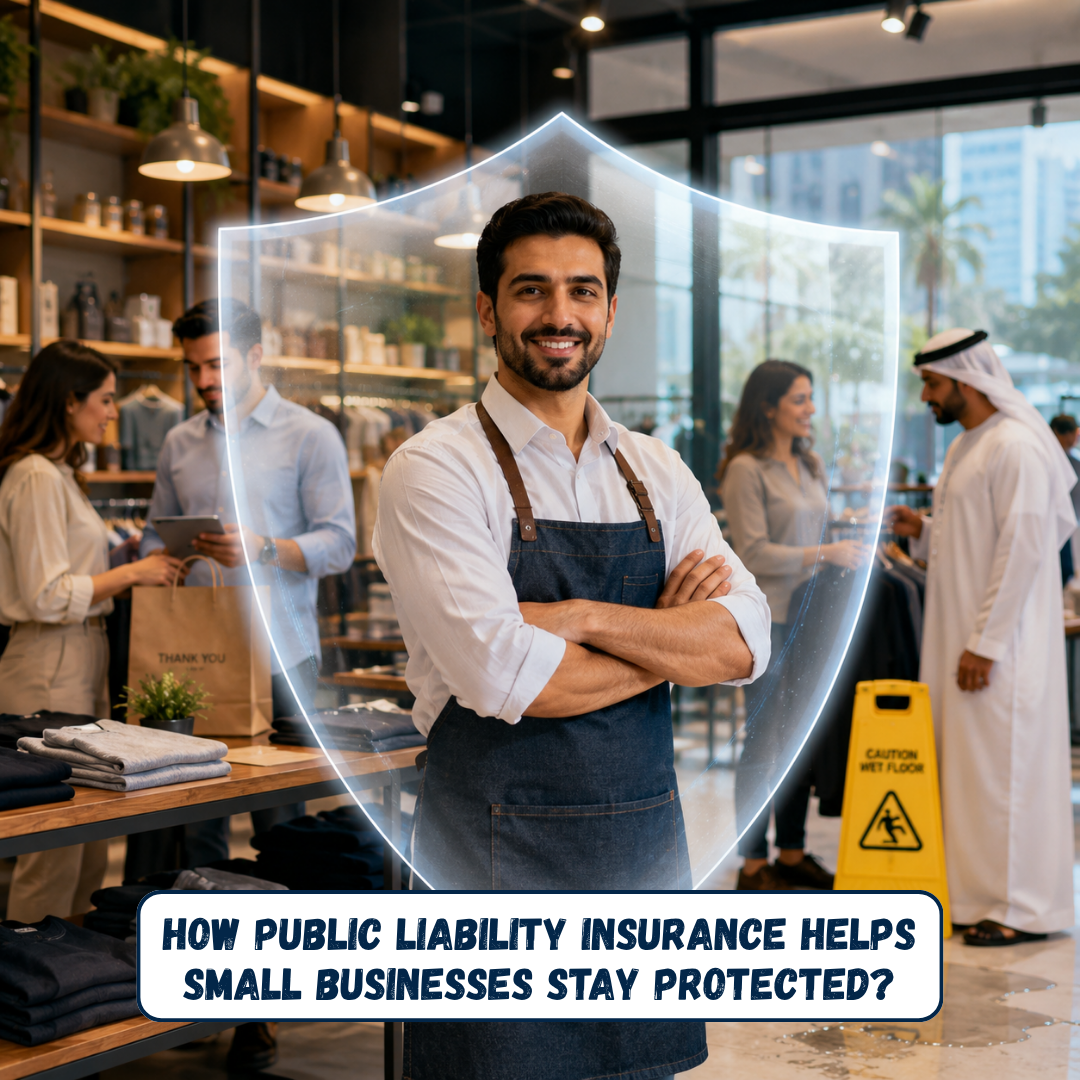
You left your home country to build a business in the UAE. You worked hard. You got your trade licence. You found a great spot in Dubai. Your cafe is finally doing well after all your hard work.
Then one day, a customer slips near the counter. He falls. His wrist breaks. A week later, his lawyer sends you a legal notice. He wants AED 60,000 as compensation. This is the exact moment when public liability insurance comes in.
You did nothing wrong. The floor was wet because someone just mopped it. But that does not matter. You still have to pay. Or fight it in court. Either way, it will cost you money and stress.
If you are an expat running a small business in the UAE, this guide is for you. It is written in plain, simple language. No confusing insurance terms. Just clear answers to the questions you actually have.
What Is Public Liability Insurance?
This insurance is a simple type of cover. It protects your business if someone outside your company gets hurt or their property gets damaged because of your business.
Think about who walks through your doors every day. Customers, delivery drivers, job applicants, and suppliers, even random passersby near your shop. Any one of them could get hurt on your property. Or your staff could accidentally damage something that belongs to them.
When that happens, this insurance steps in. It helps pay for:
- Legal defence costs
- Compensation to the injured person
- Court fees
- Medical costs, in some cases
Without this cover, you would pay all of these costs yourself. For a small business, one bad claim can wipe out years of hard work.
How Does It Actually Work?
It is simple. You buy a policy. You choose a coverage limit, which is the maximum amount the insurer will pay if something goes wrong.
If a claim comes in, your insurer helps cover legal costs, compensation, and related fees, up to that limit. You do not fight the claim alone. Your insurer handles most of the process for you.
One important tip: do not choose the cheapest limit just to save money. If your limit is too low, you will still have to pay the difference out of your own pocket. Choose a limit that matches your real risk.
Who Counts as a “Third Party”?
In insurance language, a “third party” is anyone who is not part of your company but who could be affected by your business. This includes:
Customers: People buying your goods or services.
Visitors: Anyone who steps onto your property, e.g., delivery staff, contractors, and job applicants.
Suppliers: Companies or people who supply goods to your business.
Contractors: Outside workers connected to your site or project.
Members of the Public: Even people who have nothing to do with your business directly. For example, a person walking past your construction site who gets hurt by falling debris.
If any of these people get hurt, or their property gets damaged, because of your business, you could face a claim.
If you operate in the UAE, the same principles apply: the right business insurance in Dubai UAE can protect you when a customer, visitor, or member of the public makes a claim against your company. Choosing appropriate third‑party limits and coverages from the start helps avoid costly shortfalls if a serious injury or property damage claim arises.
What Does This Insurance Cover?
A public liability policy protects your business when your normal operations accidentally cause harm to other people or their property. Here’s a simple breakdown of what’s typically included:
Bodily Injury to a Third Party: If a customer, visitor, or member of the public gets hurt on your premises or because of something your business did, this covers the resulting costs.
Accidental Damage to Property: If your staff accidentally damage someone else’s belongings while doing their job (like breaking a client’s laptop during a service call), this covers the repair or replacement.
Legal Defence Costs: If someone takes legal action against your business over an injury or damage claim, this pays for the lawyers needed to defend you.
Compensation Payments: If you’re found liable, this covers the payout to the injured party, up to your policy’s limit.
Medical Expenses: Some policies go further and cover the injured person’s treatment costs, even before liability is fully established.
Importantly, this policy has clear boundaries. It won’t cover mistakes made through professional advice (that falls under professional indemnity insurance), and it won’t cover intentional damage you caused on purpose. It’s designed strictly for accidental, unintentional incidents connected to your business activities, not for advice-related errors or deliberate mistakes.
Think of it as protection against the everyday, unplanned risks of running a business.
Which UAE Businesses Should Consider?
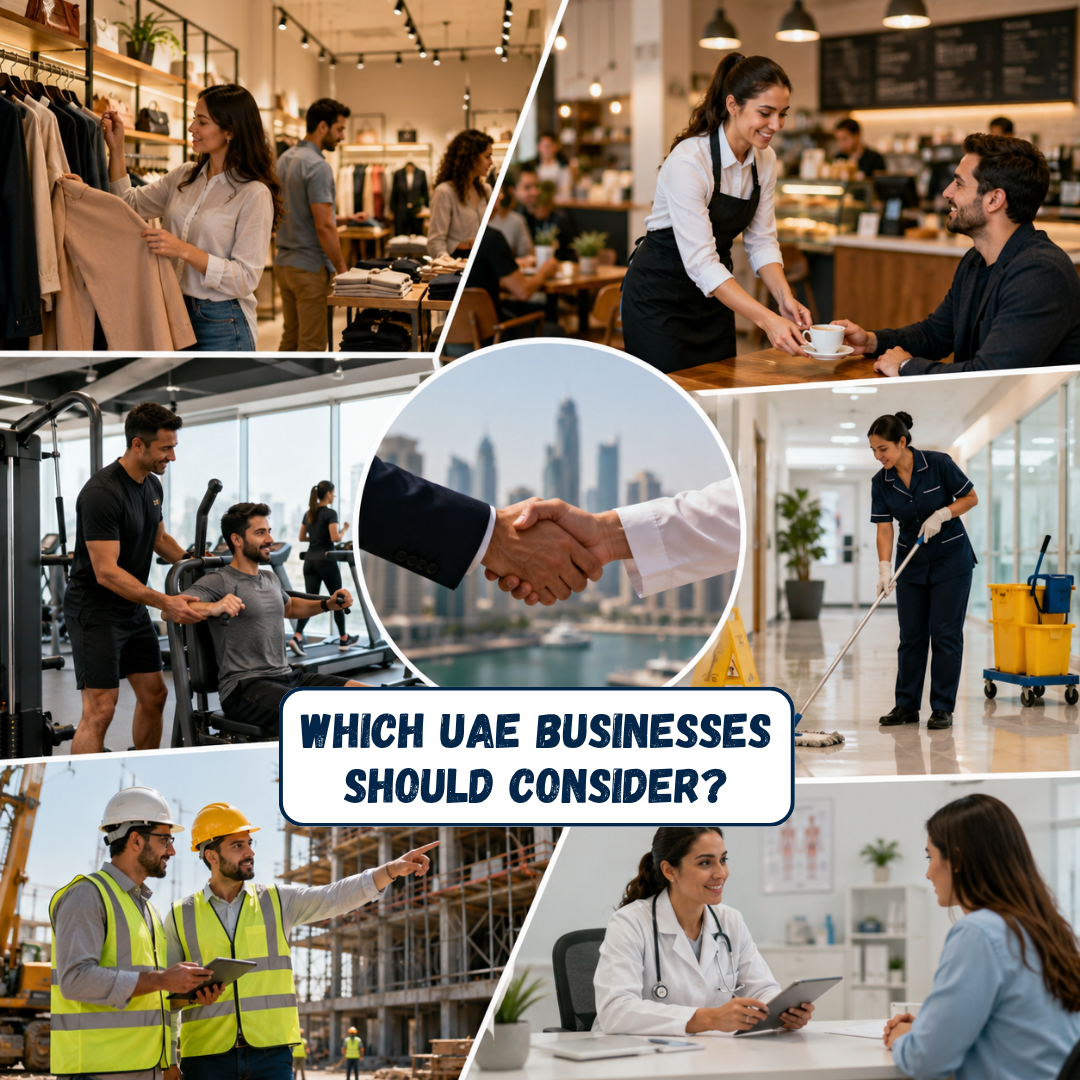
If your business involves any face-to-face interaction with the public, a public liability policy in the UAE isn’t just a nice-to-have, it’s a practical safeguard against everyday risks.
High Foot-traffic Businesses
Retail stores, restaurants, hotels, cafes, salons, and gyms see a regular stream of customers every day. More footfall sometimes can cause accidents like someone slipping on a wet floor, tripping over a display, or getting injured using gym equipment. The huge volume of visitors makes incidents statistically more likely, even with good safety practices in place.
Service-based Businesses
Cleaning companies, event organising companies, and construction or maintenance firms regularly work inside client homes or offices, not just their own premises. This raises the risk of accidentally damaging someone else’s property, like scratching flooring, breaking equipment, or causing damage during setup or teardown.
Client-facing Professionals
Clinics, healthcare centres, real estate agents, and freelancers or consultants who meet clients in person also carry exposure. A single mishap during a consultation, property viewing, or site visit could lead to an injury claim or a damage dispute.
Among these, retail and hospitality tend to carry the highest risk because of customer volume, while construction businesses are more likely to face property damage claims because of the nature of their work.
For expats setting up a business in the UAE, understanding local risk patterns takes time, cultural norms, common hazards, and even client expectations can differ from what you’re used to. Public liability cover acts as a financial backup plan during that learning journey, so a single unexpected incident doesn’t threaten the business you’ve worked hard to build.
While a public liability policy helps protect your business when a third party is injured, or their property is damaged, your own business assets need additional protection. This is where Property All Risks Insurance in the UAE can provide valuable cover against unexpected loss or damage to the property and equipment your business operates on every day.
Is Public Liability Cover Mandatory in the UAE?
Public liability cover isn’t legally required for every business in the UAE by default. However, in practice, many landlords, free zone authorities, government tenders, and corporate clients require proof of coverage before finalising agreements or leases. So while the law may not mandate it, your business relationships often do. Without this cover, you could lose out on contractual agreements, tenancy approvals, or business partnerships simply because you can’t meet a basic requirement.
How to Buy Public Liability Insurance? Step-by-Step Guide
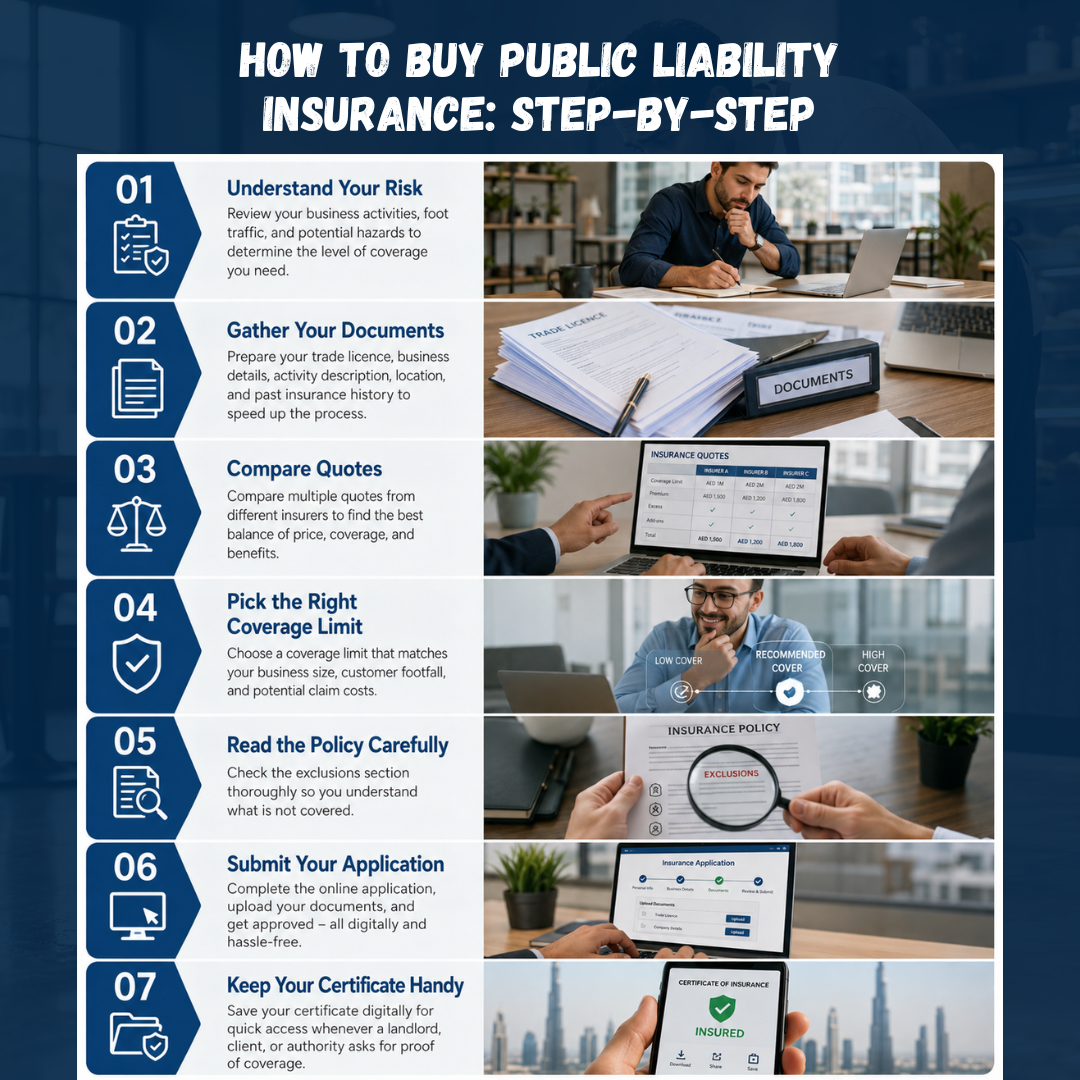
Buying a public liability policy in the UAE with an insurance company in the UAE is a straightforward process once you know what to expect. Here’s how it works, with a bit more detail at each stage:
1. Understand Your Risk
Take a review of your business: how many customers or visitors you get, what activities you carry out, and what could realistically go wrong (a slip, a damaged item, or an injury). This helps you gauge how much coverage you actually need.
2. Gather Your Documents
Insurers typically ask for your trade licence, a brief description of your business activity, basic company details like size and location, and your previous insurance history if you have one. Having these prepared essentially speeds up the process.
3. Compare Quotes
Don’t settle for the first offer. Premiums, coverage limits, and exclusions can vary significantly between insurers, so it pays to shop around and compare a few options side by side.
4. Pick the Right Coverage Limit
Base your coverage limit on your actual exposure – the size of your business, foot traffic, and potential claim costs – rather than simply choosing the cheapest plan available.
5. Read the Policy Carefully
Pay close attention to the exclusions section. This tells you exactly what circumstances and damages the policy will not cover, so there are no surprises later.
6. Submit Your Application
Most UAE insurers now offer a fully digital application process, so you can apply, upload documents, and get approved without much hassle.
7. Keep Your Certificate Handy
Landlords, clients, or tender officials may request proof of coverage with little notice. Save a digital copy somewhere easily accessible, like cloud storage or your phone.
How to File a Claim?
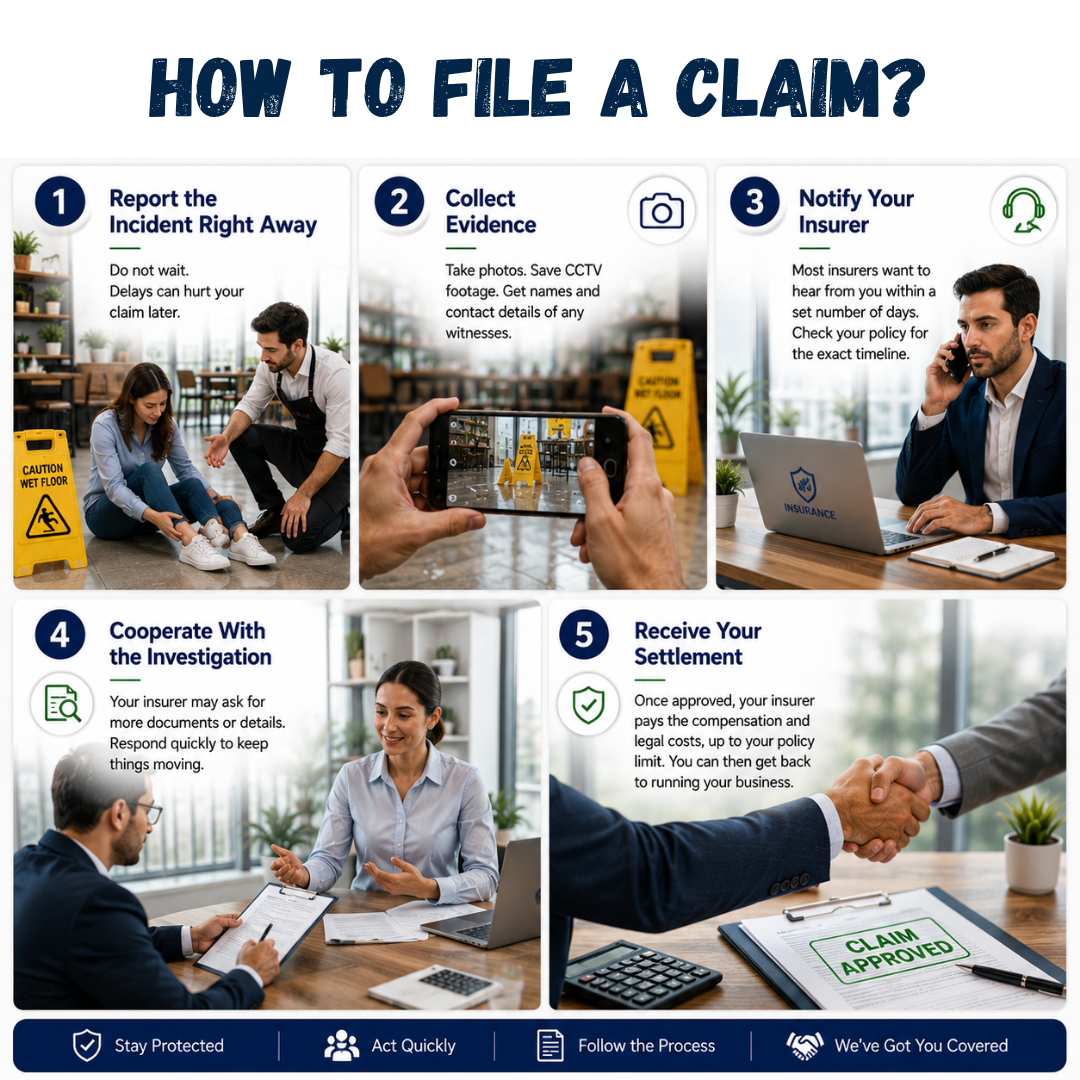
If something goes wrong at your business, acting quickly and keeping good records can make the insurance process much easier. Follow these steps:
1. Report the incident immediately
Tell your manager, landlord, security team, or the relevant authority as soon as possible. Write down the date, time, location, and a clear description of what happened. Prompt reporting helps prevent important details or evidence from being lost.
2. Collect and preserve evidence
Take photographs and videos of the scene, damage, or injury. Keep CCTV recordings, receipts, repair estimates, contracts, emails, and other relevant documents. Also record the names and contact details of anyone who witnessed the incident. These details can help the insurer assess what happened and who may be responsible.
3. Notify your insurer
Contact your insurer or broker using the details in your policy documents. Give them your policy number and explain what happened, but avoid admitting liability or agreeing to compensation before speaking with them. Insurance policies often contain specific notification deadlines, so check the wording carefully.
4. Cooperate with the investigation
The insurer may appoint a claims handler or loss adjuster to review the incident. They may inspect the premises, speak to witnesses, request documents, or assess repair and legal costs. Respond promptly and provide accurate information to avoid unnecessary delays.
5. Receive the settlement
After reviewing the evidence and checking the policy terms, the insurer will decide whether the claim is covered. If approved, it may pay compensation, repair or replacement costs, and covered legal expenses, subject to the policy excess, exclusions, and maximum policy limit. Payment may be made as a lump sum or in stages, depending on the claim.
The exact process can vary depending on the type of insurance and the terms of the policy. Keeping a written record of every phone call, email, document, and claim reference number is therefore a good idea.
For workplace injuries, the same principles apply under Workmen’s compensation insurance in the UAE, where employers must notify their insurer quickly and submit medical and incident reports to initiate the claim. Because timelines and required documents are strict, keeping clear records of every communication and submission helps ensure the settlement is processed without unnecessary delays.
Conclusion
You came to the UAE to build something for yourself. You took a risk moving here, learning a new market, and starting fresh. Don’t let one accident, one slip, or one lawsuit undo all of that hard work.
The business owners who last the longest here are usually the ones who protect themselves before something happens, not after. Take the time to compare a few quotes. Pick the right coverage for your specific business. It is a small step today that could save your entire business tomorrow.
If this guide helped answer your questions, share it with other expat business owners you know. Chances are, they have the same doubts you did.