


You’re in Zermatt, a famous car-free mountain village in southern Switzerland, halfway down a blue run, and your ski catches an edge you didn’t see. Ten minutes later you’re being carried onto a rescue sledge, and by evening you’re in a hospital with a fractured ankle and a bill that’s increasing by the hour. This is exactly the kind of moment an annual multi-trip travel insurance policy in the UAE is meant for. But knowing you’re covered and knowing what to actually do next are two different things. Let’s walk through it properly, using a real-world problem and its solution, so you’re not struggling through policy documents while you’re still in pain.
What Should You Do When You Need Medical Treatment Abroad?
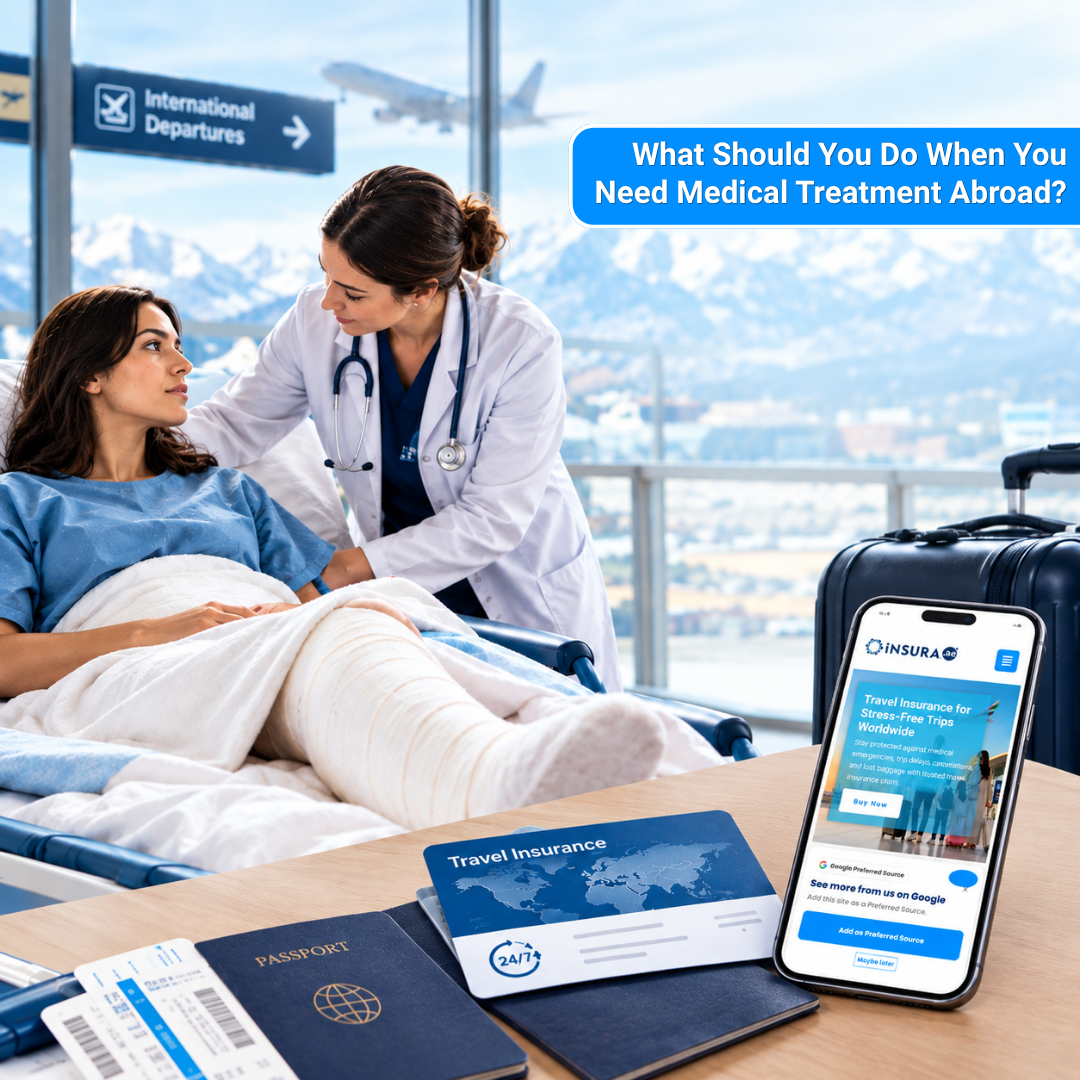
The first hour after an accident abroad is where most people go wrong, not through carelessness, but because pain and panic don’t leave much room for paperwork. Still, a few decisions made early on can save weeks of back-and-forth later. Anyone holding travel insurance in the UAE will know that the policy is only as useful as the speed with which it is activated. Your instinct, understandably, will be to focus on getting treated. But somewhere between the ambulance and the X-ray room, you need to make one call that matters almost as much as the treatment itself: the call to your best travel insurance provider in the UAE, so the claim is on record from the start.
Contact the Insurer as Early as Possible
Every UAE travel policy comes with an emergency assistance number, usually printed right on the insurance card or the confirmation email. Save it to your phone before you fly.
This call does two things. It tells the insurer a claim is likely coming, and it often unlocks direct billing arrangements with local hospitals, meaning you might not need to pay everything out of your own pocket initially. Some UAE insurers also require prior authorisation before certain procedures or hospital admissions, so skipping this step isn’t just inconvenient. It can genuinely affect how much gets reimbursed later.
Get Treatment and Keep Every Medical Record
Once the immediate emergency passes, the paperwork trail begins, whether you feel like dealing with it or not. Some clinics abroad are fairly organised about handing you a neat folder at discharge. Others won’t be. You may need to ask.
Documents Worth Collecting Include:
- The medical report or doctor’s notes explaining the diagnosis
- Details of the treatment given
- Any prescriptions issued
- Itemised hospital or clinic invoices
- Receipts proving payment was made
- Pharmacy receipts, if you bought medication separately
- Proof of admission and discharge, where relevant
Keep everything in one place, even the till receipt from the pharmacy across the street. It’ll feel excessive at the time. It isn’t.
Understand What You May Need to Pay Upfront
Here’s where a lot of confusion comes in. Some insurers arrange direct settlement, paying the hospital straight away so you don’t have to. Others work purely on reimbursement, meaning you pay first and claim the money back afterwards. Your policy might sit somewhere in between: emergency stabilisation settled directly, while follow-up sessions like physiotherapy need to be paid for and claimed later.
Don’t assume every cost gets covered automatically just because you have an annual multi-trip travel policy. Reimbursement depends entirely on what your specific policy says, so it’s worth checking this before you travel, not after you’re already in a foreign hospital bed.
Step-by-step Guide to Filing an Overseas Medical Claim
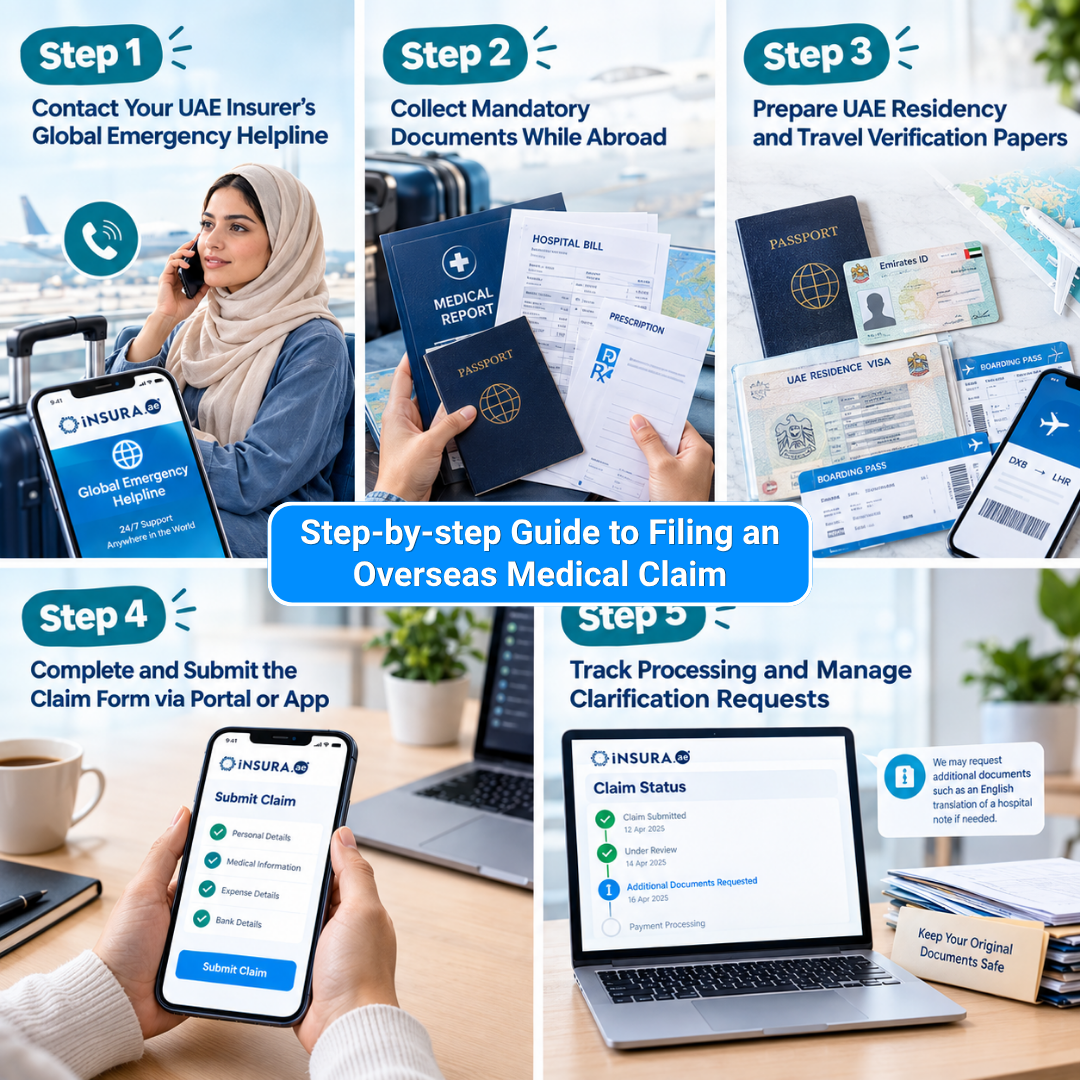
Once you’re discharged and back in the UAE, the actual claim process under your travel insurance policy in the UAE begins. It’s more manageable than it sounds if you take it one stage at a time, and honestly, most of the difficulty comes from missing a small step early on rather than the process itself being complicated.
Step 1: Contact Your UAE Insurer’s Global Emergency Helpline
- If you haven’t already called during the emergency itself, this is non-negotiable before pursuing anything beyond urgent care.
- The helpline can issue a pre-authorisation number and point you towards panel hospitals nearby, which often speeds up both treatment and the eventual claim.
Step 2: Collect Mandatory Documents While Abroad
- You’ll typically need the official medical report, an itemised bill breaking down every charge, proof of payment, and original prescriptions.
- Photocopies rarely cause problems, but insurers usually want to see the originals too, so don’t throw anything away before the claim is fully settled.
Step 3: Prepare UAE Residency and Travel Verification Papers
Your insurer needs proof that you were, in fact, on a valid trip covered by your annual multi-trip policy. This usually means:
- A copy of your Emirates ID
- Your passport, including the relevant entry and exit stamps
- Your UAE residence visa page
- Flight booking confirmations or boarding passes
Step 4: Complete and Submit the Claim Form via Portal or App
Most UAE insurers, or the broker platforms that sell their policies, offer online claim submission. Fill in the diagnosis details accurately, break down the expenses clearly, and double-check your IBAN details for the reimbursement transfer.
Step 5: Track Processing and Manage Clarification Requests
Once submitted, most portals let you track the claim’s status. Don’t be surprised if the insurer comes back asking for an English translation of a hospital note written in another language, which is fairly typical if your treatment happened somewhere the local language isn’t English or Arabic. Keep your original documents safe until the claim is fully closed, just in case something else gets requested.
Top Reasons UAE Travel Medical Claims Get Rejected

The claim process is easy, but sometimes it will not go smoothly because of some minor issues. It helps to know why before it happens to you rather than after.
Policy Limits, Exclusions and Deductibles
Every policy sets a maximum payout for medical expenses, and many apply a deductible or excess before anything gets reimbursed at all. Reading this figure before you travel, not during a hospital stay, saves a lot of unpleasant surprises.
Failure to Notify the Assistance Team in Advance
Getting treated without informing the emergency hotline, even for something that felt urgent at the time, can lead to a partial or full rejection. Insurers generally want the chance to guide the process, not just review it afterwards.
Missing Trip Length Limits on Annual Policies
Annual multi-trip policies almost always cap how long a single trip can last, commonly somewhere between 30 and 90 consecutive days. Go over that limit, even by a day, and the entire trip may fall outside your cover. Frequent travellers sometimes forget this cap exists precisely because their trips are usually short.
Pre-existing Conditions and Medical Declarations
This one’s often misunderstood. Not every pre-existing condition is automatically excluded, but how your policy treats one depends entirely on its specific wording and any declarations you made at purchase. If in doubt, ask your insurer directly rather than guessing.
Missing Documents or Late Notification
Incomplete evidence slows everything down and, in some cases, leads to rejection outright. Sticking to the notification timeline in your policy and keeping hold of original paperwork genuinely makes a difference here.
Knowing these pitfalls is only half the picture, because the policy you buy in the first place decides how many of them you will ever face. Expats in particular should look closely at coverage limits, exclusions, and trip-length caps before committing, and a guide on choosing the best UAE insurance policy walks through what to compare so you are covered for the right things from day one.
What if the Claim is Rejected or You Disagree With the Decision?
If it happens, don’t just accept it quietly. Ask the insurer exactly why the claim was declined, then go back and check the relevant clause in your Family Travel Insurance policy yourself. If you believe something was overlooked, submit additional evidence and follow the insurer’s formal complaints process. Most UAE insurers offering family travel insurance have a structured route for this, and it’s there to be used.
Key Points to Remember
- An annual multi-trip travel insurance policy in the UAE covers overseas medical expenses, but only within the terms, limits and exclusions written into your specific policy.
- Call the emergency assistance number as soon as possible, ideally before or during treatment, not after.
- Keep every medical document, invoice and receipt, even the small ones.
- Some costs may need to be paid upfront and claimed back later, so don’t assume automatic direct billing.
- Trip length caps, missed notifications, and incomplete paperwork are the most common reasons claims get delayed or refused.
- A rejected claim isn’t necessarily the final word. Ask why, check your policy, and appeal if the facts support it.
Conclusion
Claiming overseas medical expenses doesn’t have to be stressful, as long as you know what to do and when to do it. Call the helpline early, keep hold of every document, and understand that reimbursement always comes down to what your specific policy allows. Most delays and rejections happen simply because a step got missed, not because the cover wasn’t there in the first place.
If you travel often, it’s worth setting aside ten minutes before your next trip to actually read through your policy’s medical limits, exclusions and excesses. It’s far easier to check this now than to work it out from a hospital bed.
At Insura, we help UAE travellers find annual travel insurance that’s easy to understand and even easier to claim on. If you’re due for renewal, or you’re not entirely sure what your current policy covers, get in touch with us before your next trip.