


Many people in the UAE purchase health insurance expecting immediate coverage, only to realise that certain benefits are not available right away. Health insurance waiting periods play a crucial role in determining when your policy actually becomes usable, yet they are often overlooked at the time of purchase.
This gap between expectation and reality can lead to confusion, delayed treatments, and unexpected financial pressure. It may also leave you uncertain about what your policy truly covers and when you can depend on it.
Understanding how health insurance waiting periods work can help you avoid these challenges. In this guide, you will learn what waiting periods are, why health insurance company in the UAE apply them, the different types you should be aware of, and how to manage them effectively so you can make informed and confident decisions.
What Do Health Insurance Waiting Periods Mean?

Waiting periods are specific time frames during which your insurance coverage is limited or inactive for certain claims. Insurers include them in policies to control risk and ensure fair usage of benefits.
A waiting period begins from the date your policy starts. During this time, you cannot claim certain benefits, even though you are paying premiums. For example, if your policy includes a three-month waiting period for general treatments, you will need to wait before making claims unless it is an emergency like an accident.
These periods vary depending on the insurer, the type of policy, and the benefit involved. While it may feel restrictive, waiting periods are a standard practice in the insurance industry and play a key role in keeping premiums balanced for everyone.
Now that you understand the basics, let’s explore why insurers apply these conditions.
Purpose of Health Insurance Waiting Periods
Waiting periods are not designed to disadvantage you. Instead, they help maintain fairness, prevent misuse, and keep insurance sustainable for both providers and policyholders.

1. Health Insurance in UAE
People across the UAE rely on health insurance in Dubai UAE to manage rising medical costs. From routine check-ups to unexpected hospitalisation, insurance offers financial protection and peace of mind.
However, without proper controls, insurers would face frequent high-value claims immediately after policy activation. This could lead to higher premiums for everyone, making insurance less accessible.
2. Prevent False Claim
Insurance companies introduce waiting periods to prevent false claims and misuse. Without them, individuals could purchase a policy only when they need immediate treatment, claim benefits, and then discontinue coverage.
Waiting periods encourage long-term commitment and responsible usage. They ensure that insurance serves its purpose as a safety net rather than a short-term financial tool.
3. Risk Management
Insurance is built to cover uncertain future risks, not known or pre-planned events. Waiting periods allow insurers to assess your risk profile more accurately while protecting the system from immediate claims linked to existing conditions or planned treatments like maternity. This approach keeps the balance intact and ensures coverage remains fair and viable for everyone.
With the reasons clear, let’s look at the different types of waiting periods you may encounter.
Types of Waiting Periods in Health Insurance

Different benefits come with different health insurance waiting periods. Knowing these categories helps you plan your healthcare needs more effectively.
1. Initial Coverage Delay
- The most comprehensive health insurance in Dubai UAE, includes an initial waiting period of one to three months. During this time, you cannot claim for general hospitalisation unless it is due to an accident.
- This short delay acts as a buffer for insurers and ensures that policies are not purchased solely for immediate claims.
2. Maternity Coverage Delay
- Maternity benefits often come with longer waiting periods, usually between six and twelve months. This means you must hold the policy for a certain time before claiming pregnancy-related expenses.
- This condition ensures that maternity coverage is planned in advance rather than used on short notice.
3. Pre-existing Condition Waiting Time
- If you already have a medical condition before purchasing insurance, it will fall under a pre-existing condition clause. The waiting period for such conditions can range from one to four years.
- While this may seem long, it allows insurers to manage risk while still offering coverage in the long term.
4. Disease-specific Waiting Time
- Certain illnesses such as hernia, tumours, or specific surgeries may have separate waiting periods of one to two years. These are known as disease-specific waiting periods.
- Insurers define these conditions clearly in the policy, so it is essential to review the list carefully.
5. Annual Health Check-up Waiting Time
- Many policies offer free annual health check-ups, but not immediately. Typically, you need to wait until the second year of your policy to access this benefit.
- This feature encourages continuous policy renewal and promotes preventive healthcare.
Understanding these types helps you avoid surprises. Next, let’s see how you can manage them effectively.
Effective Strategies to Tackle Health Insurance Waiting Periods

Waiting periods may seem restrictive, but with the right approach, you can handle them smoothly and make the most of your insurance plan.
1. Check your Policy
Before purchasing any insurance, read the policy document thoroughly. Pay close attention to health insurance waiting periods for different benefits.
This step ensures you know exactly when your coverage becomes active and prevents confusion later.
2. Compare Options
Do not settle for the first plan you see. Use Insura.ae and compare multiple insurance options to find one that aligns with your needs and long-term healthcare goals.
Look for policies that offer shorter waiting periods or benefits that justify the wait. Platforms like Insura make this process easier by helping you explore and compare plans from different insurers in one place, so you can choose with clarity. Speaking with an advisor can further guide you towards a well-informed and confident decision.
3. Plan for Health Needs
If you expect specific treatments, plan ahead. Choose a policy early so that waiting periods are completed before you need to use the benefits.
You can also keep a financial buffer for expenses that may not be covered immediately. And when you have a business in the UAE, don’t forget that group health insurance in Dubai UAE, is not just a safety net for your workforce but also an important legal requirement.
4. Keep Track of Changes
Insurance policies can evolve over time. Providers may update terms, benefits, or waiting periods.
Stay informed by reviewing your policy regularly and keeping up with any communication from your insurer.
5. Talk to an Advisor
If you feel unsure, speak to a qualified insurance advisor. They can explain policy details in simple terms and guide you based on your health and financial situation.
This personalised advice can help you avoid costly mistakes and choose a plan that truly supports you.
With the right strategy, waiting periods become manageable rather than stressful.
How Insura Makes Waiting Periods Easier to Manage
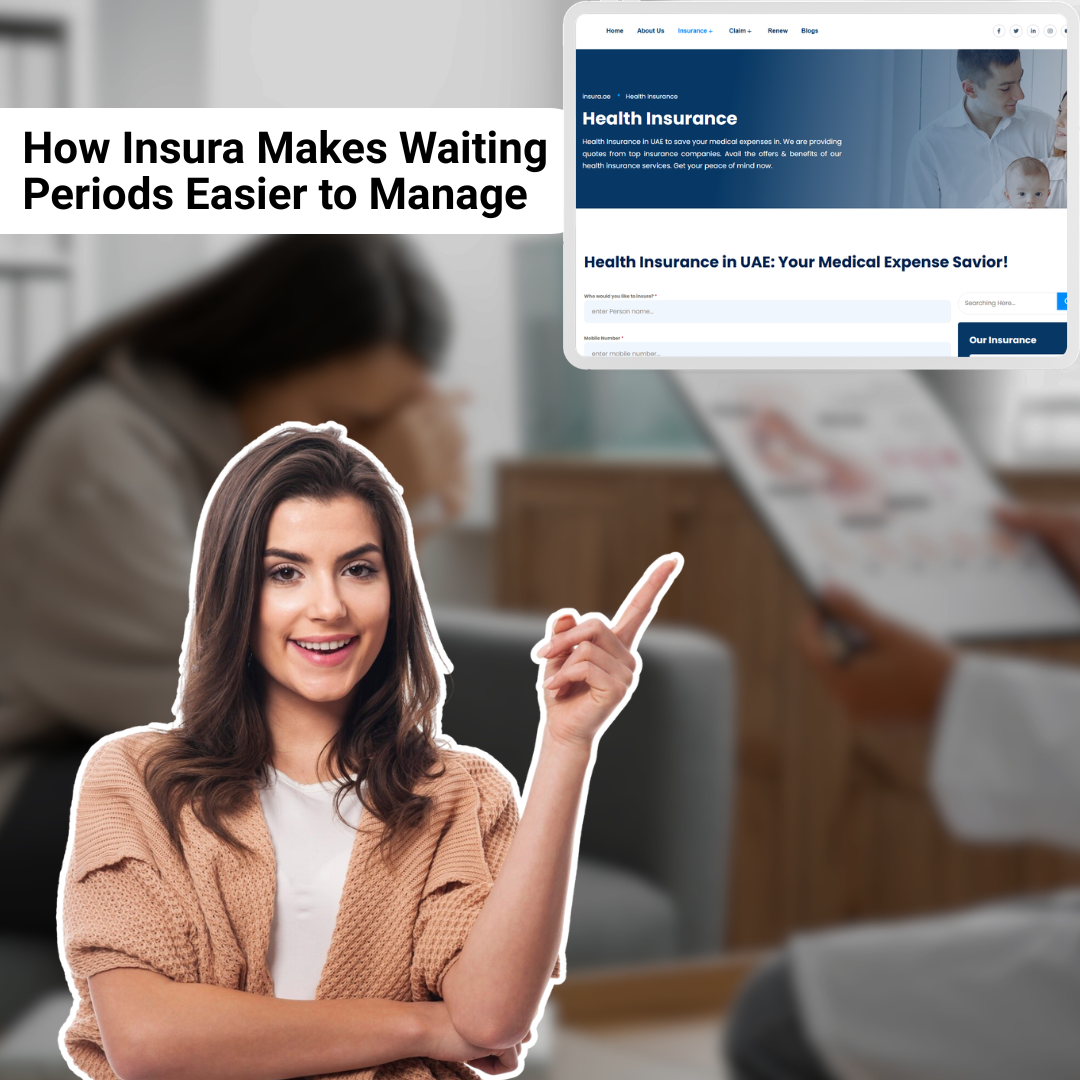
When waiting periods feel confusing, Insura steps in with clarity and practical support. Instead of leaving you to decode policies alone, Insura simplifies every step so you can plan with confidence.
- Smarter Comparison: Insura brings multiple insurers together, helping you choose plans with shorter or more flexible waiting periods.
- Explains what others overlook: Advisors break down complex clauses into clear, everyday language so you know exactly what to expect.
- Guides you with real intent: You get personalised recommendations based on your health needs, not generic suggestions.
- Supports you beyond purchase: From policy selection to claim guidance, Insura stays with you at every stage.
- Helps you plan ahead: With expert insights, you can align your policy with future medical needs and avoid last-minute stress.
With Insura, you do not just buy insurance. You understand it, plan it, and use it the right way.
Conclusion
Health insurance waiting periods are a fundamental part of health insurance, yet many people overlook their importance. They define when your coverage truly begins and influence how useful your policy will be when you need it most.
By understanding what waiting periods are, why insurers apply them, and the different types involved, you can make informed decisions that protect both your health and your finances. More importantly, you can avoid the frustration of unexpected claim rejections.
Take time to review policies carefully, compare your options, and plan ahead. When you approach insurance with clarity, it becomes a powerful tool rather than a confusing obligation. A well-chosen plan does not just offer coverage. It offers confidence, security, and peace of mind when it matters most.