
Mistakes that can invalidate your insurance policy are often small. A missed detail on a form, a forgotten renewal or an unreported change can be enough to cause trouble later.
You pay your premiums on time. Your documents look fine. But when you make a claim, the insurer may still start asking questions.
This happens to many people in the UAE. A resident changes jobs and assumes health cover moves with them. A driver lets a friend use the car. Someone forgets to mention an old diagnosis. None of it feels serious at the time.
But most of these problems are easy to avoid. Also, not every mistake cancels a whole policy. Some lead to a rejected claim, a smaller payout or a lost benefit. It depends on your policy wording and UAE law.
Below are ten common mistakes, why they matter in the UAE, and how to avoid each one. Giving wrong information, ignoring exclusions, letting cover lapse or breaking claim rules can all weaken or void cover. Honest mistakes are treated differently from deliberate ones, so always check your policy wording.
Mistake 1. Giving Incorrect or Incomplete Information When Buying Insurance
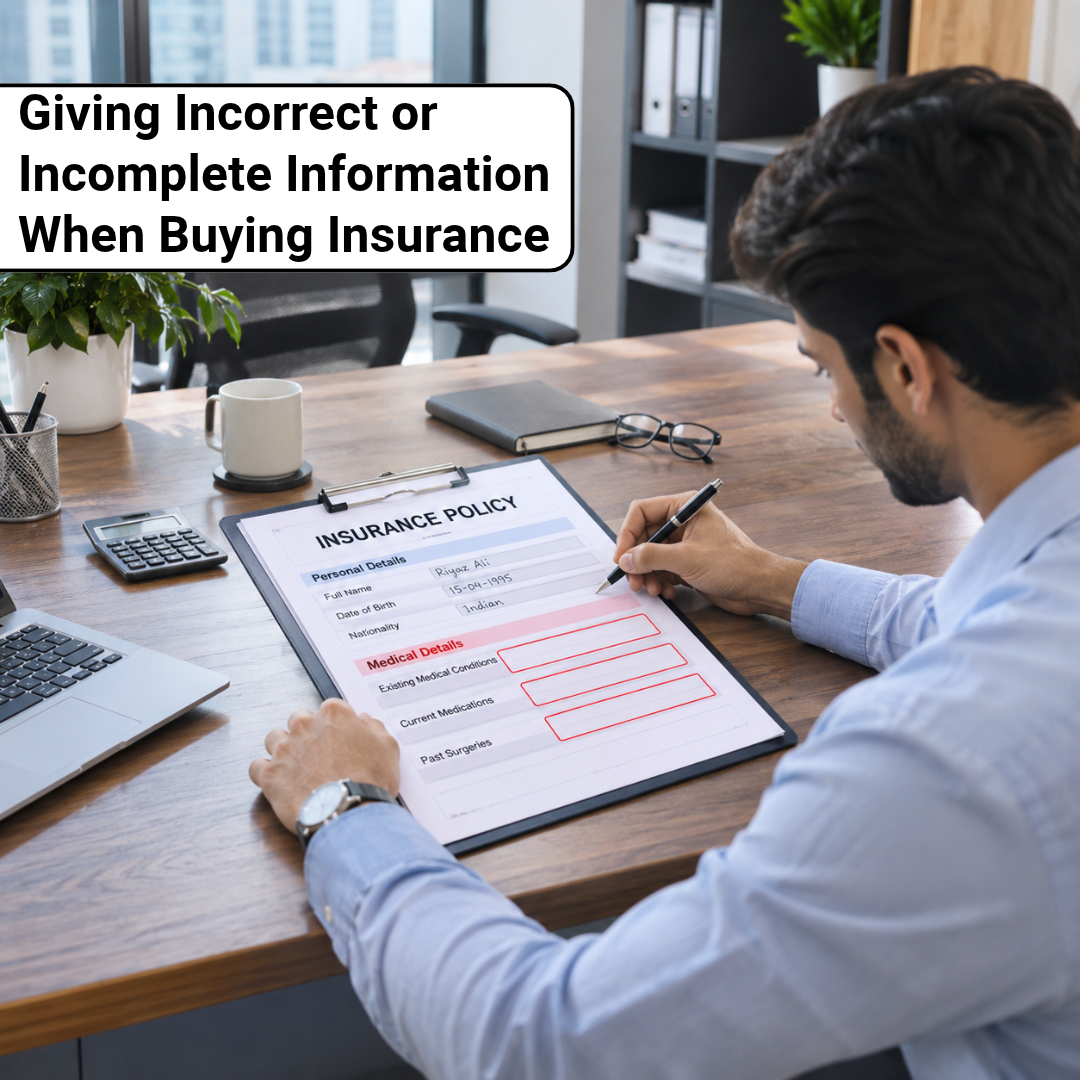
Insurers price your policy using the details you give them. If those details are wrong or incomplete, the price may not match the real risk. That is why a mistake on a form can come back to haunt you later, often at claim time.
Leaving Out Important Medical History
You move to Dubai and forget to mention a past diagnosis when applying for a health insurance policy in the UAE. Two years later, you claim cover for a related treatment. The insurer checks your medical records and discovers the missing information.
Depending on the policy terms, the claim could be refused or reduced. In serious cases, the insurer may question the policy itself. When a form asks about your health, answer fully, even if it feels uncomfortable.
Giving Incorrect Details About Your Vehicle or Property
The same goes for car insurance in the UAE and home insurance. Say the car is for personal use when it’s actually used for work. List the wrong driver or understate what your home contents are worth. Each detail can change how the insurer assesses the risk.
If you’re unsure how to answer a question, ask before you sign.
Mistake 2. Ignoring Policy Exclusions and Coverage Limits
Buying insurance, especially a business insurance policy in the UAE, doesn’t mean everything is covered. Many disputes start when people assume their policy is wider than it is.
- Health plans may have waiting periods, annual limits and excluded treatments.
- Car policies differ between third-party and comprehensive cover.
- Home and travel plans come with excesses and claim caps.
Here’s a common case: An expat books an appointment at a clinic outside their insurer’s network. At the desk, they learn the plan will only reimburse part of the bill. Nothing was “invalid”. The cover simply never stretched that far.
An excluded expense doesn’t usually cancel your whole policy. But it can leave you paying out of pocket.
Before you rely on any benefit, read the exclusions page. It’s the most useful page in the whole document.
Mistake 3. Letting Your Insurance Policy Expire
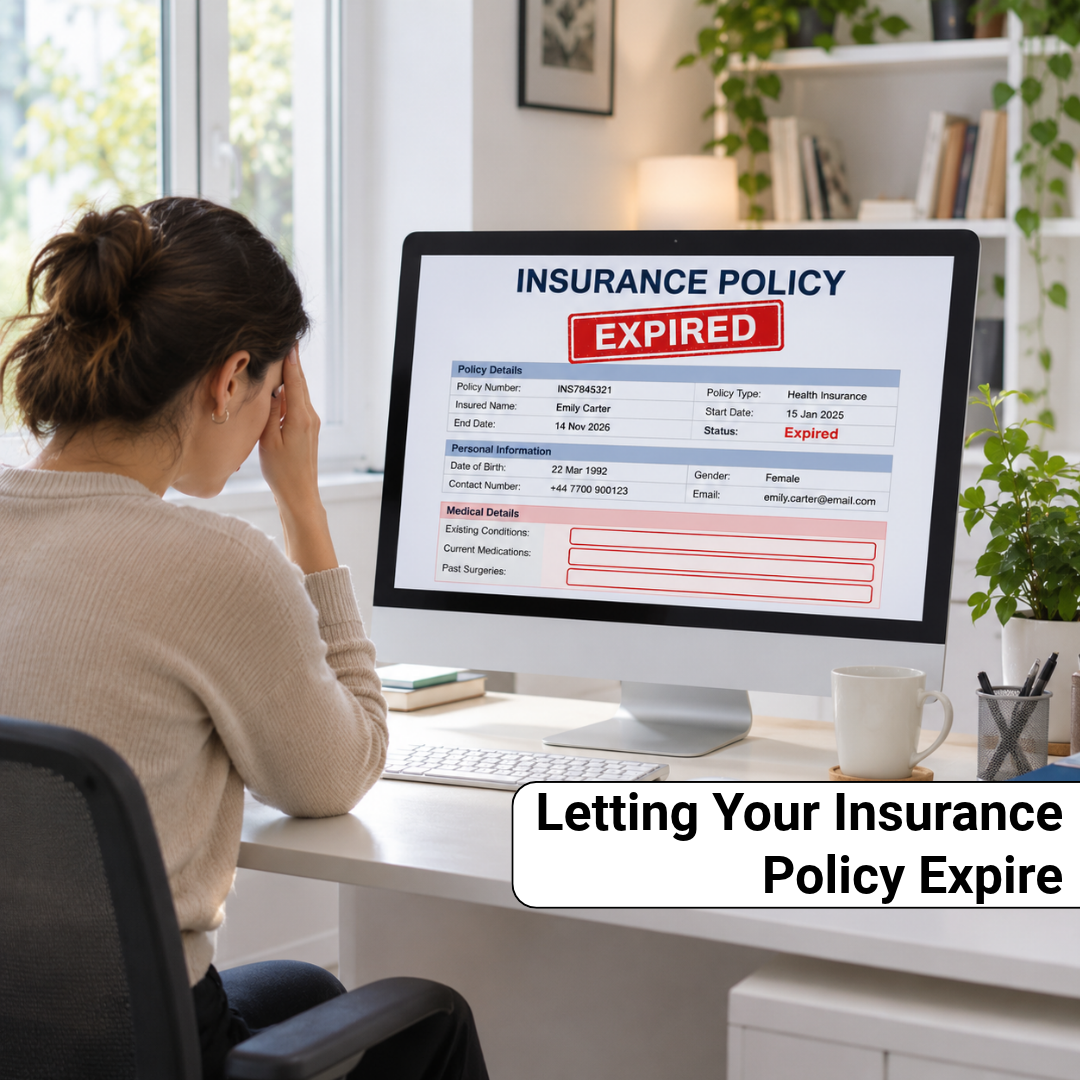
Renewal dates are easy to miss. Life in the UAE moves quickly, and policies often expire in the background.
Forgetting Health Insurance Renewal During a Job Change
New job, new employer, new plan. Sounds simple. But your old cover may end on your last day, while the new cover starts weeks later.
Don’t assume anything transfers automatically. Ask both employers for the exact start and end dates, and check for any gap.
Missing Your Car or Travel Insurance Renewal
An expired car policy is a real problem if an accident happens the next morning. The same applies to a travel policy that ended before your flight home.
Set a reminder 30 days ahead. When you renew, check the new start date as well.
Note: arrangements can differ between Emirates and policy types. A visa or job change doesn’t automatically cancel every policy, so confirm with your insurer.
Mistake 4. Failing to Report Important Changes to Your Insurer
Your policy reflects your life on the day you bought it. If your life changes, the policy may need to change too.
Think about these examples:
- You move house, or start using part of your home for business.
- You change how you use your car.
- Your business adds new activities or premises.
- Another change your policy tells you to report.
An expat who begins doing delivery work in a privately insured car. The policy was never set up for that. After an accident, the insurer may argue the use wasn’t covered.
The fix is simple. Check the notification section of your policy. If something has changed, tell your insurer and ask for written confirmation.
Mistake 5. Choosing the Wrong Insurance Policy for Your Needs
The cheapest policy can look like a bargain. Then you find the gaps. Before choosing an insurance company in the UAE, compare the cover, not just the premium.
Assuming Basic Health Insurance Covers Every Medical Expense
Basic plans often have network limits, co-payments, annual caps and waiting periods. Health insurance is mandatory in Dubai and Abu Dhabi, but a legally compliant plan isn’t always a plan that suits your family. Check what you actually need, such as maternity care, dental or chronic condition support.
Confusing Third-Party and Comprehensive Car Insurance
Third-party cover pays for damage you cause to others. It doesn’t pay to fix your own car. Comprehensive cover is broader, though it still has exclusions. Check the policy wording to see exactly what’s included.
Overlooking Travel and Home Insurance Requirements
Travel plans have destination limits, cancellation rules and caps on belongings. Home plans may separate building cover from contents cover. Read both carefully before you buy.
Mistake 6. Submitting False Documents or Making Misleading Claims

This is the most serious mistake on the list. Altered receipts, inflated repair bills and invented details can damage a claim badly. They can also bring legal consequences.
Say a motorist submits an invoice that doesn’t match the repairs actually done. Even if the amount is small, the insurer may treat it as a misleading claim.
Some simple habits keep you safe:
- Submit genuine invoices and medical papers only.
- Describe accidents and losses accurately.
- Don’t claim twice for the same loss.
- Check any paperwork passed on by an employer, garage or intermediary.
It helps to separate fraud from honest error. A wrong date typed in a hurry isn’t the same as a deliberate exaggeration. If you spot an error, tell your insurer early and correct it.
Mistake 7. Delaying Accident Reports or Insurance Claims
Time matters after any incident. Memories fade, evidence disappears, and rules may set deadlines.
Missing Reporting Requirements After a Car Accident
After a road accident, contact the police where required and get the report. Many insurers also expect quick notice, often within about 24 hours. Your own policy sets the real deadline, so check it now, not after a crash.
Waiting Too Long to Submit Medical or Travel Claims
Late paperwork makes claims harder to verify. Receipts get lost. Hospitals take time to send reports. Submit documents as soon as you can.
Keep these on hand:
- Police or incident reports
- Receipts and invoices
- Photos
- Emails and reference numbers
A late report doesn’t always mean automatic rejection. If an emergency delayed you, tell your insurer straight away and explain why.
Mistake 8. Using Your Insurance Outside Its Permitted Scope
Coverage under a travel insurance policy in the UAE often depends on where, how and by whom something is used.
Common examples include:
- Travelling to a country your travel policy doesn’t list.
- Driving without meeting the policy’s licence or driver conditions.
- Running a business from a home covered only for residential use.
- Using a hospital outside your network without approval.
This matters for expats who travel often. If you fly home several times a year, check trip length limits and territory rules before each journey. Some plans cover only trips up to a set number of days.
If you’re not sure whether something is covered, ask first. A two-minute call can save a much bigger problem.
Mistake 9. Missing Required Approvals or Failing to Follow Claim Procedures

Some claims need a step before you spend the money. Skip it, and the insurer may refuse to pay.
Skipping Pre-Authorisation for Medical Treatment
Planned surgery, specialist treatment and hospital stays often need pre-approval. Emergencies usually follow different rules, but you should still tell the insurer promptly. If in doubt, call before you book.
Repairing Your Car Before Checking the Claim Process
It’s tempting to get the car fixed straight away. But your insurer may want an inspection first, or may require an approved garage. Start repairs too early, and you could face a dispute over cost.
Keep written approvals and reference numbers. If an urgent situation stops you getting approval first, ask your insurer what to do next.
Want to understand what else your policy could offer beyond basic protection? Explore these hidden benefits of insurance in the UAE and discover how the right cover could help you save money and get more value from your policy.
Mistake 10. Failing to Check Who Is Actually Covered Under the Policy
A policy covers specific people, drivers or items. Not “everyone you’d expect”.
Watch out for these:
- Assuming your spouse or child is included in your employer’s health plan.
- Forgetting to add a newborn or new family member.
- Letting a friend drive your car without checking the permitted-driver terms.
- Overlooking whether a domestic worker needs separate cover.
Take a few minutes to read your policy schedule. It lists who and what is covered. When something changes, get written confirmation that the addition was made.
How Can You Protect Your Insurance Policy in the UAE?
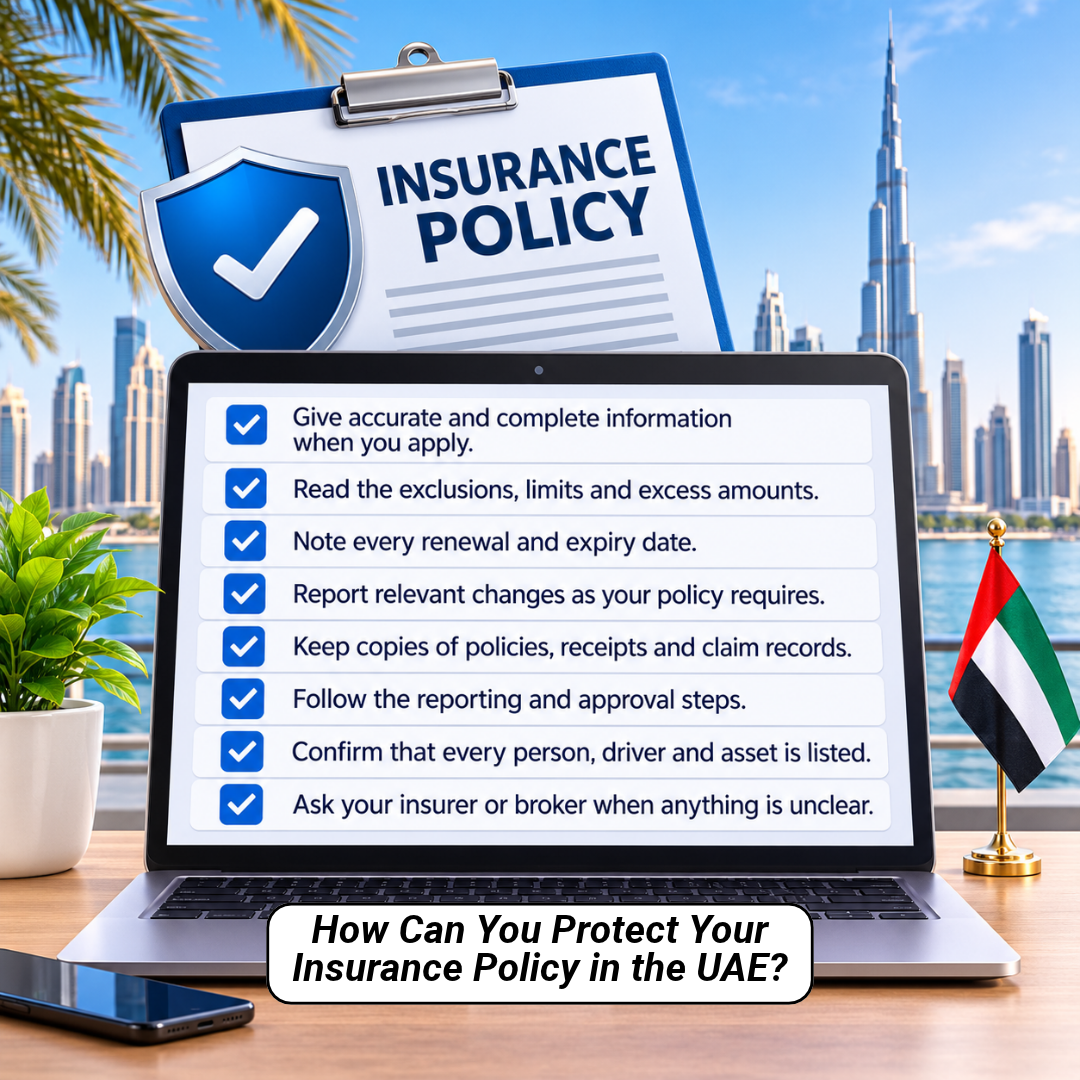
Here’s a checklist you can save on your phone:
- Give accurate and complete information when you apply.
- Read the exclusions, limits and excess amounts.
- Note every renewal and expiry date.
- Report relevant changes as your policy requires.
- Keep copies of policies, receipts and claim records.
- Follow the reporting and approval steps.
- Confirm that every person, driver and asset is listed.
- Ask your insurer or broker when anything is unclear.
If a dispute does arise, start by asking your insurer for the rejection reason in writing. If you still disagree, you can escalate. Insurance in the UAE is supervised by the Central Bank of the UAE, and health-related matters may also involve local health authorities, such as the Dubai Health Authority or the Department of Health – Abu Dhabi. The right route depends on your emirate, the type of insurance and your provider.
A Small Insurance Check Today Can Prevent a Bigger Problem Tomorrow
Insurance protects you only when the paperwork, the facts and the procedures all line up. Paying premiums is just the first step.
Most of the mistakes above are easy to avoid. They come from busy lives, not bad intentions. You’re moving cities, changing jobs, growing a family and juggling renewals. It’s normal for something to slip.
So pick one policy this week. Open it. Check the dates, the names, the exclusions and the claim steps. If something doesn’t make sense, ask.
Choosing the best insurance provider in the UAE also means looking beyond the premium. Compare the coverage, exclusions, claim support and service before making a decision. If you’d like help comparing your options, Insura.ae can help you review cover and compare plans clearly so you can choose protection that fits your life in the UAE.
This article is general guidance, not personalised insurance advice. Always check your own policy wording.