
You paid your premiums on time. You sent the forms, the invoices and the reports. Then the rejection arrived, usually just as the hospital bill, the garage estimate or the water-damage quote landed on your table too. Now you are wondering whether to complain against an insurance company in UAE after a rejected claim. You’re far from the only one.
Here’s the part many people miss. A rejection is the insurer’s decision. It isn’t always the final word. Sometimes the insurer is right, because the policy really does exclude the loss. Sometimes a missing document or a misread clause is the whole problem. You only find out which one it is by asking the right questions.
This guide shows you how. You’ll see why claims get rejected, what to do first, how to complain to your insurer, and how to take an unresolved dispute to Sanadak, the Central Bank’s independent complaints unit. No one can promise a particular outcome. But a calm, well-documented complaint gives you the best chance of a fair second look.
Why Do Insurance Companies Reject Claims in the UAE?
Before you complain, you need to know what you’re complaining about. Each type of rejection points to a different next step, so it’s worth getting this part right.
This is common with health insurance, where a claim may be refused as ‘not medically necessary’ or because a pre-authorisation was missing. Some of these problems can be fixed. Others can’t. Your policy wording decides which is which.
Common Reasons a Claim Gets Rejected
- The treatment, damage or loss is listed as an exclusion in your policy.
- The policy had expired, or the cover you needed wasn’t active on the date of loss.
- Invoices, medical reports or other documents are missing.
- The insurer found a problem with the information given when you applied or claimed.
- The claim goes over a policy limit, or falls below the excess you agreed to pay.
- The insurer disagrees about how the incident happened.
Notice that only some of these are final. A missing invoice is a gap you can fill. A clear exclusion is much harder to challenge. Knowing the difference saves you time and stress.
Is Your Rejected Claim Really Covered?
Don’t assume the insurer is right just because the letter sounds official. Don’t assume it’s wrong, either. Open your policy and look at four things: the schedule, the exclusions, the limits and any waiting periods. Then find the clause the insurer quotes and read it slowly.
Now ask one question. Does that clause actually describe what happened to me? Often the answer is yes, and that’s useful to know. Sometimes the wording is vaguer than the rejection suggests. That’s where a complaint has something to work with.
What Should You Do First When Your Claim is Rejected?
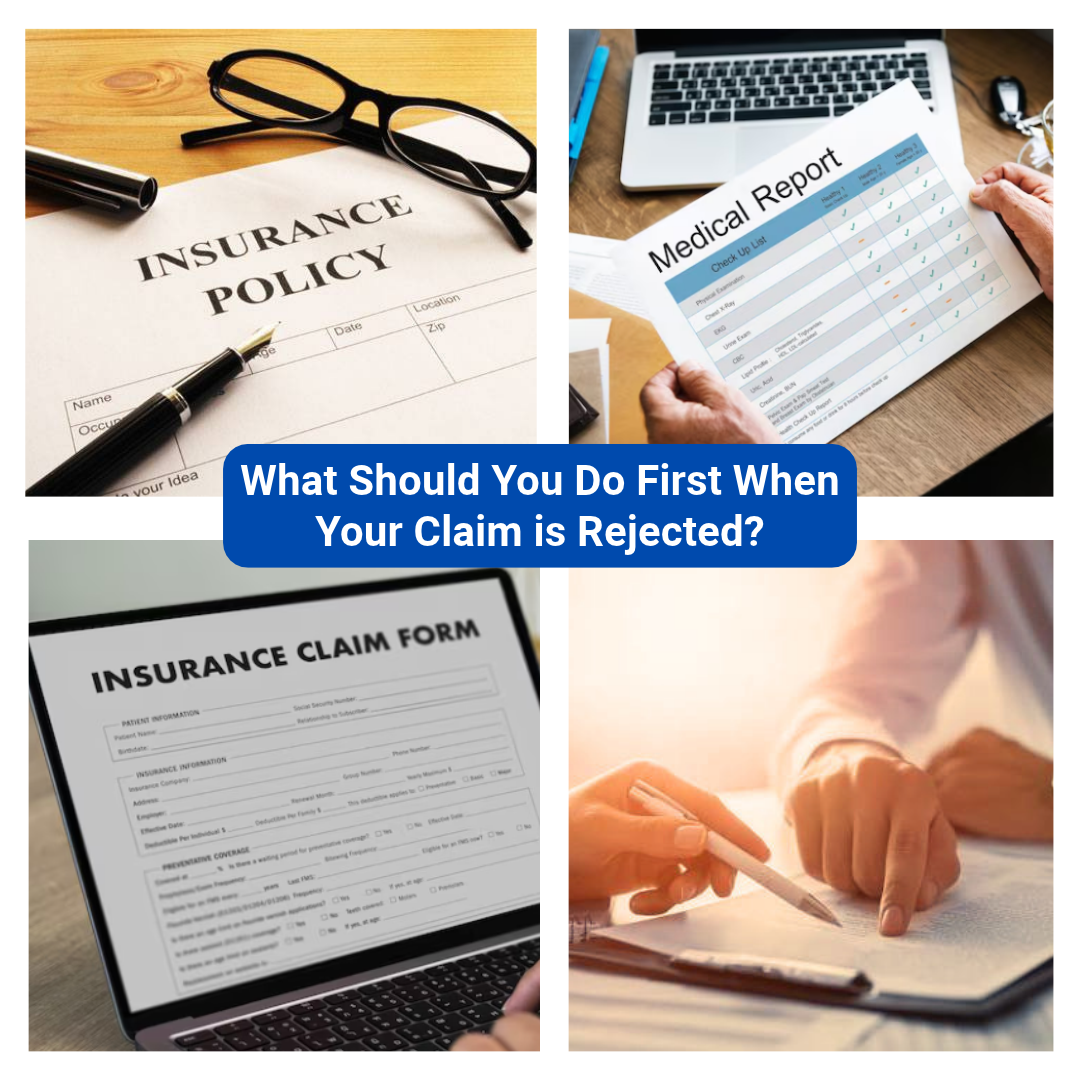
The first few days matter, because the papers you collect now can make or break your complaint later. Work through these steps in order.
- Ask for the reason in writing. Keep the claim reference number and the insurer’s full explanation.
- Read your policy. Find the exact clause the insurer relied on and compare it with your situation.
- Gather your evidence. That means medical reports, repair estimates, invoices, photos and police reports, where they apply.
- Check what’s missing. If the insurer needs more paperwork, ask exactly what it needs and by when.
- Log every contact. Save emails, note dates and names, and keep any acknowledgement numbers.
Keeping your documents organised does more than help you stay on top of things. It helps someone who has never met you understand your case in just five minutes.
Step-by-step Guide to Complain Against an Insurance Company
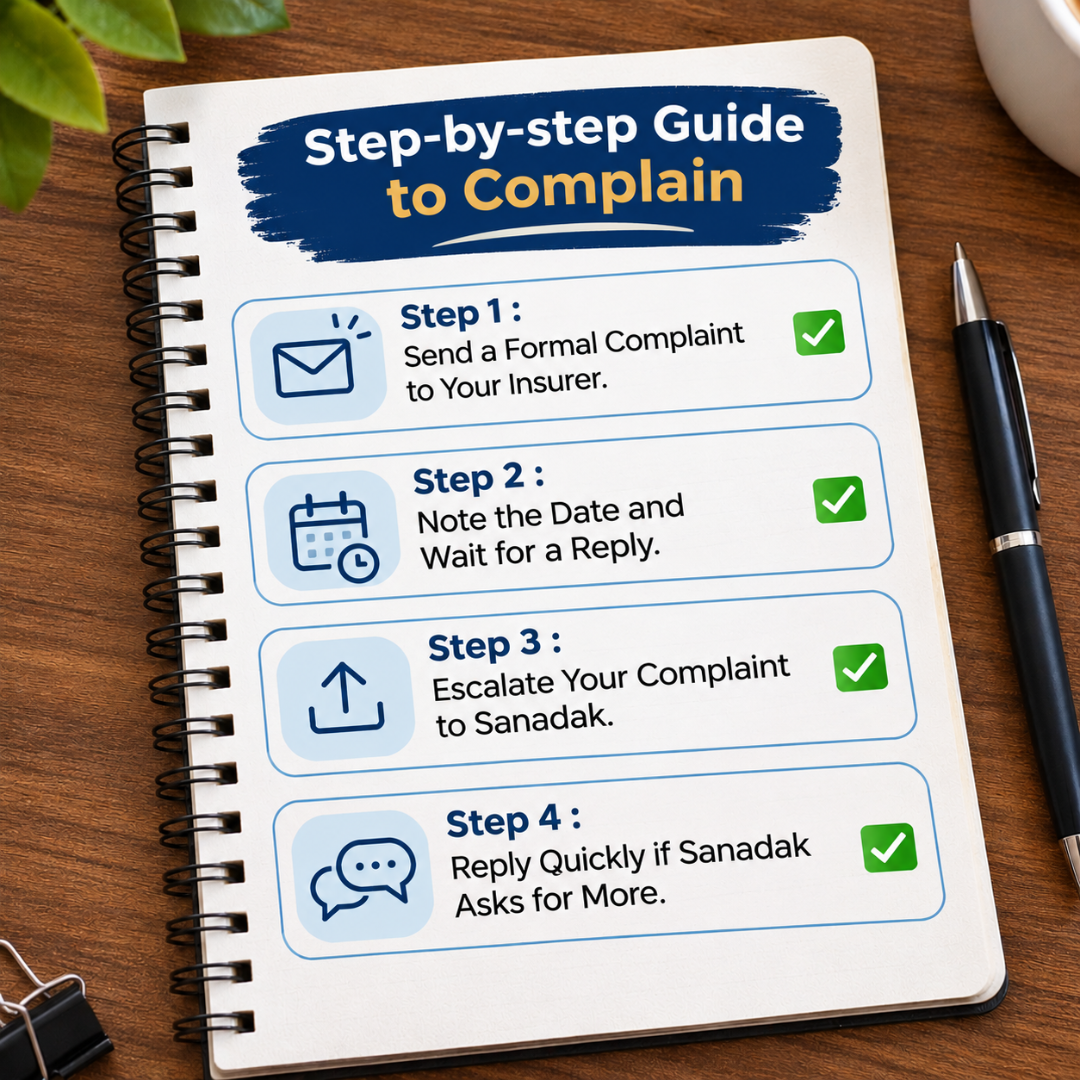
You complain to the insurer first, in writing. If it doesn’t reply within 15 working days, or you’re unhappy with the reply, you can take the matter to Sanadak. Here’s how each stage works:
Step 1: Send a Formal Complaint to Your Insurer
Use the insurer’s official complaint channel. That’s usually an email address, a web form or a section of its app. Say clearly that you’re making a complaint, not just chasing the claim. Include:
- Your policy and claim reference numbers
- The date and details of the incident or treatment
- The reason the insurer gave for rejecting the claim
- The policy wording you believe supports you
- Your evidence, attached
- What you want, such as a fresh review or payment of the amount you believe is due
- Ask for written acknowledgement and save it.
Step 2: Note the Date and Wait for a Reply
Write down the day you sent the complaint. That date matters. Under Sanadak’s published criteria, you generally need to have waited 15 working days since complaining to the insurer. In that time, you either got no written reply, or you got one, and you’re not satisfied with it.
Rules can change, so check the current criteria on Sanadak’s website before you move on.
Step 3: Escalate Your Complaint to Sanadak
Sanadak is an independent complaints body established under the Central Bank of the UAE. It handles eligible complaints about insurance companies licensed by the Central Bank, including those involving health, motor and property insurance. Filing an initial complaint is free for consumers and small businesses.
- Go to the Sanadak website and choose to submit a complaint.
- Select the option for insurance company complaints.
- Answer the eligibility questions honestly.
- Describe the dispute clearly and upload the documents requested.
- Save your complaint reference and check for updates.
Sanadak can’t take every case. It won’t accept a complaint that’s already in court, one that repeats an earlier complaint, one already settled with the insurer, or one outside the Central Bank’s remit.
Step 4: Reply Quickly if Sanadak Asks for More
Sanadak may ask for extra documents or details, and it will look at the insurer’s side too. Answer quickly. Answer exactly what’s asked. Keep copies of everything you send.
What Documents Do You Need to Dispute a Rejected Claim?
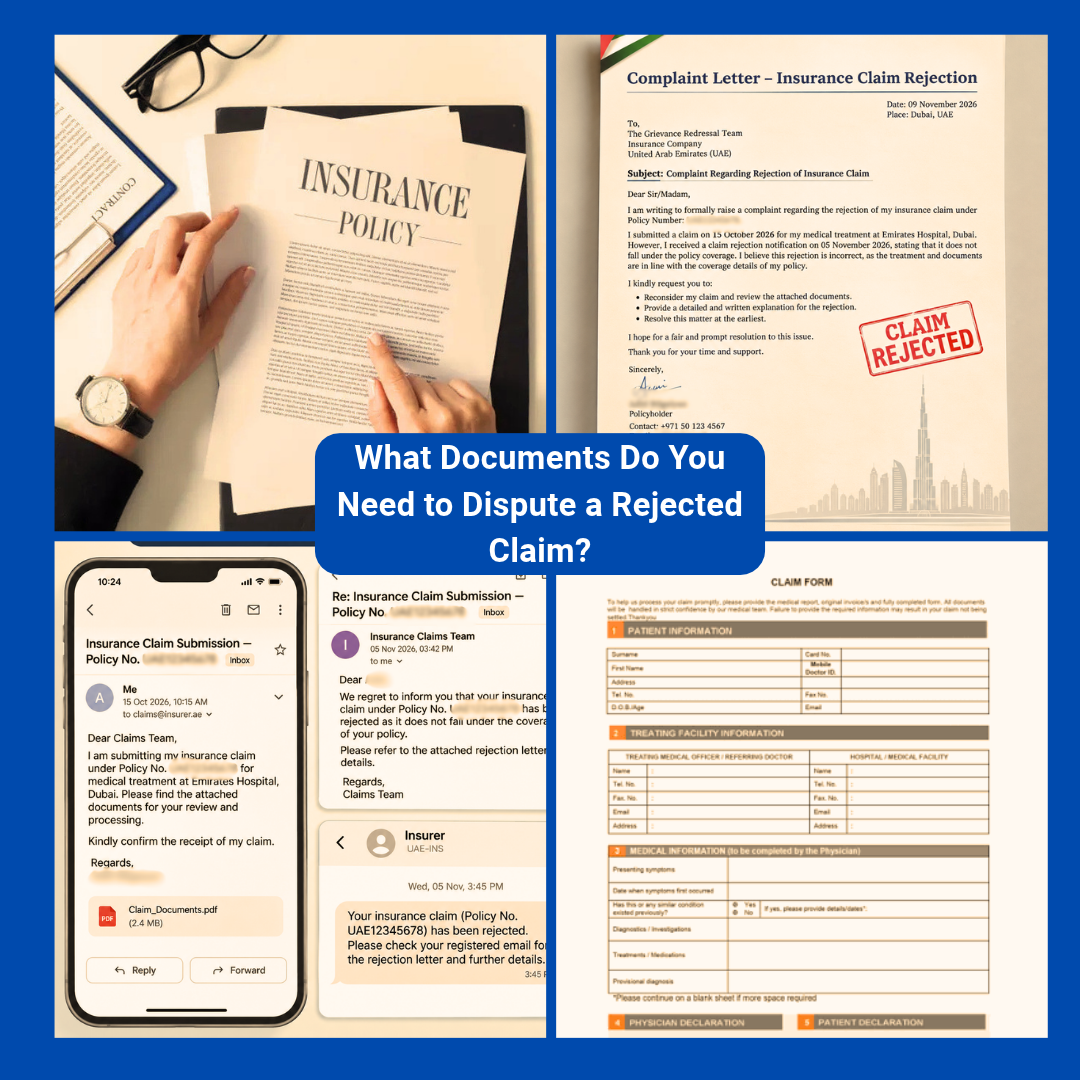
A complaint backed by clear paperwork is easier to follow and harder to ignore. The exact set depends on your policy, so send what’s relevant and what the official process asks for, not a folder of everything you own.
Your Core Checklist
- Your policy document and schedule
- The claim form and claim reference number
- The rejection letter or written explanation
- Your complaint to the insurer and its reply, if you got one
- Emails and messages between you and the insurer
- A short timeline of what happened and when
For Health Insurance Claim
Add medical reports, hospital invoices, prescriptions, and any pre-authorisation approvals or refusals. For example, if you had an MRI and the claim came back as “not medically necessary”. Your doctor’s note explaining why the scan was needed would then be your strongest document. Ask the insurer for the exact clause and the medical or administrative reason behind its decision.
For Car Insurance Claim
Whether you have standard car insurance or a more comprehensive policy, check the damage exclusions, excess and claim conditions before challenging the insurer’s decision. Imagine the insurer refuses a repair bill because it says the damage doesn’t match the accident. Dated photos and a clear report help you show the link. Then compare the decision with your policy terms and the accident evidence.
Businesses should also review their commercial vehicle insurance policies when disputing claims involving company cars, vans or other business vehicles. Keep the relevant vehicle documents, accident reports and repair invoices ready, as these can help establish what happened and whether the damage falls within the policy coverage.
If you’re planning to buy or renew a vehicle policy, having the right paperwork ready can make the process much easier. Check our guide to vehicle insurance documents to understand what expats in the UAE need before applying for a new policy.
For Home or Property Claim
Add photos or video of the damage, repair quotes, maintenance records and proof of ownership or tenancy. Say a pipe bursts and floods your kitchen, and the insurer calls it gradual wear. A plumber’s report describing a sudden failure could change the picture. Be honest with yourself here. Some events are genuinely excluded. Others may only have been labelled that way.
What if the Dispute Still Isn’t Settled?
If you disagree with Sanadak’s decision, you may be able to appeal to the Insurance Dispute Resolution Committee, which sits within Sanadak. Appeals carry a fee, and Sanadak may refund it if you win. Check the official website for the current amount, deadlines and documents before you pay anything. If the claim is large or the policy wording is complex, consider legal advice first.
For business owners, a rejected claim can affect more than the immediate repair or replacement cost. Reviewing your business insurance coverage, policy limits, and exclusions can help you understand which protections apply and whether other policies may respond to the loss.
Read the Decision Before You Appeal
Study the written decision and its reasons. Did it turn on the policy wording, on the evidence, or on a missing step? That tells you whether an appeal has anything new to add.
How to Avoid the Next Dispute
Preparation can’t prevent every problem, but it helps you spot trouble early.
- Read the exclusions and limits before you buy a policy.
- Keep your policy documents and payment records easy to find.
- Give accurate information when you apply.
- Follow the insurer’s claim notification and documentation rules.
- Ask about any clause you don’t understand.
- Keep written pre-authorisations and approvals.
Conclusion
A rejected claim feels personal, but it’s a decision you’re allowed to question. Check your policy. Collect your evidence. Send a clear, written complaint to your insurer. If the matter stays unresolved and you meet the criteria, take it to Sanadak. That’s how to complain against an insurance company in the UAE with a case worth reading.
The same approach applies across different types of cover, whether you’re dealing with a rejected medical, motor, property or travel insurance claim. Always check the policy wording, understand the reason for rejection, and keep supporting documents ready before taking the matter further.
If you’re unsure what your policy covers or what to do next, it can help to understand your options before you write a word. You can explore the insurance guidance at Insura.ae to see where you stand. And if this guide helped, send it to a friend or relative who might need it one day.