A manager hands over a termination letter on Thursday. By Monday, the employee has filed a complaint with the Ministry of Human Resources and Emiratisation (MOHRE), and a lawyer’s email is sitting in your inbox. Who pays for what happens next? For most UAE firms, the answer is the company, straight from its own pocket.
That’s what the gap employment practices liability insurance (EPLI) fills. It pays to defend claims from current staff, former staff and job applicants, and it can fund settlements too. This guide explains what it covers, what it leaves out, and how it works on the mainland and in free zones like DIFC and ADGM.
EPLI covers legal defence costs, settlements and awarded damages for employee claims such as wrongful dismissal, harassment, discrimination and breach of contract. It doesn’t cover criminal acts, unpaid wages, regulatory fines or physical injuries.
In this guide, we’ll cover what EPLI pays for, what it leaves out, how it differs from employer’s liability and D&O insurance, and how the rules change between the mainland, DIFC and ADGM. So stay with us and keep reading. By the end, you’ll know the real benefits of having cover, the gaps that catch many employers out, and the exact steps to take this week to protect your business. It’s a few minutes of your time, and it could save you months of stress and a very large legal bill.
What Is Employment Practices Liability Insurance?
EPLI protects employers from the cost of claims made by people who work, or wanted to work, for them. Think of it as cover for the “people side” of running a business, where the damage is to someone’s career or dignity rather than their body or property.
How a Claim Gets Triggered
Most policies respond to a formal written demand, a legal notice or a lawsuit. Many also respond to a labour complaint, including one lodged with MOHRE, though wording varies. Always check this point before you buy.
Most EPLI policies work on a “claims-made” basis. That means the claim has to be made while the policy is active. A dispute that started before your start date may be excluded unless the policy has a retroactive date that reaches back far enough.
What Does EPLI Cover in the UAE?
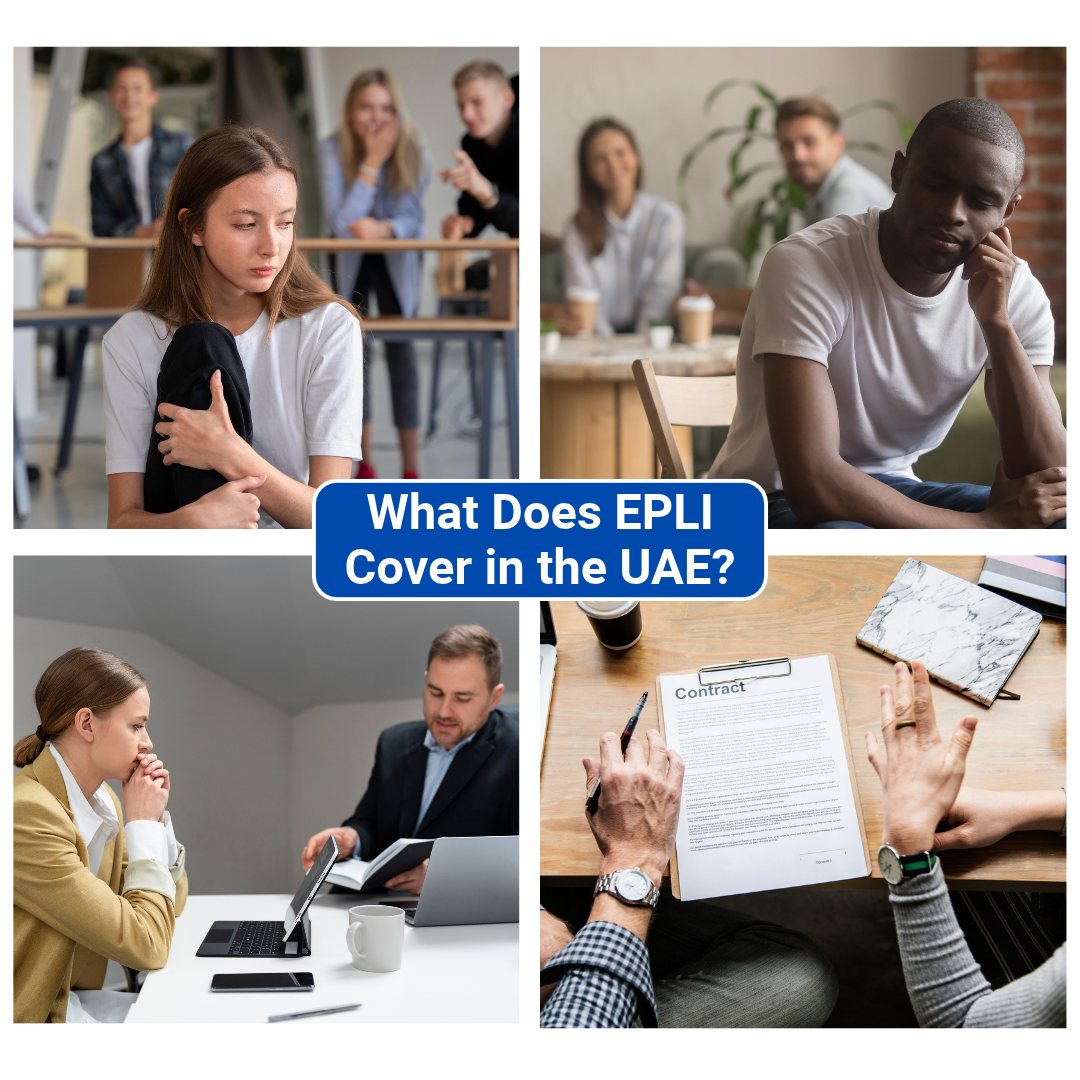
Coverage differs from one insurer to the next, but most policies pay for the same core set of workplace disputes. Here’s what usually sits inside.
Wrongful and Unfair Dismissal
The UAE Labour Law (Federal Decree-Law No. 33 of 2021) lets a worker challenge a dismissal they believe was arbitrary. A court can then award compensation. EPLI typically responds to:
- Dismissal without a valid reason or proper warnings
- Constructive dismissal, where someone resigns because the employer made work unbearable
- Skipped notice periods or ignored internal HR procedures
Harassment and Bullying
Employers in the UAE are expected to keep workplaces respectful and safe. When someone says they weren’t treated that way, EPLI can step in.
Hostile Work Environment
This covers claims about verbal, written or physical behaviour that made someone feel intimidated or humiliated. The person accused doesn’t need to be a director. A line manager’s conduct can land on the company.
Retaliation
Say an employee reports a colleague and is demoted three weeks later. That’s a retaliation claim, and it often turns out to be harder to defend than the original complaint.
Discrimination
With more than 200 nationalities working here, discrimination claims can surface in hiring, pay, promotion or exit. EPLI generally covers allegations tied to race, nationality, gender, age, marital status, disability or religion.
Contract and Entitlement Disputes
Many employment fights are really about money. Policies often help with defence and settlement costs when staff claim unpaid bonuses or commission, a late or miscalculated end-of-service gratuity, or changes to hours, job title or salary made without their agreement.
One catch here. EPLI helps you defend the claim. It doesn’t pay the wages or gratuity you genuinely owe.
What Doesn’t EPLI Cover?
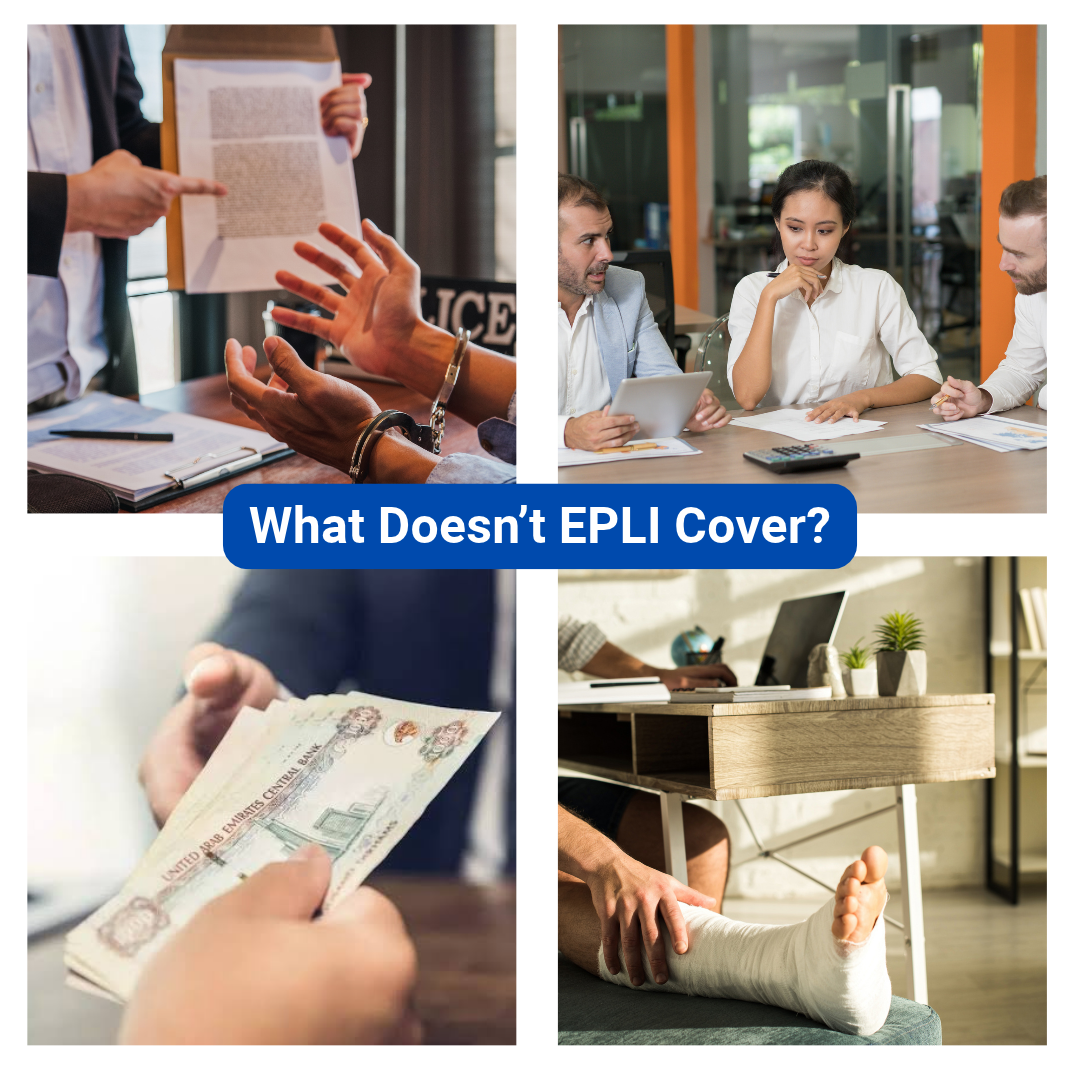
Honest insurers will tell you the limits upfront, so here they are. Exclusions exist because some risks are either uninsurable or belong under a different policy.
Exclusion | What it means | Where to look instead |
Criminal or deliberate acts | Fraud, dishonesty or malicious conduct by the insured | Generally uninsurable |
Injury and property damage | Physical harm, illness, death or lost property | Work injury compensation, Commercial General Liability |
Unpaid wages and gratuity | The actual money owed to staff | Paid by the employer. EPLI only covers defence |
Regulatory fines | MOHRE penalties, including Wage Protection System (WPS) delays | Usually uninsurable |
Non-compete enforcement | Costs of pursuing a former employee | Legal expenses insurance |
Common mistake: assuming “employment cover” means one policy handles everything from a fall in the office to a harassment claim. It doesn’t. Those risks sit under separate policies.
This is where workmen compensation insurance becomes relevant. Unlike EPLI, which deals with employment-related legal disputes, this cover addresses eligible work-related injuries or illnesses. Businesses should understand the distinction between these policies to avoid gaps in their insurance protection.
EPLI vs Employer’s Liability vs D&O
People mix these up constantly, and it’s an easy mistake to make.
Policy | Covers | Typical example |
EPLI | Employment-related claims | Wrongful dismissal, harassment |
Employer’s Liability / Work Injury | Physical injury at work | A warehouse accident |
D&O | Management decisions | A shareholder suing a director |
Some insurers bundle EPLI with Directors & Officers insurance, which can keep costs down for smaller firms. It’s worth asking about, along with your commercial general liability and group health arrangements, so nothing overlaps or slips through.
Why UAE Employers Should Think About It
Alongside employment-related protection, businesses should also consider medical insurance for employees as part of their wider employee benefits package. While EPLI helps manage legal disputes, medical insurance supports employees with eligible healthcare expenses, giving employers a more complete approach to workplace protection and staff wellbeing.
Alongside employment-related protection, businesses should also consider medical insurance for employees as part of their wider employee benefits package. Employers can also explore the differences between individual health insurance and employer cover in the UAE to understand how workplace medical benefits support their staff.
The rules also change depending on where your company sits. Mainland firms follow Decree-Law No. 33 of 2021, with disputes usually starting at MOHRE before heading to the labour courts. DIFC companies follow DIFC Employment Law (DIFC Law No. 2 of 2019), and ADGM has its own employment regulations. Both free zones run English-style common law systems.
Expert tip: if you operate across several jurisdictions, tell your broker exactly where your people sit. A policy that quietly excludes one of those jurisdictions is worse than having no policy, because you’d assume you’re protected.
Key Takeaways
- EPLI covers defence costs, settlements and damages for employee claims
- Typical claims include wrongful dismissal, harassment, discrimination and contract disputes
- Unpaid wages, gratuity, regulatory fines, criminal acts and physical injuries sit outside it
- Policies are usually claims-made, so timing and retroactive dates matter
- Mainland, DIFC and ADGM have different rules, so check jurisdiction wording
- EPLI isn’t a legal requirement, but it can protect your cash flow
Conclusion
Employment disputes rarely announce themselves. They start with a tense meeting, an unclear contract or a rushed exit, and they can grow into a legal bill nobody planned for. Employment practices liability insurance won’t stop people from raising complaints, but it can stop one claim from draining your budget.
Choosing an experienced employment practices liability insurance provider in the UAE can also help businesses understand policy exclusions, coverage limits and jurisdiction-specific requirements. Before selecting a policy, compare the available options and check whether the protection matches your workforce and potential employment risks.
If you’d like a second pair of eyes, Insura can help you explore suitable EPLI options for your business. As a trusted employment practices liability insurance company in the UAE, the team can guide you through available coverage options, policy terms and exclusions to help you make a more informed decision. Get in touch to discuss your business’s insurance requirements, with no pressure to buy.