Your company hands you a medical card, and you keep it in your wallet and forget about it. Most of us do. Then one evening your spouse needs a specialist, or your child’s paediatrician turns out to be outside the network, and the question lands hard: is this cover actually enough? It’s the moment many people start looking at individual health insurance for the first time.
Here’s the thing nobody tells you when you sign the contract. Employer cover and a personal policy can look almost identical on paper, yet they behave very differently when you need them. Who pays, who picks the hospital and what happens the day you resign all depend on which one you hold.
This guide compares both, using real UAE rules and everyday situations. By the end, you’ll know exactly what your card does and doesn’t promise and what to do about the gaps.
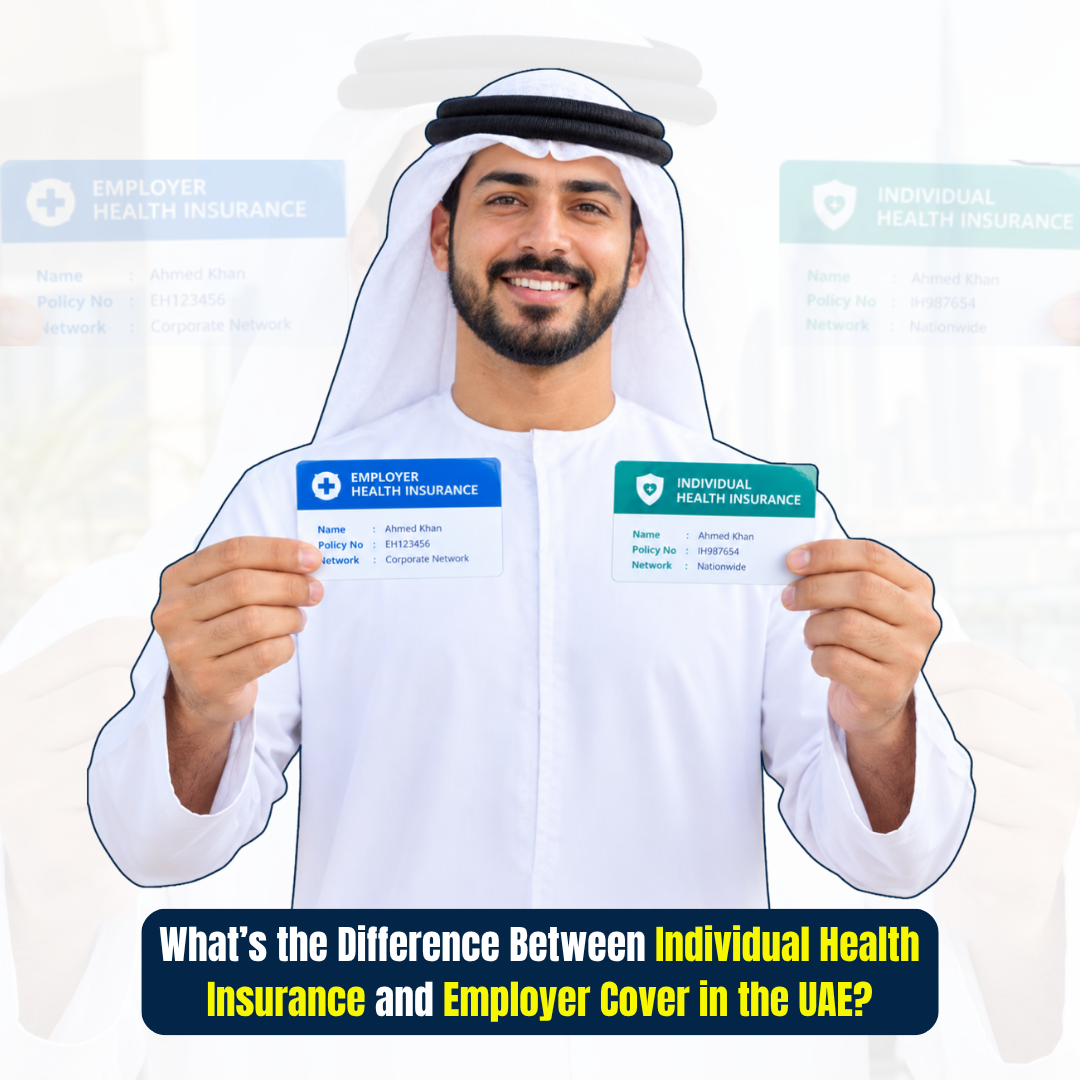
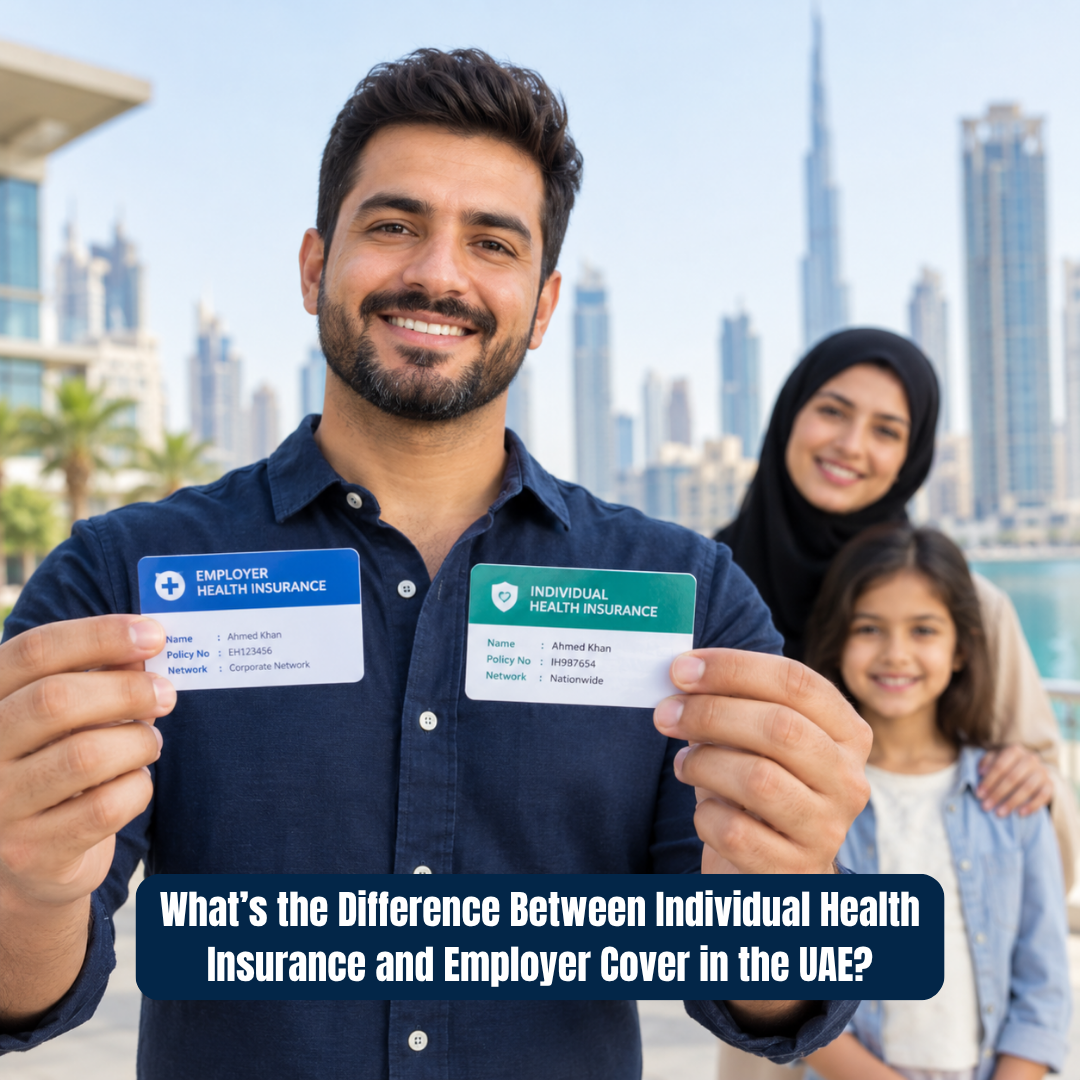
Difference Between Individual Health Insurance and Employer Cover
An individual health plan is a policy you buy yourself, choosing the benefits and network. Employer cover is a group policy your company arranges, usually paying the premium for you. The first travels with you between jobs. The second generally ends when your employment does.
Think of it as renting versus living in company housing. One is yours to shape. The other is convenient but tied to your contract.
Feature | Individual Health Insurance | Employer Health Insurance |
Who arranges it? | You or your sponsor | Your employer |
Who pays? | Usually the policyholder | The employer, for the employee |
Coverage choices | Tailored to your needs | Set by the company’s plan |
Hospital network | Based on the policy you buy | Based on the company plan |
Family cover | Depends on the policy | Depends on your benefits and the emirate |
Job changes | Stays while the policy is active | Usually ends with employment |
Best for | Freelancers, self-sponsored residents, people wanting more | Employees eligible for company benefits |
Health insurance rules differ across the UAE, so choosing the right individual health insurance provider in the UAE depends on where you live and who is responsible for your cover. In Dubai, employers must insure employees, and sponsors must insure dependants. Abu Dhabi usually expects employers to cover the employee’s family as well. Since January 2025, basic cover has also been mandatory for private-sector employees in the Northern Emirates. The UAE Government portal, the Dubai Health Authority and the Department of Health – Abu Dhabi publish the current rules.
How Does Individual Health Policy Work in the UAE?
You pick an insurer, compare plans, answer health questions and pay the premium. The policy then belongs to you, not your employer. You choose the annual limit, the hospital network and add-ons such as maternity or dental.
Who Should Consider an Individual Health Plan?
- Freelancers and the self-employed
- Retirees and people on self-sponsored residency
- Expats whose employer’s plan falls short
- Employees who want benefits beyond the company policy
What Does an Individual Policy Cover?
Most plans include inpatient and outpatient care, consultations, scans and blood tests, and prescribed medicines. Maternity and pre-existing conditions are where plans differ most. Some cover them after a waiting period, some cap them, and some exclude them. Read that section twice.
What Are the Pros and Cons?
You get flexibility, a wider choice of hospitals and cover that doesn’t vanish when you resign. The trade-off is cost, since you pay the premium yourself. Exclusions, waiting periods and co-payments can also catch people out.
How Does Employer-Provided Health Insurance Work in the UAE?
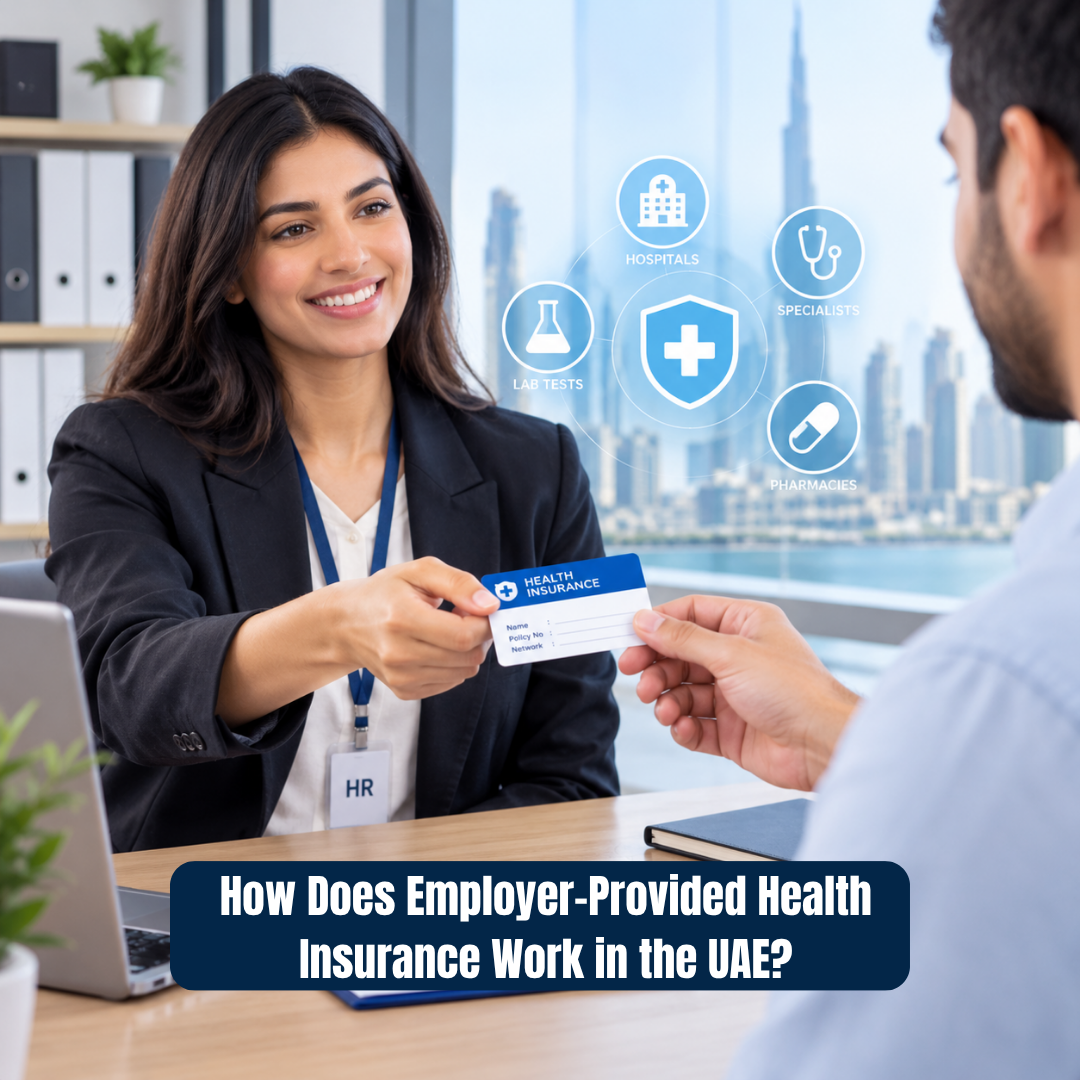
Companies buy a group health insurance plan for their staff, and insurers price it across the whole team rather than person by person. That shared risk is why group plans can feel generous for the money. In Dubai, employers must pay for employee cover, including in free zones, and can’t pass that cost on. The catch is that you inherit the plan someone else chose. Most employees never see the policy document until they need it, and by then it’s awkward to discover a gap. Ask HR for the table of benefits in your first week.
What Benefits Can Employees Receive?
Typical group plans include an approved network of hospitals and clinics, inpatient and outpatient care, and often medicines and specialist visits. Maternity and pre-existing conditions are covered only if the plan says so. And the premium is paid by the company, which is the biggest perk of all.
What Are the Limitations of Employer Cover?
Networks can be narrow. Annual limits, co-payments and exclusions vary, and you rarely get a say in the plan. A senior manager and a junior analyst may hold the same card but have very different benefits, because employers often tier cover by grade.
Does Employer Insurance Cover Your Spouse and Children?
Not always. Dubai’s law makes the sponsor responsible for dependants, which usually means you, unless your contract promises otherwise. Abu Dhabi expects employers to cover an employee’s spouse and up to three children under 18.
Coverage details can vary widely between employers, so it helps to understand exactly what your policy includes before you rely on it. Our guide to group medical policy explains the common benefits, exclusions and conditions expats should check.
Which One is Cheaper?
For you personally, employer coverage is usually cheaper because the company pays your premium. With individual health insurance, the full premium lands on you. That said, “cheaper” depends on what you compare. A free policy with a narrow network and a low limit can cost you more when you actually fall ill. Dubai’s minimum essential benefits plan, for example, carries an annual limit of AED 150,000 and a limited network. Premiums for personal plans vary widely by age, health and benefits, so the best health insurance policy for you will come from comparing current quotes rather than trusting figures from articles, including this one.
What Affects Health Insurance Costs?
- Age and medical history
- Annual limit and benefit level
- Hospital and clinic network
- Maternity, dental and optical add-ons
- Co-payments, deductibles and exclusions
- Whether your employer subsidises the premium
What Should You Compare Beyond the Premium?
Look at the annual limit, hospital access, medicine cover and your share of each bill. A 20% co-payment on an AED 300 specialist visit means AED 60 from you every time. Add that up across a family over a year, and the “cheap” plan may not look cheap.
What Happens to Your Health Insurance When You Change Jobs in the UAE?
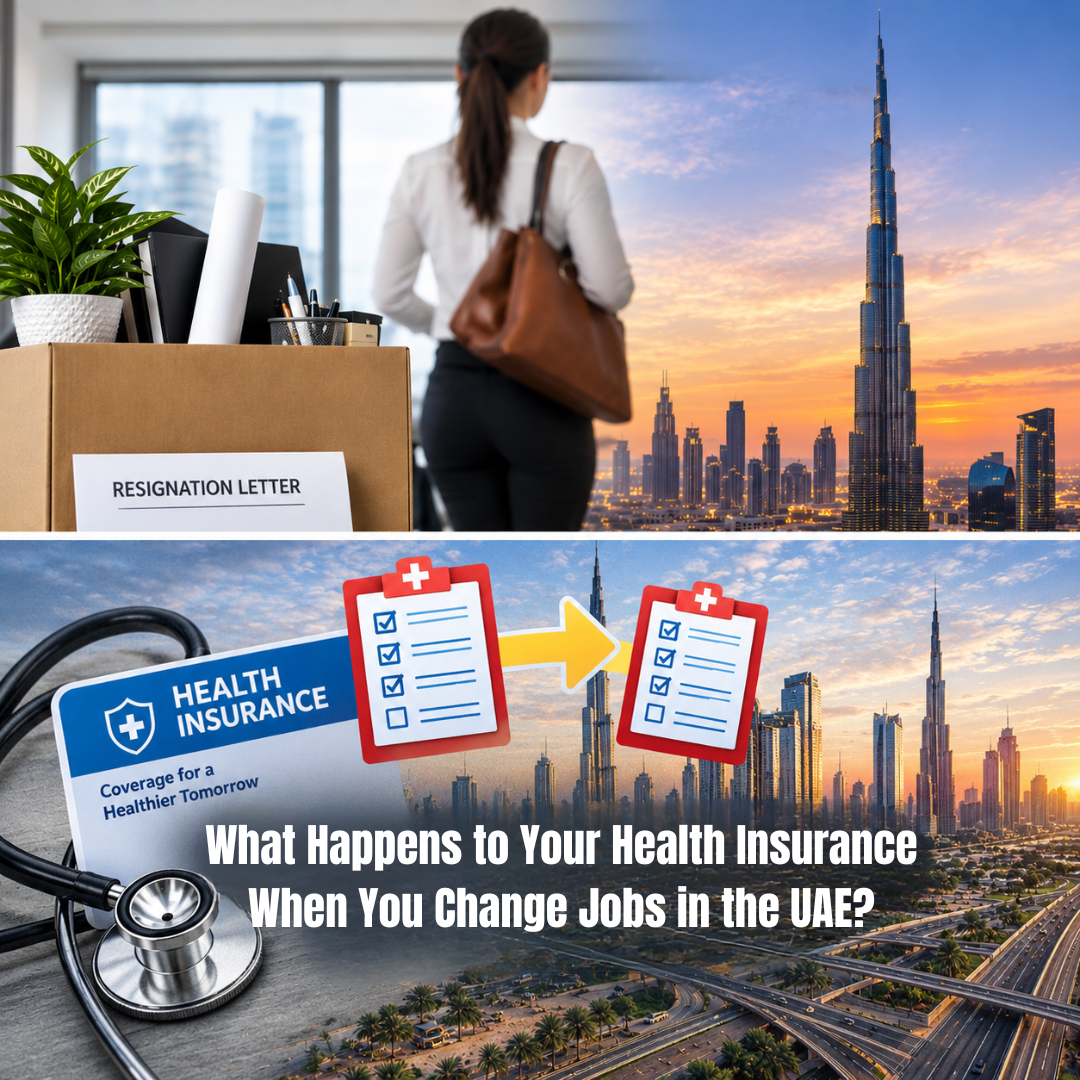
Employer cover is tied to your employment, so it generally ends when the job does. The exact date depends on the policy and your visa cancellation, which makes timing the real danger. A gap of even a few weeks can leave you paying hospital bills in full.
Can You Keep Your Employer’s Insurance After Leaving?
Usually not. Some insurers offer a conversion to an individual plan, but this isn’t automatic. Ask your HR team and the insurer before your last day, not after.
Can You Switch to Individual Cover Without a Gap?
Plan it. Set the new policy’s start date for the day your old one ends. Declare your medical history honestly, because undisclosed conditions can lead to rejected claims. Also confirm how waiting periods and pre-existing conditions will be treated.
Should You Buy Individual Cover While Still Employed?
Sometimes. It makes sense if your company network is limited, your maternity limit is low, or you want specific specialists. Don’t expect to claim the same bill twice, though. Insurers generally reimburse actual costs, not double payments, and each policy has its own rules.
Should You Choose Individual or Employer Health Insurance in the UAE?
Match the cover to your situation.
- Employed, and does the plan fit your needs? Use employer cover as your main policy.
- Self-employed, between jobs or self-sponsored? Individual cover is your route.
- Employer plan has gaps for you or your family? Consider an additional policy.
What Should You Check Before Choosing a Policy?
- Does it meet the rules in your emirate?
- Are your preferred hospitals and clinics in the network?
- Are your regular medicines and specialists covered?
- What are the annual limit, co-payment and deductible?
- Are maternity and pre-existing conditions covered?
- Are your spouse and children included?
- What happens when the policy expires or your job changes?
Conclusion
Neither option is the clear winner, and that’s the honest answer. Employer coverage keeps your costs low and takes the paperwork off your plate. Individual health insurance keeps your protection in your own hands, whatever happens to your job. The right choice depends on your family, your health needs and how secure your employment feels today.
What matters most is that you know what you’re holding. Plenty of residents carry a card for years without knowing the annual limit, the co-payment or whether their spouse and children are covered at all. That’s the gap where nasty surprises live.
So make a small plan. Before your next renewal or job move, pull out your benefits table and check the hospital network. Ask HR who pays for your dependants. Look at how maternity, medicines and pre-existing conditions are treated. If your resignation date arrived next month, would your family still be protected? If the answer is “I’m not sure”, that’s your cue to look at your options.
Ten minutes of checking now can save you a very expensive evening later.
If you’d like help comparing your current cover with what’s available, you can browse options from an individual health insurance company in the UAE on Insura.ae. Look at the benefits, check the networks and see how the numbers stack up, with no pressure to decide.