
You’ve collected the keys to your dream car. The car still smells new, and then a worry sets in. Can you actually drive it home? In the UAE, a car can’t be registered without a valid policy. That makes a new vehicle insurance policy in the UAE the first piece of paperwork that really counts and the one that catches many expats out. A missing Emirates ID or an expired licence can stall things for days. This guide covers what to have ready, why insurers ask for each item, and what to do if something’s missing. Use it as a checklist before you request a single quote.
What Is New Vehicle Insurance in the UAE?
New vehicle insurance means arranging a fresh motor policy for a car you’ve just bought. It also covers taking out a new policy on a car you already own, such as when you switch insurers. The paperwork is mostly the same either way.
Third-party liability is the legal minimum in the UAE. It pays for injury or damage you cause to other people and their property. It won’t pay to fix your own car. Comprehensive cover adds that protection, plus extras like theft and accidental damage, depending on the policy.
Motor insurers are regulated by the Central Bank of the UAE, which took over from the Insurance Authority. Your policy needs to be in place before the car is registered with the traffic authority in your emirate, such as the RTA in Dubai. Renewals work the same way.
So insurance isn’t an add-on. It sits right in the middle of the buying process.
Documents Expats Need to Get New Vehicle Insurance in the UAE
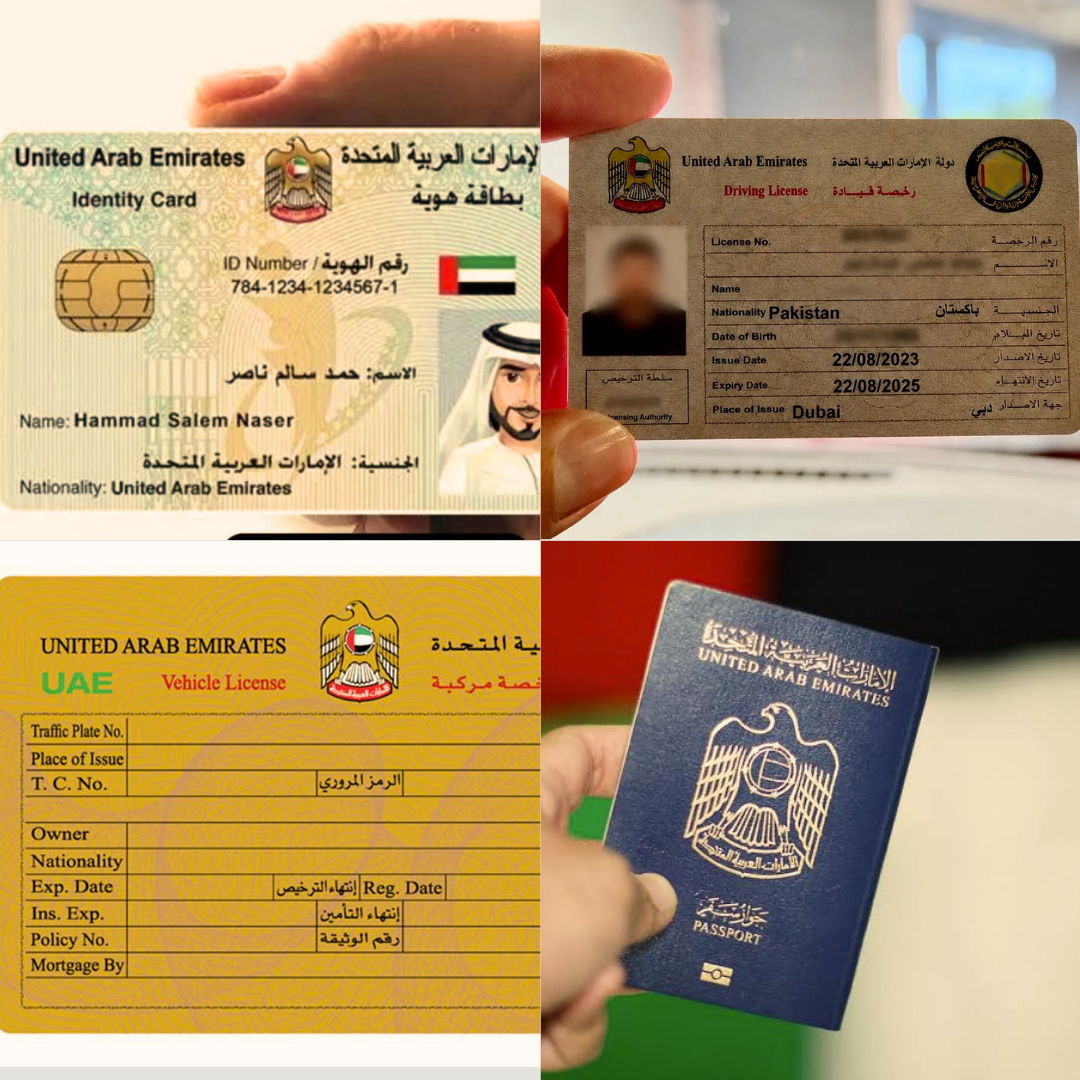
A new vehicle insurance provider in the UAE asks for two sets of papers. One proves who you are and that you can legally drive here. The other proves what you’re insuring. Some documents are near-universal, others depend on your situation. The following are the documents you will need at the time of insurance:
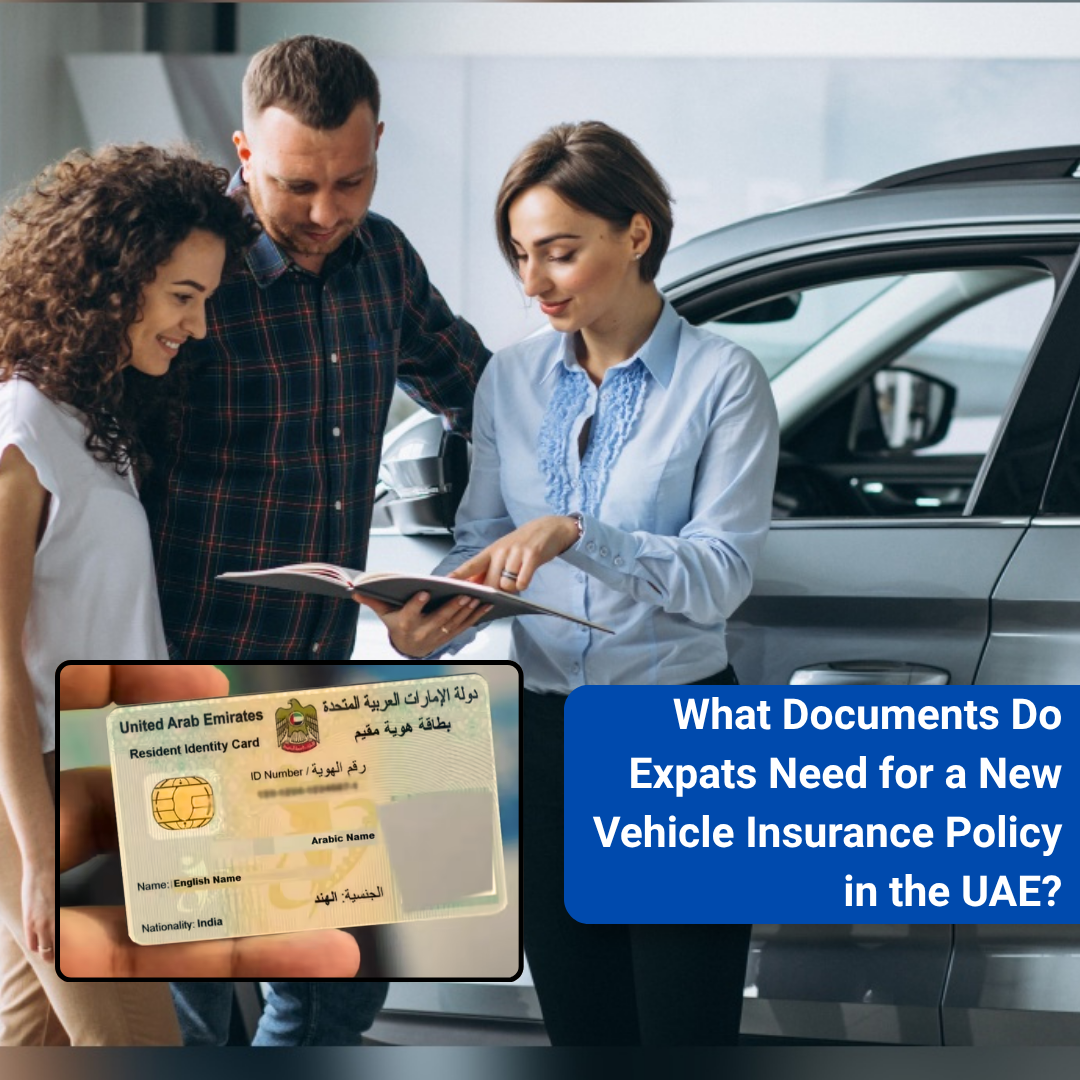
1. Emirates ID
Insurers use your Emirates ID to confirm who you are and that you live in the UAE. It’s the document most often asked for first.
If yours is under renewal, don’t panic. Keep the application receipt and ask your insurer what it will accept. Some will take a temporary proof, others will want to wait for the new card. Ask before you start, not after.
2. UAE Driving Licence
A valid UAE licence tells the insurer you’re legally allowed to drive here. It also lets them check your record.
What about a foreign or international licence? Rules differ by insurer and by how long you’ve been a resident. Some insurers may accept one for a limited time, others won’t. Check first. Don’t assume.
3. Vehicle Registration Card (Mulkiya)
The Mulkiya lists the car’s registration and ownership details. Insurers match it against your policy, so the chassis number, plate and owner name must line up.
For a car you’ve only just bought, you may not have a new Mulkiya yet. In that case, the sales papers and a copy of your visa or residency usually do the job. Your insurer will tell you what they’ll take.
4. Passport and UAE Residence Visa
Not every insurer asks for these, but plenty keep a passport copy on file. A visa or residency proof comes up more often for recent arrivals.
If your visa was issued only days ago, your Emirates ID may still be on its way. A passport copy with the visa page can bridge the gap.
5. Vehicle Purchase Documents
A sales invoice or purchase agreement shows what you paid and who sold the car. Dealership papers are usually tidy. Private sales need more care, since the transfer details must be clear.
Imported and used cars often bring extra paperwork, covered in the next section.
6. Previous Insurance or No-Claims Certificate
If you’ve held a policy before, your insurer may ask for it. A no-claims certificate shows years without a claim, and it can lower your premium.
Letters from overseas insurers are sometimes accepted, but not always. Ask for the certificate in English, on letterhead, with your name and dates clearly shown.
Once you have these papers ready, the next question is usually timing. Buying online car insurance is quick, often done in minutes, but the registration side has its own steps and deadlines. If you’re wondering how soon you need to act after your policy is issued, it helps to know the typical timeline before you start.
Additional Documents You May Need Based on Your Vehicle and Insurance Type
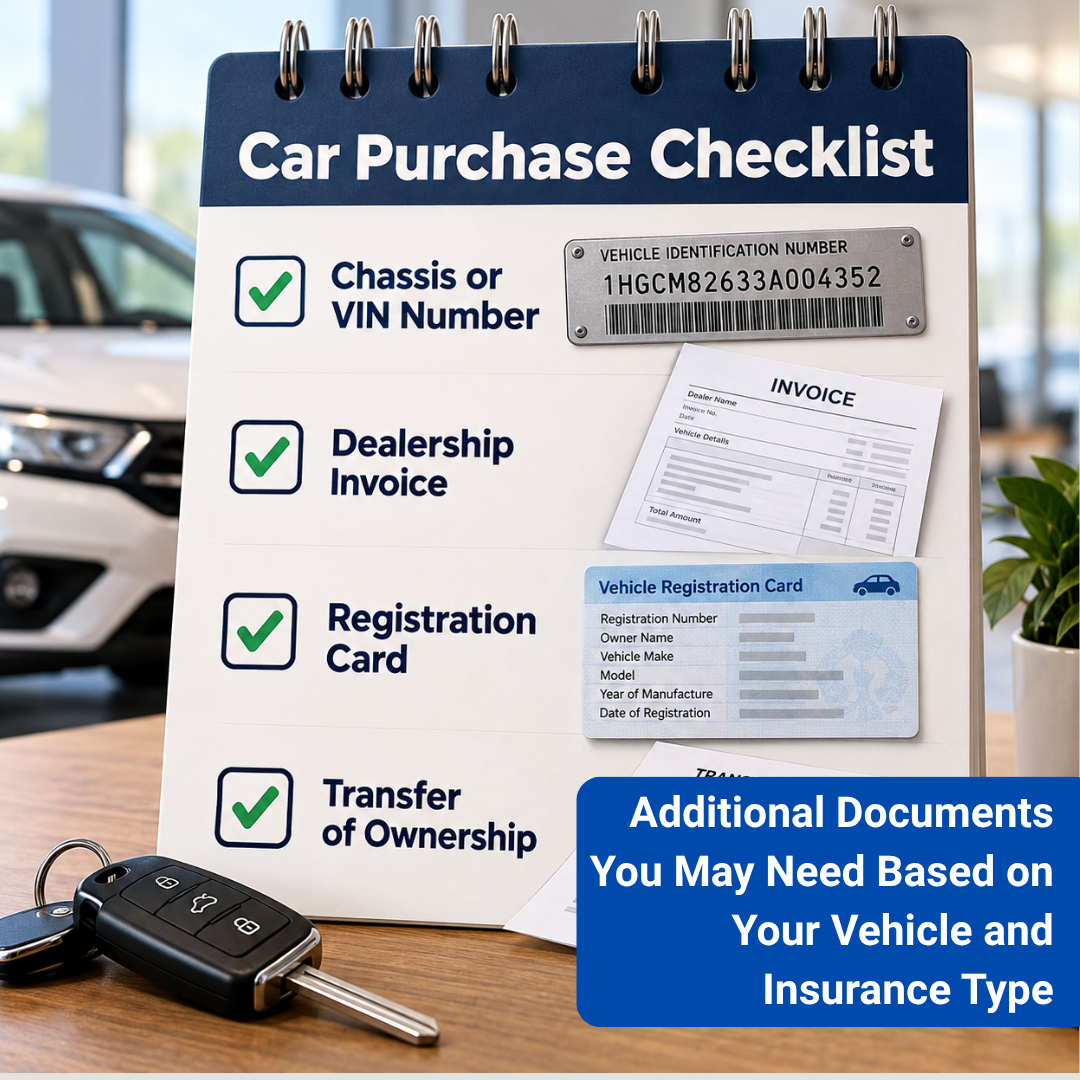
Your car and your cover shape the paperwork. A showroom model needs less than a ten-year-old import. Comprehensive cover often brings more checks than third-party.
1. Documents for New Cars
Bring the dealership invoice, the vehicle details with the chassis or VIN number, and any registration papers the dealer has arranged. Dealers often handle much of this, so ask what they’ve already submitted.
2. Documents for Used Cars
Collect the previous registration card, transfer of ownership papers and, where applicable, a passing certificate from a vehicle testing centre. Private sellers sometimes forget these. Ask for them before you pay.
3. Documents for Imported Vehicles
Expect to show customs clearance papers, an import certificate, and inspection and registration paperwork. Imports take longer, so start the insurance conversation early.
4. Documents for Comprehensive Insurance
Some insurers want extra vehicle details, an inspection, or photos of the car, especially for used vehicles. It’s their way of recording the car’s condition before cover begins. Take clear photos yourself too. They’re handy if a dispute comes up later.
How Can Expats Get Vehicle Insurance in the UAE?
The process is simpler than it looks. Most insurers now let you apply online, and many policies are issued within the same day when your papers are in order. The delays almost always come from documents, not from the insurer.
Here are the steps most expats follow:
Step 1 — Gather Your Personal and Vehicle Documents
Lay everything out before you begin. Check that your Emirates ID and licence haven’t expired and that names and numbers match across every paper. Even a small mismatch can hold things up.
Step 2 — Choose Third-Party or Comprehensive Insurance
Third-party liability car insurance in the UAE covers damage or injury you cause to others and costs less. Comprehensive covers your own car as well.
For a new or financed car, comprehensive is often the sensible choice, and banks may require it. For an older, low-value car, third-party liability cover can make more sense, and it’s the legal minimum needed to register and renew your vehicle in the UAE. Your budget and how much you drive both matter.
Step 3 — Compare Insurance Quotes
Look beyond the premium. Insurance for commercial vehicles in the UAE varies widely by vehicle type and use, so compare cover limits, the excess you’d pay on a claim, and exclusions. Check whether roadside assistance, agency repair and other add-ons are included or cost extra. The cheapest quote isn’t always the best value.
Step 4 — Submit Documents and Complete the Policy
Upload your papers online or hand them over in person. The insurer verifies them, you pay, and the policy is issued. Keep a digital copy on your phone, because you’ll need it at registration.
Common Document Problems Expats Face When Buying Car Insurance
Most mistakes are predictable. Knowing them in advance saves a lot of back and forth.
- Expired Emirates ID or Driving Licence: Expired papers are the most common blocker. Renew first if you can. If a renewal is in progress, keep the receipt and ask your insurer what they’ll accept.
- Newly Arrived Expats Without a UAE Driving History: You won’t have local insurance history, and that’s normal. Insurers see it often. Bring your overseas licence details and any previous policy letters, and expect the premium to reflect limited local history.
- Buying a Car Before Receiving the Final Registration Documents: Don’t wait for the Mulkiya to start. The invoice or sales agreement, plus your ID papers, can often get a policy moving. Ask your insurer which temporary documents they’ll take.
- Transferring a No-Claims Discount From Another Country: Not every insurer honours foreign NCD proof. Request a certificate from your old insurer before you leave, or as soon as you can. Then ask any new insurer, before you buy, whether they’ll accept it.
- Differences Between Insurer Requirements: Insurers set their own rules beyond the legal basics. One may want a passport copy, another may not. If your case is unusual, such as an import, a private sale or a lapsed ID, call or message before buying the policy. A five-minute check can save a week.
Conclusion
Getting new vehicle insurance in the UAE comes down to preparation. Start with the three documents almost every insurer asks for: your Emirates ID, UAE driving licence and the vehicle’s registration or purchase papers. Add a passport copy, visa page or no-claims proof if your situation calls for it.
Check every expiry date before you ask for a quote, and make sure names and chassis numbers match across your papers. Those small checks are often the difference between a same-day policy and a week of delays.
Compare two or three options instead of picking the lowest price, and remember that insurers set their own rules. If something’s missing or unusual, ask first. When you’re ready, you can compare quotes online through Insura.
If a document is missing, don’t guess. Ask your insurer what they’ll accept.